


Bench Desk - Optimizing Lecture Hall and Classroom Space
Explore bench desks for lecture halls, classrooms, and training centers. Learn about their structure, advantages, how to choose, and outstanding models at RPB Education & Public right below.
In today's lecture halls and classrooms, the logical arrangement of furniture plays a very important role in enhancing learning effectiveness. However, many learning spaces still use traditional separate tables and chairs, making arrangement cumbersome, difficult to optimize space, and lacking uniformity.
Facing the need to build modern and scientific learning spaces, bench desks are becoming a furniture solution chosen by many schools, university lecture halls, and training centers. With a design integrating the seat and writing desk into a single product, bench desks help optimize space, increase neatness, and enhance the professionalism of the learning environment.
In this article, we will explore in detail the structure, classification, advantages, as well as how to choose suitable bench desks for lecture hall and classroom projects.
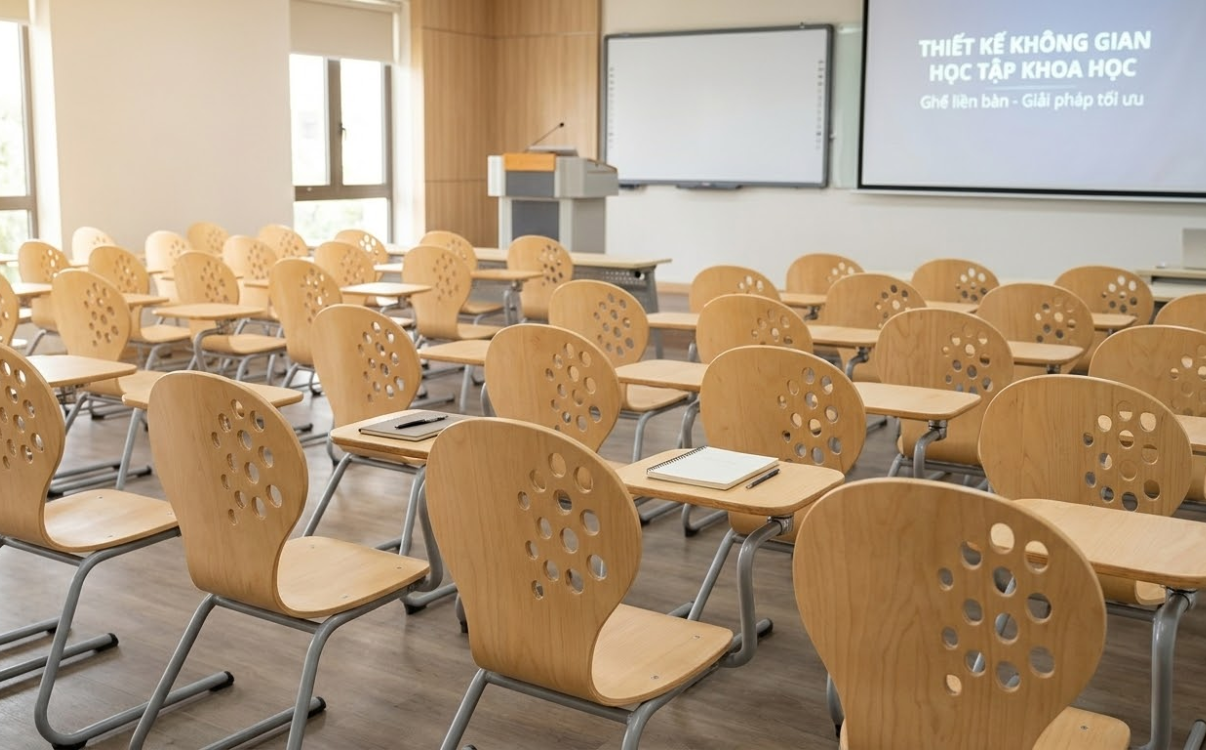
What is a Bench Desk?
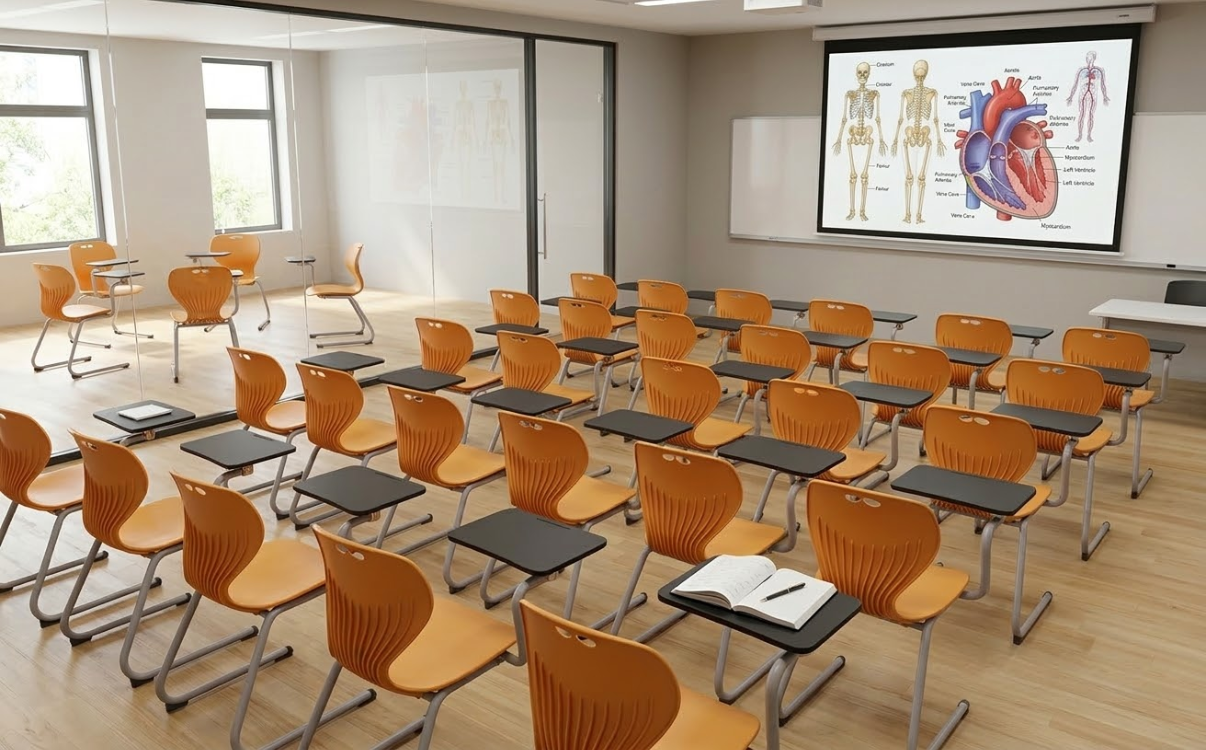
Concept of Bench Desk
A bench desk is a type of furniture designed to integrate the seat and writing desk into a single structure. Instead of having to use separate chairs and tables, users only need a single product that still fully meets the needs for sitting, studying, note-taking, and working.
This is a furniture solution commonly used in classrooms, lecture halls, training rooms, and academic auditoriums. Depending on the purpose of use, bench desks can be designed as individual units for each person or in rows of 2 to 3 seats to increase the capacity for large numbers.
The outstanding feature of bench desks is their neatness, stability, and ability to create uniformity for the entire learning space.
Integrated Design of Seat and Writing Surface
Compared to traditional tables and chairs, bench desks have a more compact structure thanks to integrating the writing surface directly with the chair body or frame. This design reduces the number of furniture items in the classroom, thereby creating a neater and easier-to-organize space.
The desk surface is usually calculated at an appropriate height so that users can sit, study, write, or place materials in a comfortable posture. As a result, bench desks not only save space but also improve the user experience over long periods.
Bench Desks Can Be Fixed in Rows or Individually Designed
Currently, bench desks are divided into two common layout types. The individual type is suitable for small classrooms, spaces requiring flexibility, or training rooms where the layout may change frequently. Meanwhile, row-type bench desks are widely used in university lecture halls, where optimizing the number of seats and creating a stable arrangement is necessary.
For each form, the product offers clear benefits in organizing a professional, scientific, and easier-to-manage learning space.
Read more: Training Chairs -- Suitable for training classes and seminars
Structural Characteristics of Bench Desks
Sturdy Electrostatic Powder-Coated Steel Frame
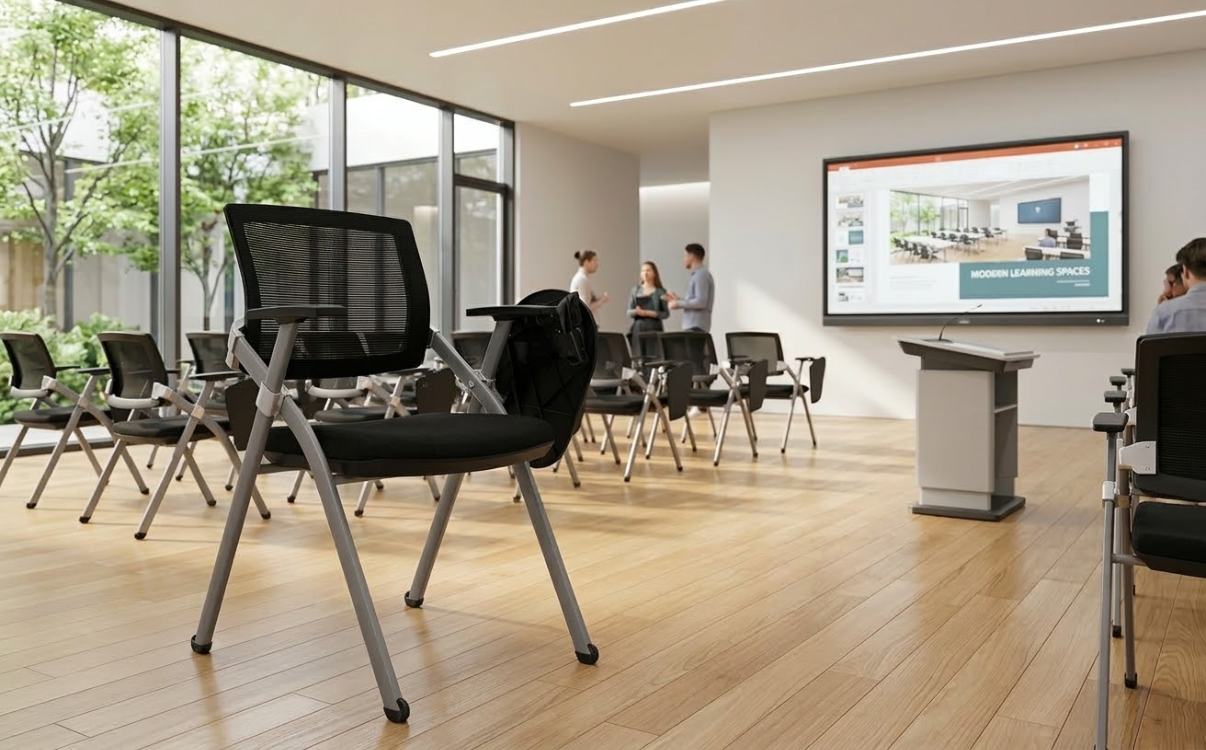
Most current bench desk models use an electrostatic powder-coated steel frame to ensure good load-bearing capacity and high durability. This part determines the stability of the entire product, especially in a school environment with continuous high usage frequency.
The powder coating helps the frame surface resist rust, scratches, and increases durability over time. This is very important for projects requiring long-term investment such as schools, lecture halls, or training centers.
Desk Surface Made of Industrial Wood or High-Grade Plastic
The writing desk part of bench desks is often made from industrial wood with a scratch-resistant surface or high-grade plastic with good load-bearing capacity. Each material has its own advantages but generally aims for durability, easy cleaning, and suitability for the educational environment.
Industrial wood provides a sturdier feel, better aesthetics, and a more professional look. Meanwhile, high-grade plastic helps reduce product weight, suitable for some spaces needing to optimize costs and ease maintenance.
Seat Cushion and Backrest Depending on the Model
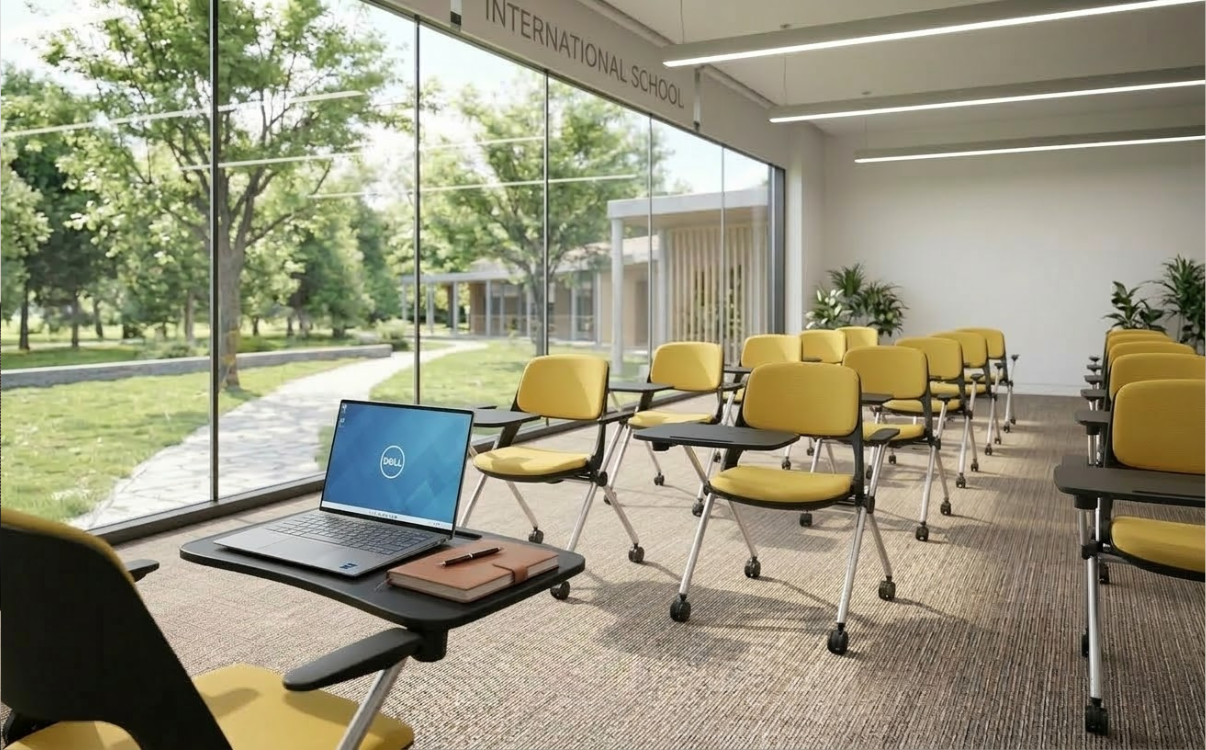
Depending on the product segment, the seat can be designed with hard plastic, plywood, or supplemented with a seat cushion and backrest to increase comfort. For professional training facilities or long-hour learning spaces, premium bench desks are often prioritized due to their better ergonomic design, supporting the back and reducing fatigue when sitting for long periods.
This is an important factor if the investing unit aims for a quality learning experience and sustainable usage efficiency.
Outstanding Advantages of Bench Desks
Optimizes Space
The most noticeable advantage of bench desks is their space-saving capability. Because the desk and chair are integrated into a unified block, the product reduces bulkiness in the space and creates a neater layout compared to using separate tables and chairs.
This is especially suitable for large lecture halls, classrooms needing to arrange many seats, or training rooms with limited area but still wanting to ensure optimal functionality.
Increases Uniformity and Professionalism for the Classroom
When an entire space uses the same system of bench desks, the classroom will have consistency in design, color, and layout. This enhances aesthetics, creates a professional feel, and contributes to building a modern image for the school or training center.
Uniformity in furniture also makes management, cleaning, and space arrangement simpler.
Reduces Investment Costs Compared to Separate Tables and Chairs
Compared to buying separate tables and chairs, bench desks can help optimize the investment budget. Being manufactured in a unified structure, the product often helps reduce costs for materials, transportation, installation, and long-term maintenance.
For large-scale projects like university lecture halls or synchronized classroom systems, this is a solution worth considering both in terms of cost and usage efficiency.
Easy to Clean and Maintain During Use
With a design featuring fewer separate parts, bench desks are more convenient for daily cleaning. The desk surface, frame, and seat area can all be quickly wiped down, helping maintain cleanliness in the classroom space.
Furthermore, the integrated structure also helps reduce the risk of shifting, minor damages, or mismatch between desk and chair as seen with separate products.
Standard Bench Desk Dimensions
When choosing bench desks for classrooms, lecture halls, or training centers, dimensions are a factor that directly affects the user experience. A model with suitable proportions helps the sitter maintain a stable posture, take notes easily, reduce fatigue during long study periods, and simultaneously supports a more scientific space layout.
For current educational projects, bench desk dimensions are usually calculated based on the main user groups: middle school students, high school students, university students, or trainees in training classes. Below are the most common and suitable specifications to consider when selecting a product.
Seat Height
Seat height is the distance from the floor to the seating surface. This is a very important parameter because it directly affects leg posture, comfort, and the ability to sit and study for long periods.
For bench desk models used for older students, university students, and adult learners, the common seat height should be between 430 mm and 450 mm. This size range helps the feet rest firmly on the floor, allows the knees to form a relatively natural angle, and reduces pressure on the thighs when sitting for a long time.
In practical implementation, 440 mm is often a fairly balanced choice for many training spaces. If the project targets users with smaller stature, 430 mm might be preferred. Conversely, for adult training classes or university lecture halls, 450 mm would be more suitable.
Desk Height
Desk height is the distance from the floor to the top surface of the desk. This parameter directly affects arm positioning, note-taking actions, and the comfort of the shoulders and neck during study.
For bench desks, the standard desk height usually ranges from 720 mm to 750 mm. Specifically:
-
720 mm is suitable for general training spaces, high school students, or users of average build
-
740 mm is quite common in many modern bench desk models
-
750 mm is suitable for university lecture halls, adult classes, or premium bench desk models designed for long-term comfort
The distance from the seat surface to the desk surface should ideally be maintained between 270 mm and 300 mm to provide users enough space to rest their arms, write, or use a laptop without feeling cramped. If the desk is too high, shoulders and neck can easily get tired; if the desk is too low, users will have to hunch over, affecting their study posture.
Seat Depth
Seat depth is the measurement from the front edge to the back edge of the seating area. This factor determines the level of thigh support and stability while sitting to study.
The suitable seat depth for bench desks typically ranges from 400 mm to 450 mm. Specifically:
-
400 mm is suitable for students, smaller users, or spaces needing to optimize area
-
420 mm to 430 mm is a common range, providing a stable and quite comfortable sitting feel
-
450 mm is suitable for premium bench desk models, university lecture halls, or training areas needing enhanced user experience
Seat depth needs to be sufficient to support the thighs but should not be too long as it can press against the back of the knees, reducing comfort during several continuous hours of sitting.
Seat Width
Seat width is an important parameter to ensure each person has enough personal space when sitting to study. This is also a factor that greatly influences the density of chair arrangement in lecture halls or classrooms.
The common size for each seating position on a bench desk usually falls between 450 mm and 520 mm per person. Specifically:
-
450 mm is suitable for general classrooms, spaces needing to maximize the number of seats
-
480 mm to 500 mm is common, balancing comfort and layout efficiency
-
520 mm is often seen in premium bench desk models or training chairs aimed at long-duration sitting comfort
If using row-type bench desks for 2 or 3 seats, the total length of the bench needs to be calculated according to the exact number of users. For example:
-
2-seat bench: total width typically from 900 mm to 1040 mm
-
3-seat bench: total width typically from 1350 mm to 1560 mm
Ensuring the correct width for each position will help learners sit more comfortably, reducing feelings of crampedness throughout the session.
Writing Desk Surface Dimensions
Besides desk height, the area of the writing surface also needs to be calculated appropriately to meet the needs for note-taking, placing materials, or using a laptop.
For individual bench desk models or those with foldable writing tablets, the desk surface dimensions commonly referenced are:
-
Desk width: approximately 250 mm to 350 mm
-
Desk depth: approximately 300 mm to 450 mm
For models with a small tablet for quick note-taking, a size of about 250 x 300 mm to 300 x 400 mm is sufficient. For modern training chair lines or premium bench desks serving laptop use, the desk surface can be larger, around 300 x 450 mm or more depending on the design.
The desk surface needs to be large enough for A4 notebooks, study materials, or small to medium-sized laptops, while still maintaining the overall product's neatness.
Distance Between Rows of Bench Desks
When installing bench desks in rows in classrooms or lecture halls, the distance between rows is a very important parameter. If arranged too closely, users will find it difficult to move, stand up, or sit down, easily creating a cramped feeling. If arranged too widely, the number of seats will decrease, reducing the efficiency of floor space utilization.
A reasonable distance between two rows of bench desks should typically be between 850 mm and 1000 mm. Specifically:
-
850 mm is suitable for spaces needing to maximize the number of seats
-
900 mm to 950 mm is common, balancing ease of movement with reasonable seating density
-
1000 mm is suitable for large lecture halls, high-standard classrooms, or training areas requiring more comfort
This distance should ideally be measured from the edge of the front row's desk to the nearest point of the back row, to ensure users have enough space to get in and out without disturbing those sitting nearby.
Standards for Aisles and Emergency Exits in Lecture Halls
Besides product dimensions, the aisle system also needs to be calculated in coordination when installing bench desks. This factor affects daily convenience and safety in case of needing to move quickly.
Some size references to consider include:
-
Secondary aisles between clusters of seats: from 600 mm to 800 mm
-
Main aisles: from 1000 mm to 1200 mm
-
Emergency exits or main circulation areas in large lecture halls: from 1200 mm upwards
If the project is large-scale or requires fixed installation according to a plan, the arrangement of bench desks needs to be calculated alongside the overall floor plan to both optimize seating and ensure convenience for movement, cleaning, and long-term operation.
Popular Types of Bench Desks
Individual Bench Desks
Individual bench desks are products designed for one person, suitable for small classrooms, specialized subject rooms, or spaces needing flexible layout. This type is easy to arrange, convenient for installation, and can suit various classroom models.
This is a suitable choice if the unit needs a combination of neatness and the ability to change layouts in the future.
Row-Type Bench Desks (2-3 Seats)
This type of bench desk is very common in university lecture halls and training auditoriums. The row design helps increase the number of seats within the same area, while creating uniformity and stability for the space.
This type is suitable for projects requiring fixed installation, long-term use, and high user traffic.
Premium Bench Desks
Premium bench desks are products aimed at providing a better user experience, higher durability, and greater aesthetic value. These models often feature modern designs, good quality materials, sturdy frames, and may include comfortable seat cushions or backrests.
The premium line is suitable for corporate training centers, high-quality lecture halls, or projects wishing to invest long-term in image and usage efficiency.
Criteria for Choosing the Right Bench Desk
Design Suitable for the Lecture Hall Space
Each project will have different area characteristics, user demographics, and investment goals. Therefore, when choosing bench desks, the first consideration should be the suitability between the desk design and the overall space. Style, color, number of seats per row, and layout all need to be calculated to ensure harmony with the actual floor plan.
Standard Ergonomic Dimensions
A good bench desk model is not only durable but also needs to support correct study posture. Factors such as seat height, backrest angle, and distance from seat to desk must be appropriate for the user's physique.
This is an important factor in helping learners feel more comfortable and maintain concentration throughout the study session.
Durable and Easy-to-Clean Materials
Due to high-frequency use in an educational environment, bench desks need materials durable enough to withstand force, resist abrasion, and be easy to clean. Common materials like electrostatic powder-coated steel, industrial wood with coated surfaces, or high-grade plastic are often prioritized for their high stability and ease of maintenance.
Sturdy and Safe Structure
Safety is always a crucial criterion, especially in a school environment. The chair needs a solid structure, minimal wobbling, a well-finished surface, and no sharp edges that could cause danger during use.
Installation and Project Execution Capability
For large-scale lecture hall or classroom projects, the ability to execute synchronized installation is a very important factor. It is necessary to choose a bench desk supplier with practical implementation experience, supporting measurement, layout planning, and installation according to the actual floor plan.
Suggested Quality Bench Desk Models at RPB Education & Public
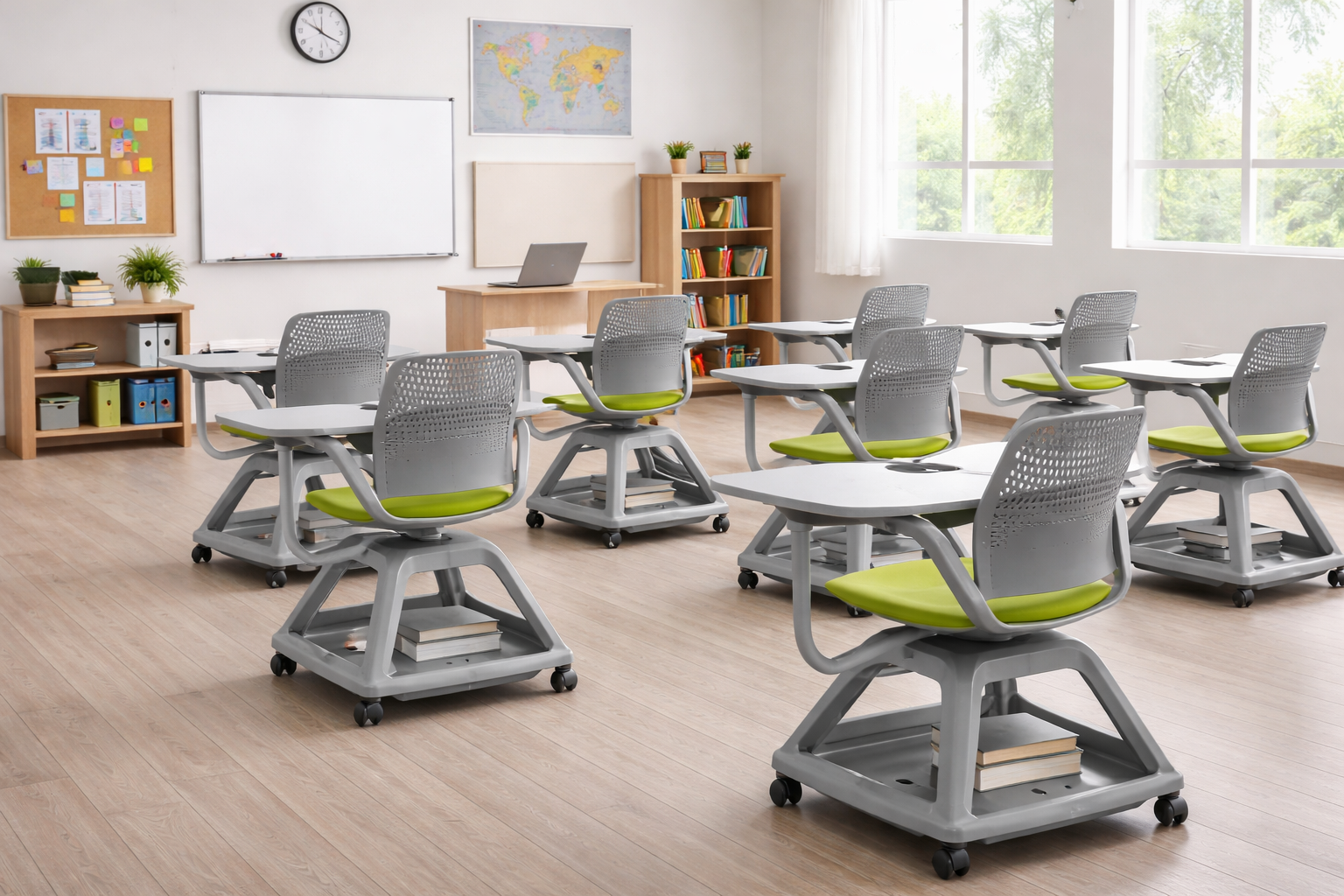
RPB Education & Public currently offers various lines of bench desks and chairs with desks suitable for classrooms, lecture halls, training rooms, and modern training spaces. A common feature of these products is their design focused on uniformity, space optimization, high durability, and good support for studying, note-taking, or laptop use over long periods. Depending on space layout needs and investment level, customers can choose from basic bench desk models to premium lines with wheels, storage compartments, or smart folding desks.
Kubin 07 Training Chair
The Kubin 07 chair is a worthy reference. This model features a backrest and seat made of high-grade virgin plastic, a fixed iron leg with electrostatic powder coating or chrome plating, accompanied by a foldable writing tablet. The armless design helps save space and makes it easy to arrange multiple chairs adjacent, suitable for classrooms, exam rooms, or training spaces needing scientific arrangement.
See more: Kubin 07 Training Chair
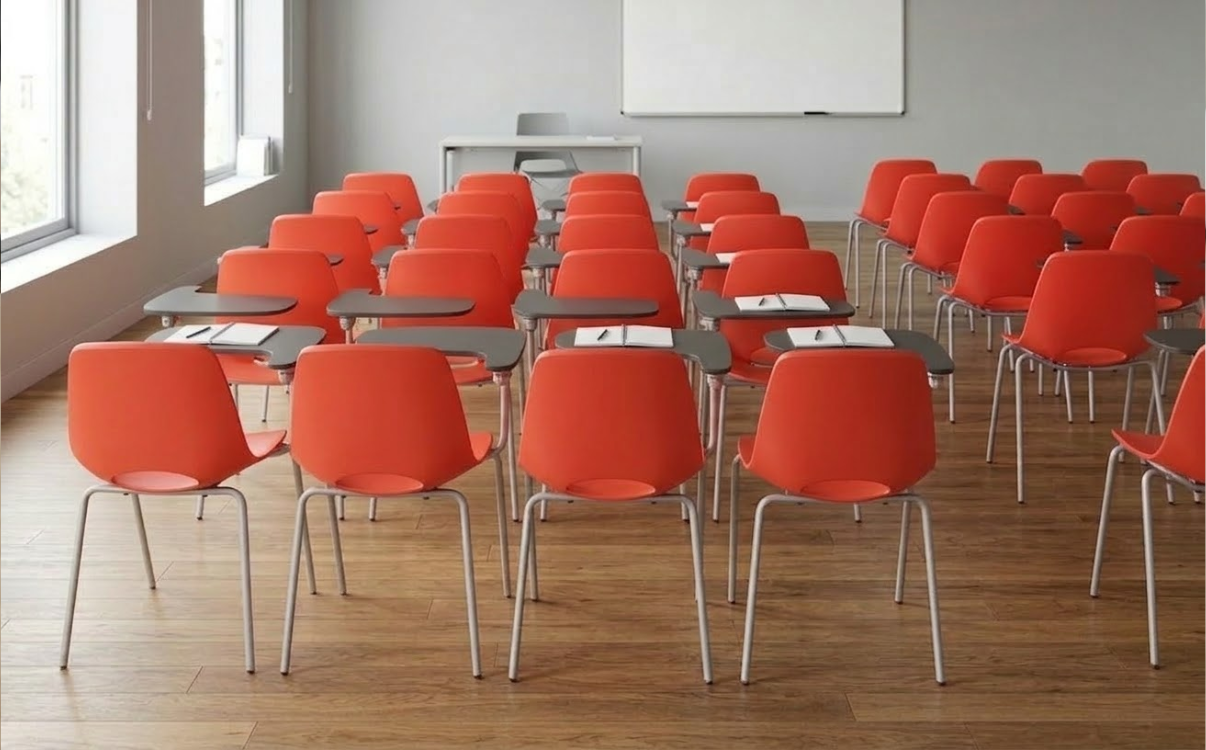
Mody 04 Training Chair
If a more flexible, mobile chair with a desk is needed, the Mody 04 Training Chair is a suitable option for interactive classrooms or multi-functional training areas. The product is equipped with an electrostatic powder-coated iron leg with 4 wheels, the backrest has a fabric-upholstered cushion for enhanced comfort during long sitting periods, and it integrates a foldable desk on the armrest for note-taking or laptop use. This chair line is suitable for modern training models that frequently change classroom layouts.
See more: Mody 04 Training Chair
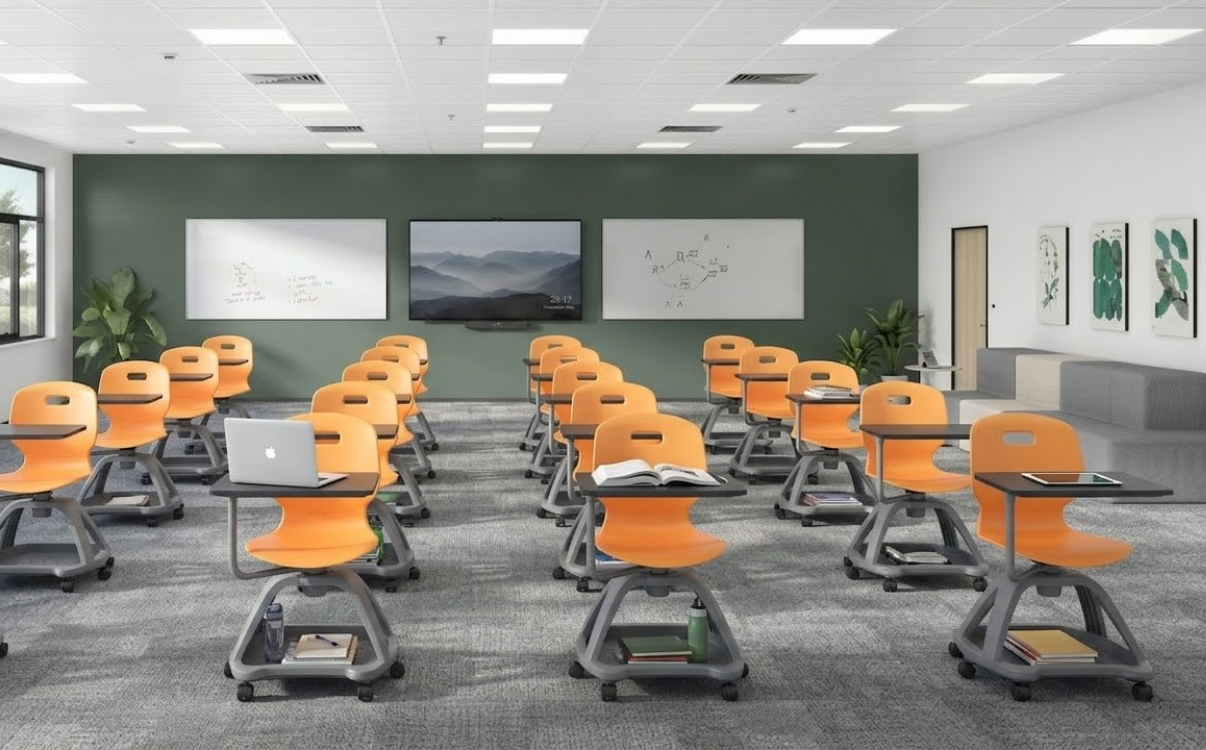
ARC Community Swivel School Chair with Writing Desk
In the modern and flexible segment, the ARC Community Swivel School Chair with Writing Desk is a standout chair-with-desk model for creative educational spaces. The product integrates a writing desk, storage compartment, and wheels, while using high-grade plastic with durable, slow-burning, antibacterial properties, and is easy to clean. Thanks to its swivel design, this chair model is suitable for open classrooms, self-study areas, or training environments needing to encourage interaction.
See more: ARC Community Swivel School Chair with Writing Desk
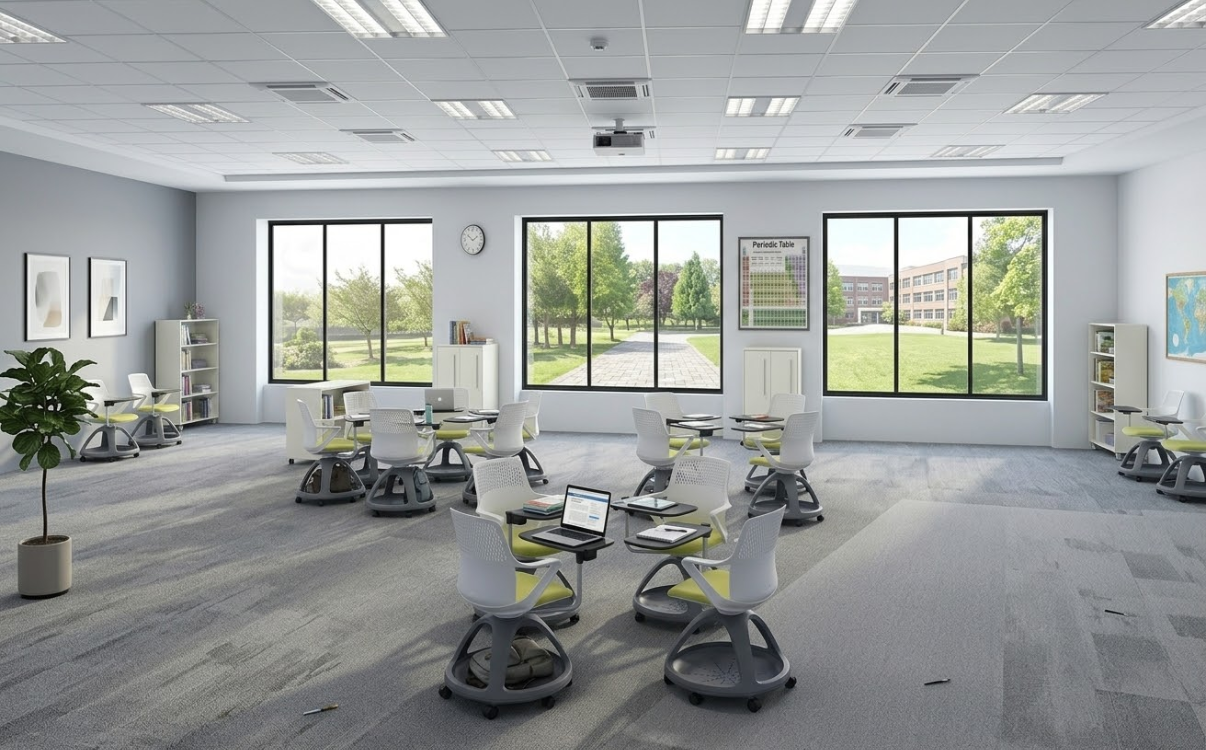
Rover 01 - 02 Smart Chair with Desk
Additionally, the Rover 01 - 02 Smart Chair with Desk line is also a suitable suggestion for learning spaces requiring high comfort. This chair model is designed with a folding desk, book/backpack tray, fixed armrests, and a 5-caster swivel base, allowing users to easily move and use it in various situations. The Mousse foam cushion upholstered in fabric or vinyl increases comfort, making it very suitable for classrooms, self-study rooms, or flexible training areas.
See more: Rover 01 - 02 Smart Chair with Desk
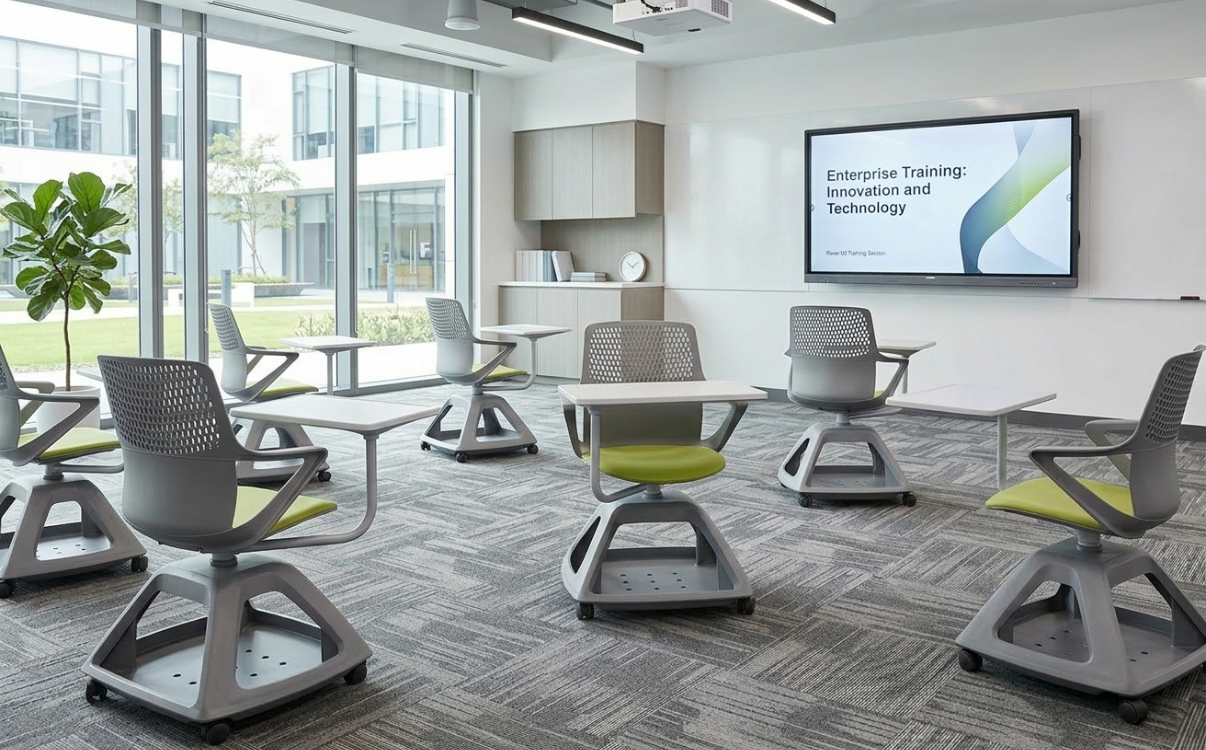
Rover 02 Smart Chair with Desk
To further enhance the user experience, the Rover 02 Smart Chair with Desk is a notable choice in the premium bench desk group. The product is designed with an A3-sized desk, a book/backpack tray, a fixed plastic backrest frame, and a 5-caster swivel base, providing convenience for both study and in-depth training. With its neat, modern design and multiple integrated utilities, the Rover 02 is suitable for corporate training centers, high-standard classrooms, or spaces requiring operational flexibility.
See more: Rover 02 Smart Chair with Desk
Practical Applications of Bench Desks
Thanks to the integrated design of seat and writing surface, bench desks are widely applied in various training models. Not only helping to optimize space, this product also creates uniformity for the space, supports better classroom management, and enhances the user experience in practice. Depending on the educational level and purpose of use, bench desks will leverage different advantages.
Bench Desks for Primary and Secondary Schools
In the primary and secondary school environment, especially from elementary to high school, the key requirement for classroom furniture is neatness, stability, and ease of management. Given that students typically use a fixed space for each study session, bench desks are a suitable solution to create a tidier and more consistent classroom layout.
Compared to separate tables and chairs, bench desks help limit the shifting of furniture during use. As a result, the classroom always maintains its arranged order, clear pathways, and is easier to clean after each school day. This is a particularly important advantage in schools with a large number of classes and high classroom usage frequency.
Besides neatness, bench desks also help schools standardize the classroom space in terms of style, color, and size. This uniformity not only brings aesthetic value but also contributes to building a professional, modern image for the educational environment. For schools aiming for a standard classroom model, investing in a suitable system of bench desks will help optimize both functionality and overall image.
At the middle and high school levels, where students must sit for longer periods and need to take notes frequently, choosing correctly sized bench desks also significantly supports posture and concentration. A model with appropriate height, a sturdy desk, and a reasonable layout will help improve the daily learning experience for students.
Bench Desks for University Lecture Halls
In university lecture halls, the most important problem is often not just seating, but how to accommodate many learners in the same space while ensuring ventilation, ease of movement, and maintaining a stable user experience. This is precisely why bench desks are very commonly used in today's lecture halls.
With learning models involving large numbers of students, row-type bench desk systems for 2 or 3 seats help utilize floor space more effectively than separate tables and chairs. This layout helps increase the number of seats within the same area while still ensuring order, aesthetics, and uniformity for the entire lecture hall. At the same time, fixed installation according to the floor plan also makes the space more stable, minimizing shifting during use.
Another advantage of bench desks in university lecture halls is that they support good design according to different elevation levels, rows, and viewing areas. When products are installed uniformly, learners have a reasonable sitting distance, a stable writing surface, and a better view towards the lectern or projection screen. This is a very important factor for academic lecture halls, where note-taking, following lectures, and using presentation equipment occur frequently.
Furthermore, premium bench desks are particularly suitable for high-quality lecture halls, international classrooms, or in-depth training spaces within universities. These models often have a more modern design, sturdier construction, and pay more attention to the long-sitting experience, thereby enhancing the long-term usage quality of the project.
Bench Desks for Corporate Training Centers
Unlike primary schools or university lecture halls, corporate training centers often aim for a modern, professional image and greater flexibility in organizing space. These are places for internal training sessions, workshops, skills classes, short-term courses, or professional coaching, so furniture not only needs to be durable but also must create a comfortable feeling and have high aesthetic value.
In this model, bench desks are a suitable choice because they meet the need for sitting, studying, note-taking, or laptop use, while also making the overall space neater and more professional. Compared to traditional tables and chairs, the integrated product helps reduce the number of furniture items in the room, thereby creating a modern feel and optimizing the space for medium or small-sized training areas.
Especially, premium bench desk lines are often prioritized in the corporate environment due to their attractive design, high-quality finish, and better user experience. Models with seat cushions, good back support, sturdy writing desks, or integrated wheels and storage trays will be suitable for classes lasting many hours or spaces needing flexible layout changes.
Besides functionality, bench desks in corporate training centers also contribute to enhancing the brand image and quality of the internal learning space. A training room that is uniformly invested in, neat, and comfortable will create a more professional impression on trainees, staff, and partners participating in the training program. This is a factor increasingly emphasized by many businesses when building an environment for internal learning and capacity development.
Bench Desk Prices in the Current Market
The prices of bench desks on the market today are quite diverse, depending on design, materials, level of finish, and integrated functionalities. For school, lecture hall, or training center projects, determining the right price segment from the outset will help the investing unit better balance the budget with long-term usage efficiency.
Popular Bench Desk Segment
In the popular segment, bench desks usually focus on basic functionality, stable durability, and the ability to deploy in large quantities. This product line is suitable for schools, general classrooms, or projects needing to optimize initial investment costs while still meeting actual usage needs.
Basic to mid-range products typically start from around 4,000,000 VND per chair. For instance, the Mody 04 Training Chair is currently listed at 4,090,000 VND, making it a suitable choice for training spaces needing chairs with folding desks, wheels, and a flexible structure while still controlling the budget.
For projects requiring large quantities, this segment is worth considering as it meets the learning functionality needs while being convenient for standardizing furniture across entire classrooms or training areas.
Premium Bench Desk Segment
Premium bench desks require a higher investment due to the use of better materials, more modern designs, and a greater focus on user experience. This segment is suitable for high-quality lecture halls, corporate training centers, high-standard classrooms, or projects aiming to elevate the image of their learning space.
Some models in the premium group currently have specific prices as follows:
-
ARC Community Swivel School Chair with Writing Desk: 4,800,000 VND
-
Rover 01 - 02 Smart Chair with Desk: 5,850,000 VND
-
Rover 02 Smart Chair with Desk: 6,450,000 VND
From these price points, it can be seen that the premium bench desk segment currently ranges from approximately 4.8 million to 6.45 million VND per chair, depending on the model and level of integrated utilities. Products in this group often have additional features such as smart folding desks, swivel bases, wheels, storage trays, better ergonomic design, or higher quality finishing materials.
Factors Influencing Bench Desk Prices
The price of bench desks depends not only on whether the product falls into the popular or premium segment but is also influenced by many specific factors during the actual selection and implementation process.
First is the material. Models using electrostatic powder-coated steel frames, high-grade plastic, comfortable seat cushions, or well-finished desktops generally have higher prices than basic lines. Besides, the design style and integrated functionalities also clearly affect the price. Models with wheels, folding desks, storage compartments, or flexible swivel designs usually belong to a higher price bracket compared to simpler structured models. This is quite evident in the price difference between the Mody 04 (4,090,000 VND) and the Rover 01 - 02 (5,850,000 VND) or Rover 02 (6,450,000 VND) lines.
Additionally, origin, brand, level of finish, order quantity, and project-specific installation requirements are also important factors. For large projects like lecture halls, synchronized classrooms, or corporate training centers, the cost can also vary depending on the installation plan, number of products, and specific design requirements.
Conclusion
Bench desks are an effective furniture solution for modern lecture halls, classrooms, and training centers. With their smart integrated design, they help optimize space, increase uniformity, reduce investment costs, and enhance the learning experience.
For projects emphasizing durability, aesthetics, and long-term usage efficiency, investing in premium bench desks is a choice worth considering. Not only providing practical use value, this product line also contributes to building a professional image for the entire training space.
If you are building or upgrading a classroom, lecture hall, or training center, choosing the right bench desk model will be an important step in creating a scientific, comfortable, and sustainable learning environment.
To explore quality bench desk models with modern designs suitable for various educational spaces, businesses can learn more at RPB Education & Public. This is a provider of educational and training furniture solutions focused on uniformity, durability, aesthetics, and effectively meeting long-term practical usage needs.
Related News

Kích thước ghế băng chờ inox, nhựa, nệm: Bảng thông số chi tiết nhất
Cập nhật bảng kích thước ghế băng chờ inox, nhựa, nệm theo 2–5 chỗ ngồi; kèm cách bố trí lối đi, chọn thông số phù hợp từng không gian như bệnh viện, trường học, văn phòng, bến xe.

What is a Stool? Classification, Uses and Standard Sizes
Learn what a stool is, popular types of stools, practical uses, standard sizes, and how to choose the right stool for your home, school, restaurant, and office.
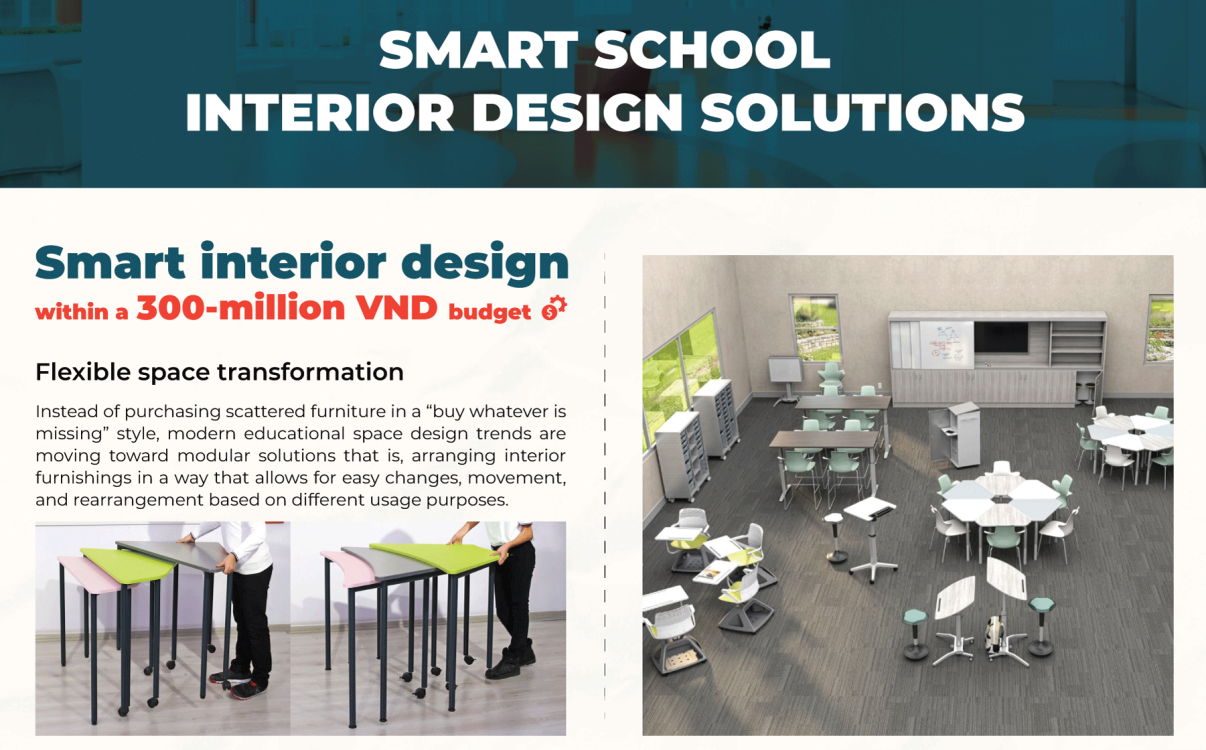
Smart Interior Design Solutions for Universities: Within a 300 Million VND Budget
Smart university interior design within a 300-million budget is not only a financial challenge but also a strategy to elevate the learning experience. With the right investment, it helps create modern, inspiring, and flexible spaces aligned with new teaching methods while optimizing long-term operating costs.