


Modern, Durable Airport Chairs for Crowded Waiting Areas
In the airport terminal environment, the waiting area is where passengers spend a lot of time before boarding, waiting for connecting flights, or completing procedures. Therefore, investing in suitable airport chairs not only meets the demand for seating but also contributes to improving service quality and perfecting a professional image for the entire facility. A properly selected seating system will help the waiting area operate more efficiently, keep the space tidy, create a comfortable feeling for passengers, and significantly reduce maintenance costs during long-term use.
In the context of increasingly high passenger traffic, chairs used for airports need to simultaneously meet many requirements such as high durability, modern design, easy cleaning, safety, and suitability for continuous usage density. This is also why airport chairs have become an important item in the design and operation process of modern terminals.
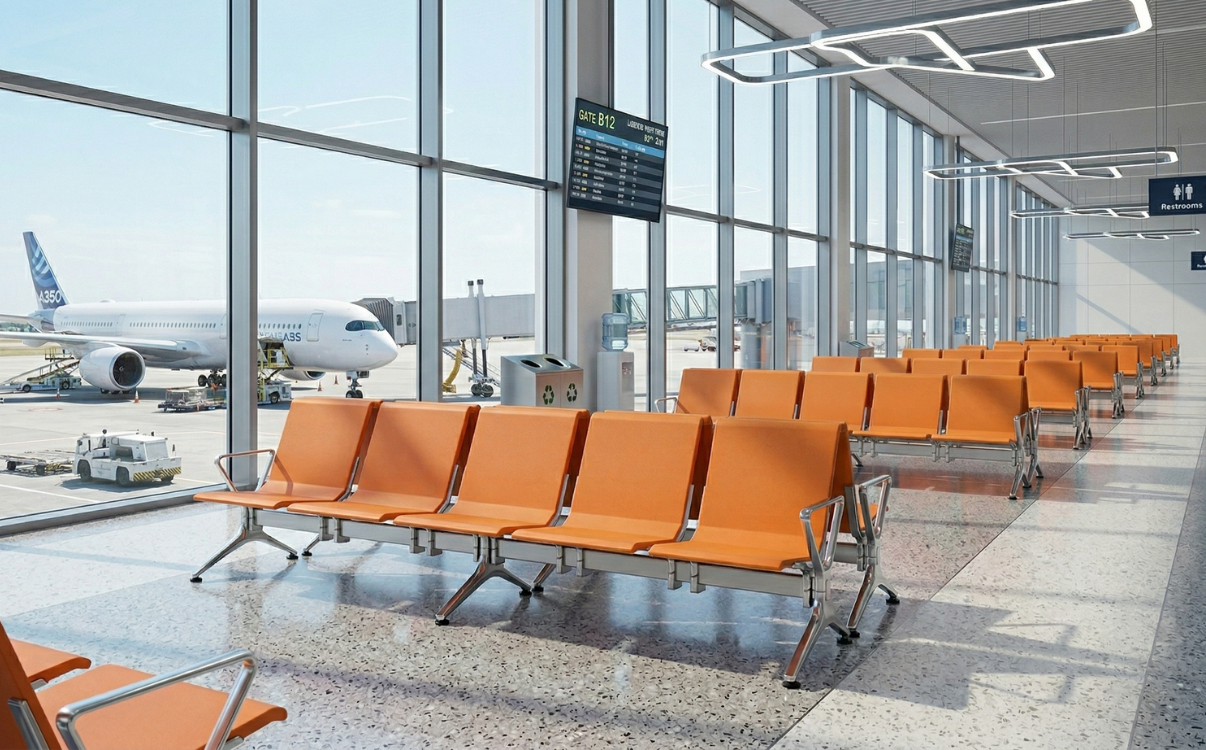
What are airport chairs? Why are they an important item in waiting areas?
Concept of airport chairs
Airport chairs are specialized seating lines designed specifically for waiting areas at airline terminals, transit zones, check-in areas, or passenger lounges. Unlike ordinary chairs, this type of chair is developed to serve public environments with very high usage density, with great demands for durability, stability, hygiene, and uniformity.
Typically, airport chairs are arranged in rows with multiple seats, have a sturdy structure, neat design, and are easy to maintain. Product design aims for long-term use under continuous operating conditions, while still ensuring a relatively comfortable seating experience for different groups of passengers.
Role of airport chairs in passenger experience
At the airport, waiting time is an experience that every passenger must go through. Therefore, airport chairs directly affect the feeling of waiting, the level of satisfaction, and the overall impression of the terminal's service quality. A waiting area arranged with reasonable, clean, modern, and sturdy chairs will help passengers feel more comfortable, especially during peak hours or when waiting times are prolonged.
Besides functional factors, chairs also contribute to building a civilized and professional image for the airport. A synchronized, tidy, and modern waiting space will create a positive impression on both domestic and international passengers, thereby enhancing the aesthetic value and perceived quality of the entire facility.
Why do crowded waiting areas need specialized chairs?
Waiting areas at airports always have a very high usage frequency, almost continuous throughout the day. This means chairs cannot just be beautiful in form but must also meet practical requirements such as good load-bearing capacity, few breakdowns, easy cleaning, and safety when used for long periods.
Additionally, the terminal needs to optimize area to arrange many seats while still keeping aisles clear and orderly. Therefore, specialized airport chairs are a necessary choice to ensure functionality, optimize space, and maintain operational efficiency in crowded public environments.
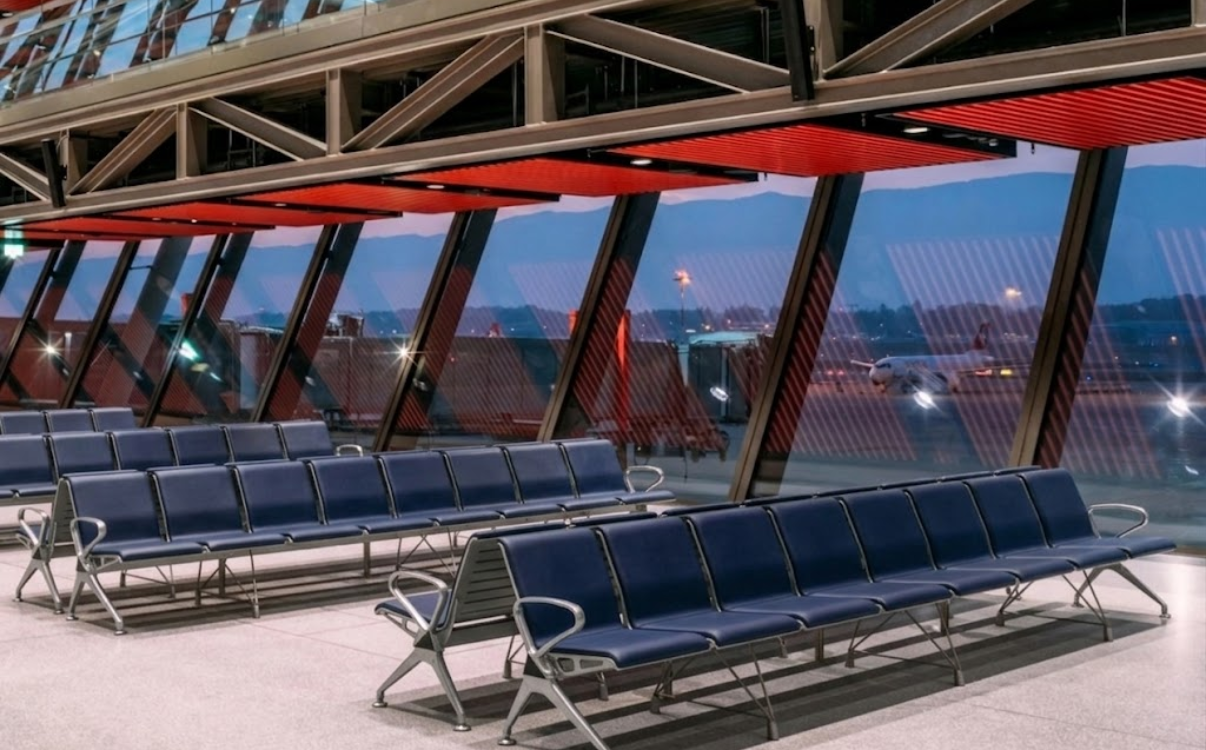
Characteristics of modern airport chairs in today's terminals
Optimal design for crowded areas
One of the outstanding features of modern airport chairs is the design of linked rows with multiple seats. This arrangement helps make good use of floor area, keeps the overall space tidy, and creates uniformity in the waiting area. Compared to individual chairs, row seating also helps limit displacement, is easy to arrange, and is suitable for environments requiring stable operation.
Thanks to optimal design, the waiting area can accommodate a larger number of seats while still ensuring aisles, movement space, and neatness for the entire terminal.
Durable materials suitable for public environments
Chairs used in airports are often manufactured from materials such as stainless steel, electrostatic powder-coated steel, engineering plastic, or specialized upholstery. These are materials with good load-bearing capacity, resistant to warping, less prone to degradation, and suitable for conditions of frequent use in public environments.
Besides durability, the materials also need to be easy to clean, resistant to dirt buildup, and maintain a beautiful appearance after long-term use. This is especially important for airports with large passenger volumes, where cleaning and maintenance work must be performed continuously.
Modern design, easy to synchronize with the overall terminal
Nowadays, airport chairs not only need to be sturdy but also must fit the modern design language of the terminal. Sleek shapes, clear lines, neutral colors or colors synchronized with the spatial identity help the waiting area look more professional.
Depending on the area such as standard waiting, business class waiting, or transit zones, chairs can be selected with appropriate designs to create differentiation while still maintaining consistency in the overall structure.
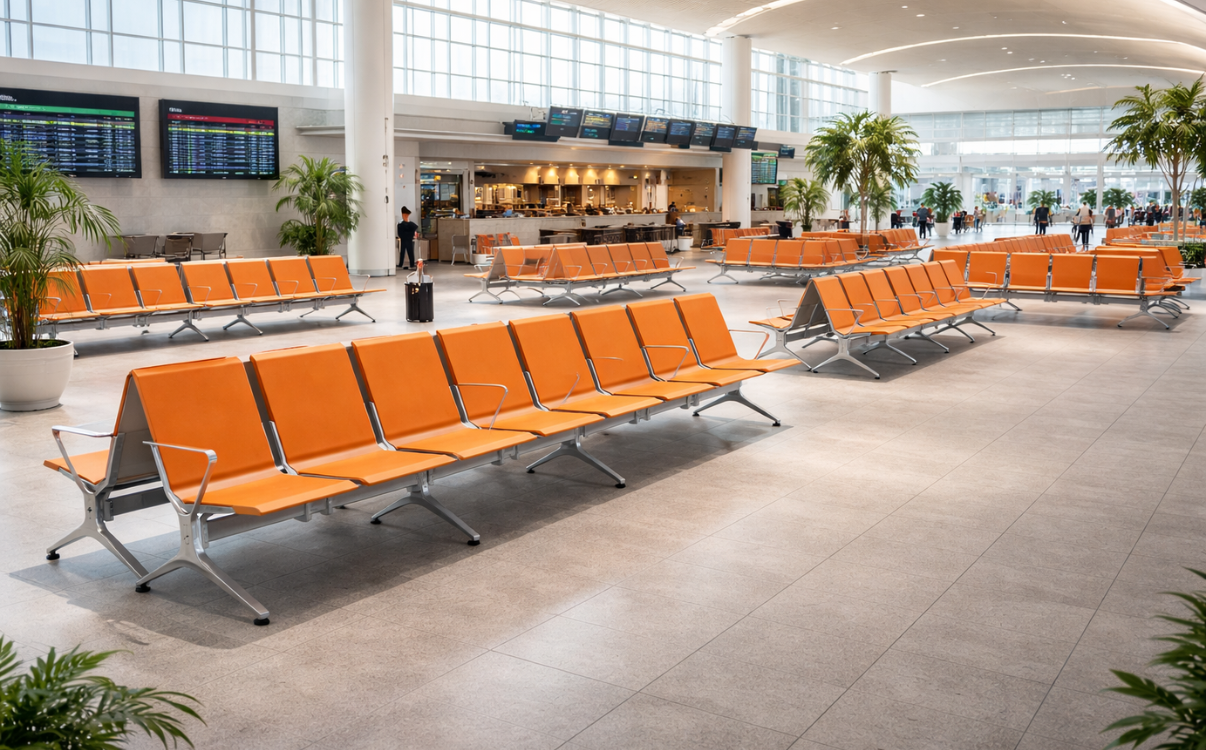
View details: Stone 04 Waiting Bench
Airport chairs with armrests separating seats
This chair line is designed with added armrests between seating positions to clearly separate seats, create a neat feeling, and assist passengers better when sitting or standing up. Armrests also help the waiting area look more professional, while enhancing the user experience for the elderly, children, or passengers needing more support.
If a chair model with clear armrests is needed for the airport waiting area, RPB Education & Public can refer to the SJ 9061-05 waiting bench. This is a 5-seat model, using Q235 steel frame, backrest and seat cushion made of high-density PU with reinforced metal frame, combined with armrests and legs made of electrostatic powder-coated aluminum. This chair model is suitable for waiting spaces that require neatness, a more comfortable feeling of use, and a more professional image in the overall terminal.
View details: SJ 9061-05 Waiting Bench
Upholstered airport chairs
For areas requiring long waiting times or higher service requirements, upholstered chairs are the appropriate solution. The cushion adds softness, creating a more pleasant feeling for the sitter. This type of chair often appears in private lounges, business class lounges, or priority areas, where passenger experience is placed first.
In this group, RPB Education & Public has the Sitto 04 waiting bench model suitable for reference. The product has 4 seats, the frame and legs are made of electrostatic powder-coated iron, while the backrest and seat cushion are covered with high-grade vinyl, both creating a softer feeling when used and convenient for regular cleaning. With modern design, neatness, and durable materials, Sitto 04 is suitable for waiting areas that need a balance between comfort, durability, and uniform spatial image.
View details: Sitto 04 Waiting Bench
Airport chairs with integrated utilities
The trend of modern terminal design increasingly prioritizes airport chair lines that can enhance the user experience, from scientific layout to the integration of additional utilities suitable for passengers during waiting time. In this group, besides factors such as small tables, charging ports, or multi-functional structures, the product also needs to ensure sustainability, easy cleaning, and a modern image to suit high-end waiting areas or transit zones with high usage volume.
At RPB Education & Public, the Silver Surf waiting bench model can be referenced for high-end and modern-oriented waiting spaces. According to information from the product page, this chair model uses solid cast aluminum for the entire structure from the backrest, seat cushion, support bars to the legs, providing high durability, good corrosion resistance, and a sleek, luxurious appearance. This is a suitable choice for airport waiting areas that need a meticulous image, durable and beautiful materials, and an enhanced user experience. For projects requiring integration of small tables or charging ports, investors can combine the selection of appropriate chair models with utility layout plans according to the terminal's overall design.
View details: Silver Surf Waiting Bench
Criteria for choosing suitable airport chairs for crowded waiting areas
For airport terminals, the waiting area always has high usage density, continuously long operating hours, and great requirements for operational stability. Therefore, when choosing airport chairs, investors need to evaluate products on many aspects rather than just looking at design or price. A suitable seating system must meet requirements for structure, user experience, cleanability, space layout capability, and the overall image of the facility. Below are important criteria to consider.
Sturdy materials, long lifespan
In a public environment like an airport, material durability is almost the deciding factor for long-term use efficiency. Chairs are used continuously every day, withstand repeated loads, and frequently come into contact with impacts from luggage, trolleys, or cleaning processes. Therefore, the frame needs to be made from materials with high stability such as steel, stainless steel, or suitable alloys, capable of withstanding force and limiting warping during prolonged operation.
Not only the frame, but the chair surface also needs good durability to maintain form and function after long-term use. A suitable chair model should have a surface that is scratch-resistant, does not fade easily, is not prone to cracking, and maintains a neat appearance even with frequent use. When materials are chosen correctly from the start, the seating system will be more stable, reduce repair frequency, and extend the usage life for the entire waiting area.
Comfortable seating design for waiting time
Passengers at the airport may only sit and wait for a short time, but there are also many cases of waiting for connecting flights, waiting for procedures, or delayed flights for many hours. Therefore, airport chairs need a design comfortable enough to support the sitter in many different usage situations. This criterion is not only related to comfort but also directly affects the quality of service experience at the terminal.
A suitable design needs a reasonable seat height for users to easily sit down and stand up, sufficient seat depth to create a stable support, and the backrest must support a natural sitting posture. Additionally, the chair should suit many passenger groups such as the elderly, those traveling with children, business travelers, or passengers who have to wait long. Comfort in design does not necessarily have to be overly sophisticated, but needs to be calculated enough to create a convenient, unrestrictive feeling of use and not cause quick fatigue when sitting for long periods.
Dirt resistance and easy cleaning capability
One very important requirement for airport chairs is that they must be suitable for a public environment with high cleaning frequency. The waiting area at the airport regularly welcomes a large number of passengers coming and going, so chairs are very prone to dust, fingerprints, water stains, or impacts from personal luggage. If the material is difficult to clean or the surface easily gets dirty, operation work will take more time and the waiting space will find it hard to maintain a clean, professional feeling.
Suitable products should have an easy-to-clean surface, low dirt retention, and withstand regular cleaning with common cleaning solutions. In the terminal environment, the ability to disinfect quickly and simple maintenance is a great advantage, helping the operation team save effort while still keeping the waiting area image always tidy and hygienic. This criterion is especially noteworthy for airports with large passenger volumes or those needing to maintain high service standards.
Optimize installation area
Terminal space always needs to be organized scientifically to both meet seating demand and ensure smooth movement flow for passengers. Therefore, when choosing airport chairs, it is necessary to carefully consider the floor plan optimization capability of each chair model. Chairs not only need to fit in terms of dimensions but also must support reasonable layout according to each functional area such as general waiting areas, gate areas, transit areas, or priority areas.
A good seating system will help arrange the waiting space more neatly, create clarity in seating distribution, and limit the feeling of chaos when passenger numbers increase. At the same time, chairs also need to be calculated so as not to obstruct aisles, not take up too much usable area, and still ensure movement distance between rows. When installation area is optimized, the waiting area will operate more efficiently, be easier to organize, and create an airy feeling for passengers.
Safety during use
Safety is an indispensable criterion for any item in a public facility, especially at an airport. Airport chairs need a sturdy, stable structure and minimize shaking during continuous use. This is very important in the context where the waiting area always has large foot traffic, passengers sit down and stand up frequently, and chairs must withstand repeated pressure over long periods.
Besides structural stability, finishing details also need to be handled carefully to avoid causing discomfort during use. Chair edges, rounded corners, armrests, connection points, or contact positions with users need to be safely designed, not rough, without details that cause pinching or inconvenience when sitting long. A seating system that ensures safety not only helps users feel more secure but also minimizes potential risks during daily operation.
Aesthetics and uniformity
In modern facilities, chairs are not just equipment serving function but also part of the spatial image. For an airport terminal, airport chairs need to harmonize with the common design language to contribute to creating a professional, civilized waiting area with high recognizability. From color, design to layout, everything should be considered to suit the overall architecture and operating style of the airport.
Uniformity is also shown in the ability to coordinate chairs with other functional areas such as check-in counters, boarding waiting areas, business areas, short rest areas, or transit areas. When chairs are chosen with the right style, the terminal space will feel much more meticulous and modern. This is also a factor that contributes to enhancing the service image, helping passengers more clearly perceive professionalism right from the waiting area.
Benefits of investing in high-quality airport chairs
Investing in high-quality airport chairs is not only a solution to supplement seating for passengers but also brings many practical values to the entire waiting area. In the terminal environment with large user volume, continuous operating hours, and high requirements for service image, a good seating system will contribute to improving user experience, reducing operational pressure, and perfecting the professional appearance of the facility. This is an item that seems simple but has a direct impact on passenger perception as well as the long-term operational efficiency of the airport.
Enhance passenger experience
One of the clearest benefits of investing in high-quality airport chairs is helping passengers feel more comfortable during waiting time. At the airport, waiting time can last from a few minutes to many hours, especially in cases of connecting flights, delayed flights, or waiting for procedures. Therefore, a sturdy, stable chair system with reasonable design will help sitters reduce fatigue, reduce discomfort, and create a more pleasant mentality during the waiting process.
This comfort comes not only from the feeling of sitting but also from the way chairs are arranged uniformly, neatly, and suitably for the surrounding space. When passengers have stable, clean, and convenient seats, they will more clearly perceive the quality of service at the terminal. This is a very important factor in creating a positive impression, especially for airports with large international passenger volumes or those wanting to improve overall service standards.
Additionally, a well-invested waiting area also demonstrates care for user experience. This helps passengers appreciate more the professionalism, meticulousness, and operational quality of the airport right from seemingly very small details. In practice, passengers' positive perception of the waiting area can significantly impact the overall impression of the entire journey.
Increase durability and reduce maintenance costs
For public facilities with high usage frequency like airports, product durability is always a factor that needs to be prioritized. When choosing high-quality airport chairs, investors will get a seating system with sturdy structure, good load-bearing capacity, and few breakdowns during long-term use. This is especially important for waiting areas that operate almost continuously every day, where chairs must withstand repeated pressure with great intensity.
Chairs with high durability will help limit shaking, cracking, heavy scratching, or rapid degradation after a short period of operation. Thanks to that, the operating unit does not have to frequently repair or replace individual chair clusters, thereby significantly saving maintenance costs and reducing pressure on facility management. This is a very practical benefit, especially for airports with large areas and many installed chairs.
Besides, investing in the right product from the start also helps reduce the frequency of periodic replacement. Instead of continuously handling small arising defects or partial replacements affecting overall aesthetics, investors can maintain a uniform, stable seating system and operate effectively for a long time. Overall, this is a much more economical investment method than choosing low-priced products that degrade quickly.
Complete modern appearance for the terminal
Besides functionality, airport chairs are also an important part of the overall image of the waiting area. A seating system invested uniformly in design, color, and layout will make the space tidier, more civilized, and more professional. In the context of modern terminals increasingly focusing on spatial experience, chairs are not only a place to sit but also a factor contributing to shaping the service appearance of the entire facility.
A waiting area with meticulous design and a modern chair system will create a feeling of order, cleanliness, and better organization for passengers. This is especially important at large airports, where the terminal image is often linked to service quality and the level of investment in the facility. A well-completed waiting space will enhance the overall aesthetic value, while creating a positive impression on passengers, partners, and related operating units.
Furthermore, choosing high-quality chairs also helps increase the long-term image value for the terminal. When chairs maintain a durable and beautiful appearance, degrade little, and fit the overall architecture, the waiting area will always retain a modern feeling over time. This is an important benefit for facilities that want to build a professional, friendly image and meet increasingly high service standards in the aviation industry.
[For airport spaces using beautiful waiting benches using Turini chairs]{.mark}
Common mistakes when choosing airport chairs
In terminal projects, the waiting area is often invested in with the orientation of optimizing functionality, aesthetics, and long-term operational efficiency. However, in reality, many units still make basic mistakes when choosing airport chairs, leading to products not meeting usage needs, degrading quickly, or causing difficulties during operation. These mistakes not only affect passenger experience but also increase operating costs and reduce the overall quality of the waiting space.
Focusing only on price while ignoring durability
This is the most common mistake when choosing airport chairs for public areas. Many units tend to prioritize low prices to reduce initial investment costs, but have not fully assessed the actual durability of the product. In the airport environment, where chairs are used continuously with high frequency, products with average quality or weak structure usually degrade very quickly.
When chairs lack sufficient durability, problems such as weak frames, scratched surfaces, peeling details, or local damage will appear sooner than expected. This forces the management unit to incur additional repair costs, partial replacements, or even complete replacement after a short time. If calculated over the product's lifespan, the option of choosing cheap chairs with low durability usually does not bring real economic efficiency.
Besides cost factors, rapid chair degradation also significantly reduces the professional image of the terminal. A waiting area with old, damaged, or non-uniform chairs will create a feeling of neglect, directly affecting passenger impression. Therefore, choosing products based solely on selling price is an approach that easily leads to unsustainable decisions.
Choosing chairs unsuitable for usage density
Another common mistake is choosing chairs based on aesthetic perception of models without properly relying on the actual usage intensity of the installation area. Each waiting space in the airport has different usage levels, from crowded general waiting areas, gate areas, transit areas, to priority waiting spaces. If using a chair type unsuitable for the operational density, the product will quickly reveal its limitations.
For example, a chair model suitable for an office area or small waiting area may not necessarily meet needs well in a crowded terminal area. When chairs are not sturdy enough, not stable enough, or not designed for a continuous use environment, the degradation rate will be much faster than initial calculations. This not only reduces product lifespan but also causes the waiting area to lose the necessary stability and comfort.
Besides, chairs unsuitable for passenger volume also reduce user experience. Passengers may feel inconvenient, cramped, or uncomfortable if the chair does not meet the need to sit and wait during many peak hours. Therefore, correctly assessing usage density is a very important step before deciding to choose a product.
Ignoring cleaning and maintenance factors
In the airport environment, the hygiene factor is not only related to appearance but also directly affects daily operational quality. However, many units when choosing airport chairs only focus on form or structure without paying due attention to the product's cleanability and maintainability. This is a major omission, especially for areas with continuously circulating passenger volume.
If the chair material is prone to dirt, difficult to clean, or has many complex details, the operation team will spend more time on periodic cleaning. In conditions where the terminal operates almost continuously, this increases pressure on maintenance work and can cause the waiting area to quickly degrade in appearance if not handled regularly. For crowded airports, this is a problem that very clearly affects service image.
Additionally, some chair models with structures that are difficult to disassemble, hard to replace components, or hard to inspect periodically will also cause great inconvenience during long-term use. When maintenance or partial replacement is needed, time-consuming handling can affect the common operation of the waiting area. Therefore, ignoring cleaning and maintenance factors is a mistake that easily causes operating costs to increase over time.
Design not synchronized with terminal space
Many investors focus on choosing chairs based on technical specifications but have not paid due attention to the suitability between chairs and the overall space design. In reality, airport chairs are not just equipment for sitting but also an important part of the terminal's appearance. If choosing a chair model that does not harmonize with the architectural style, color, or spatial organization, the overall waiting area will become disjointed and lack professionalism.
Lack of uniformity can come from many factors such as chair design being too stiff or too monotonous compared to the modern space, colors not matching the common identity, or layout not suitable for each functional area. This makes it difficult for the terminal to create its own impression and reduces the overall aesthetic value of the facility.
In a competitive environment regarding service quality, spatial image plays a very large role in creating an impression on passengers. A waiting area invested in uniformly will convey a feeling of civilization, meticulousness, and modernity much more than a space using disjointed, inconsistent chairs. Therefore, disregarding design uniformity is a mistake that is easy to encounter but also very worth avoiding.
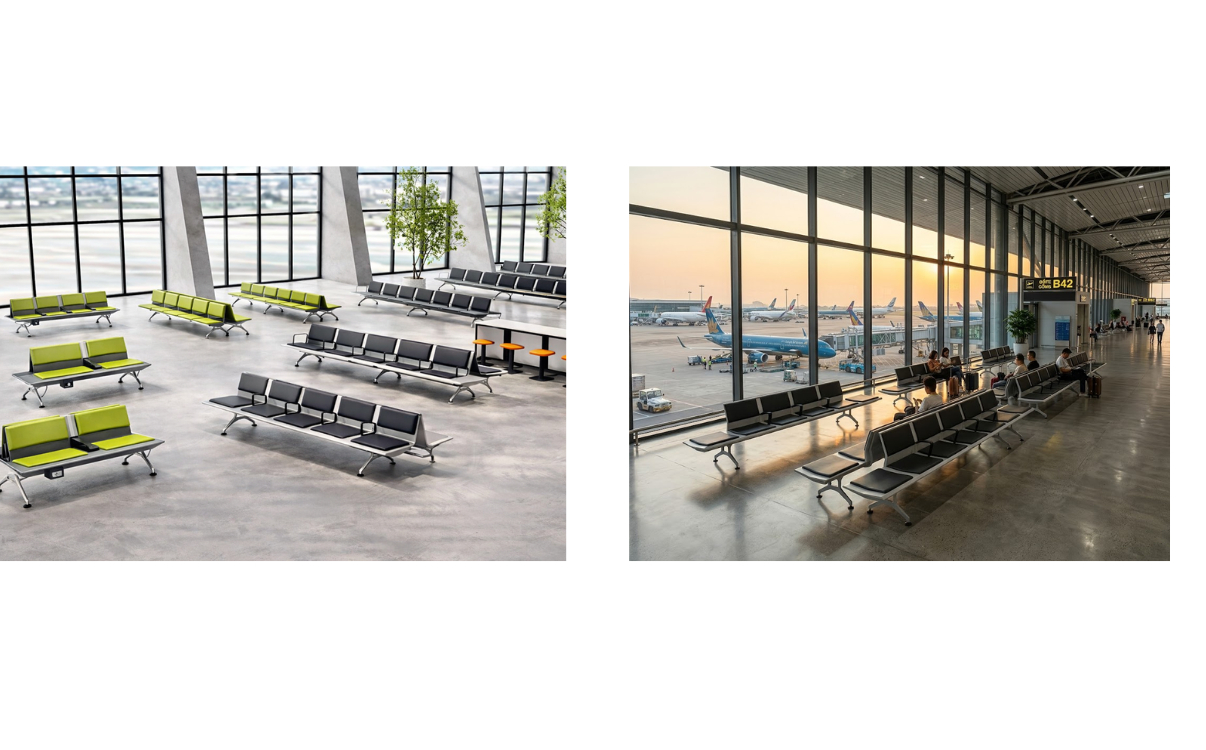
Experience in choosing a reputable airport chair supplier
Besides choosing the right product, selecting the right supplier is also an important factor deciding the quality and investment efficiency of the entire airport chair system. A reputable unit not only sells products but also has the ability to advise, propose suitable solutions, and accompany the investor during the implementation process. To choose the right partner, you can refer to the following experiences.
Have experience with large-scale public projects
The first criterion to consider is the supplier's practical experience in large-scale public projects. The airport is an environment with very specific requirements regarding usage density, uniformity, maintainability, and finishing quality. A unit that has participated in similar projects will better understand these demands and have the ability to propose solutions suitable for actual operation.
Experience is not only shown in the number of projects completed but also in the ability to grasp the characteristics of each waiting area. An experienced supplier will usually advise better on how to choose chair types, layout plans, usage zoning, and investment orientation suitable for each project scale. This is a great advantage that helps investors limit risks during the selection process.
Products have clear specifications
A reputable supplier always needs to have a transparent and specific product information system. For airport chairs, factors such as materials, dimensions, load capacity, structural type, installation method, and finishing characteristics all need to be clearly presented. This is an important basis for investors to compare options, check suitability levels, and make more accurate decisions.
Clear specifications also help the working process between parties such as design, construction, and operation to be more convenient. When the product has a complete technical dossier, inspection, acceptance, and actual implementation also become more transparent and professional. Conversely, if information is vague or lacks detail, the risk of errors arising during ordering and installation is very high.
Have synchronized installation and warranty solutions
A good supplier does not stop at delivering products but also needs the ability to provide end-to-end support. For airport waiting area projects, synchronization in consulting, installation, and warranty is a very important factor. This helps investors not have to work separately with many different parties and ensures the product is implemented according to the initial orientation.
A reputable unit will usually support from the needs survey stage, layout plan consulting, proposing suitable product lines, to practical installation guidance. After handover, a clear warranty policy and the ability to provide technical support when needed are also differentiating factors. This is very noteworthy for facilities with a large number of chairs and requirements for stable operation over a long period.
Reasonable price corresponding to long-term usage quality
When choosing an airport chair supplier, price is always a factor to consider, but should not be the sole criterion. More important is to evaluate the correlation between price and actual usage value in the long term. A product with a reasonable price, good durability, few breakdowns, and easy maintenance will bring higher economic efficiency than a low-priced product that degrades quickly.
Instead of just comparing initial investment costs, investors should look at the total cost of ownership throughout the usage process, including product lifespan, maintenance frequency, component replaceability, and operational stability level. This is the appropriate evaluation method for public facilities with long-term usage requirements like airports.
Conclusion
It can be seen that airport chairs are an important item in enhancing passenger experience and perfecting the quality of the waiting space at the terminal. A properly selected seating system not only meets the seating demand in crowded areas but also contributes to creating a modern, civilized, and professional image for the entire facility.
When choosing chairs for the airport, investors need to pay special attention to factors such as structural durability, modern design, ease of cleaning, functional optimization, and long-term cost efficiency. These are criteria that directly determine product lifespan, stable operation capability, as well as the actual perception of passengers during waiting time.
Investing in the right airport chair solution from the start will help the waiting area be arranged more scientifically, operate more durably, and create a better impression of service quality. At the same time, this is also a way to help the terminal reduce maintenance pressure, limit replacement arising, and maintain a uniform appearance throughout the operation process.
If you are looking for a modern, durable airport chair solution for crowded waiting areas, please contact RPB Education & Public for advice on suitable solutions, receive detailed quotes, and choose the optimal chair model according to each actual waiting area. With the orientation of providing solutions for public facilities, RPB Education & Public will be a partner supporting you to build a more professional, comfortable, and sustainable waiting space.
Related News


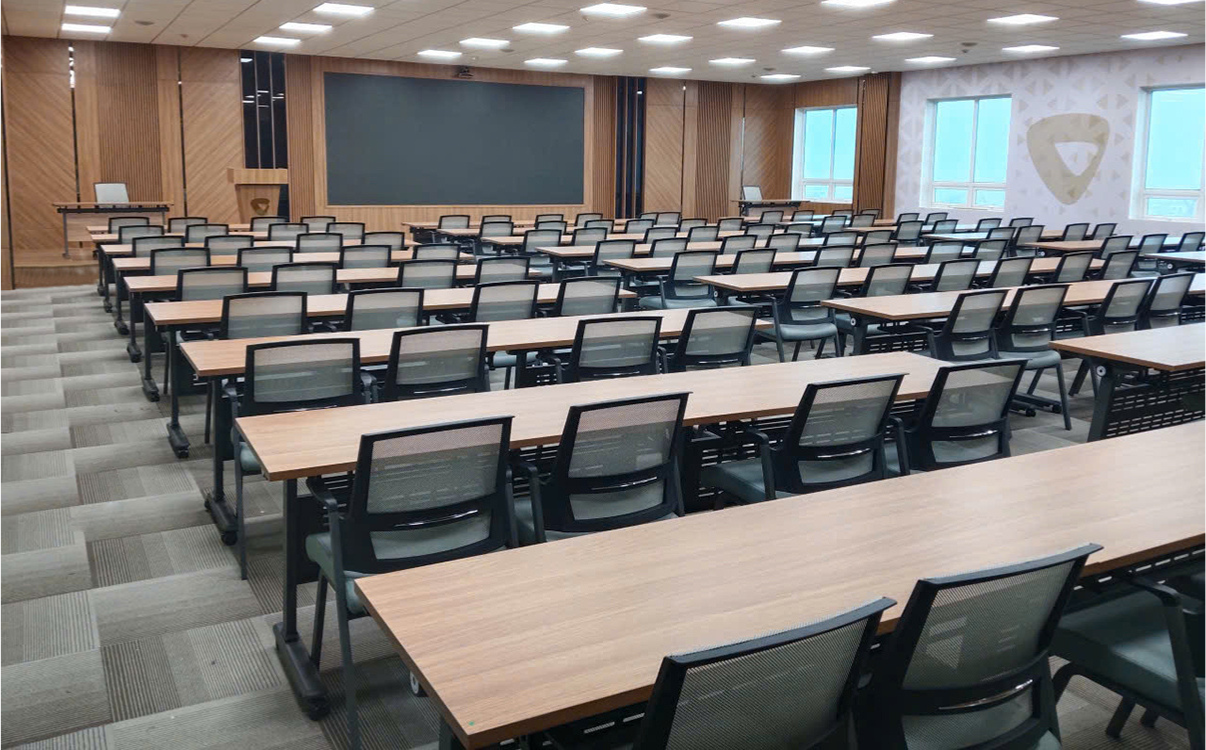
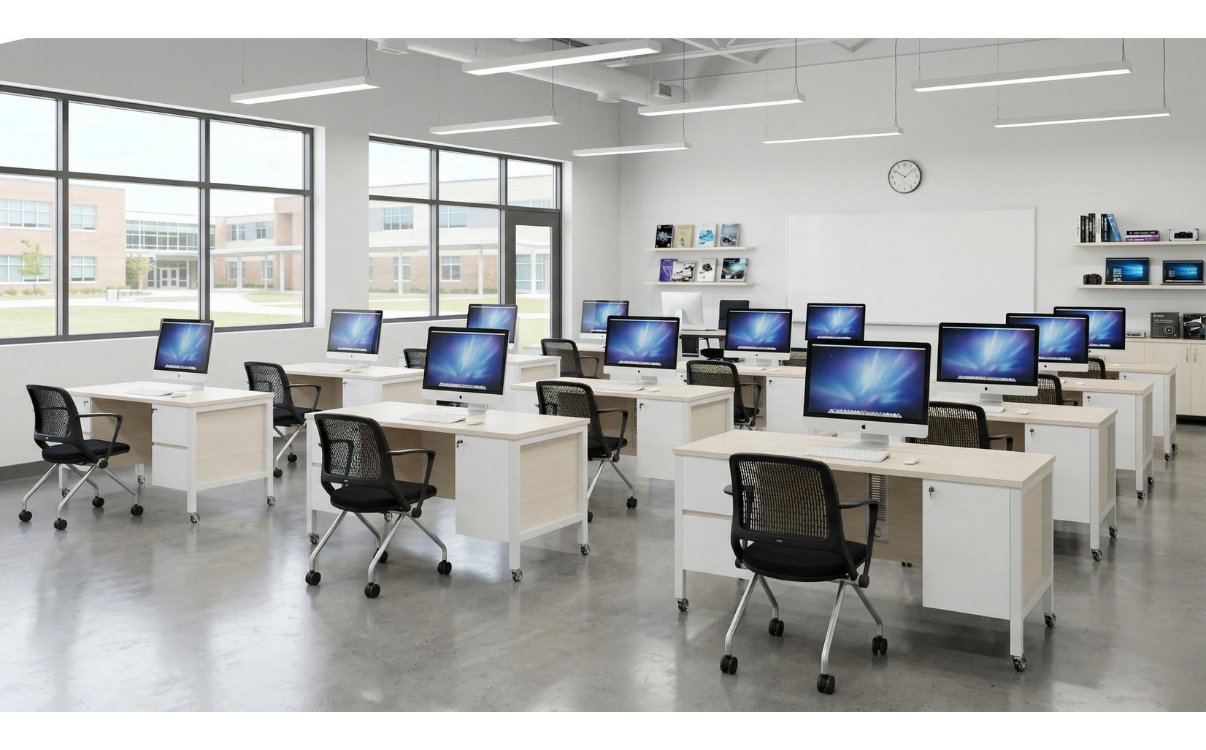
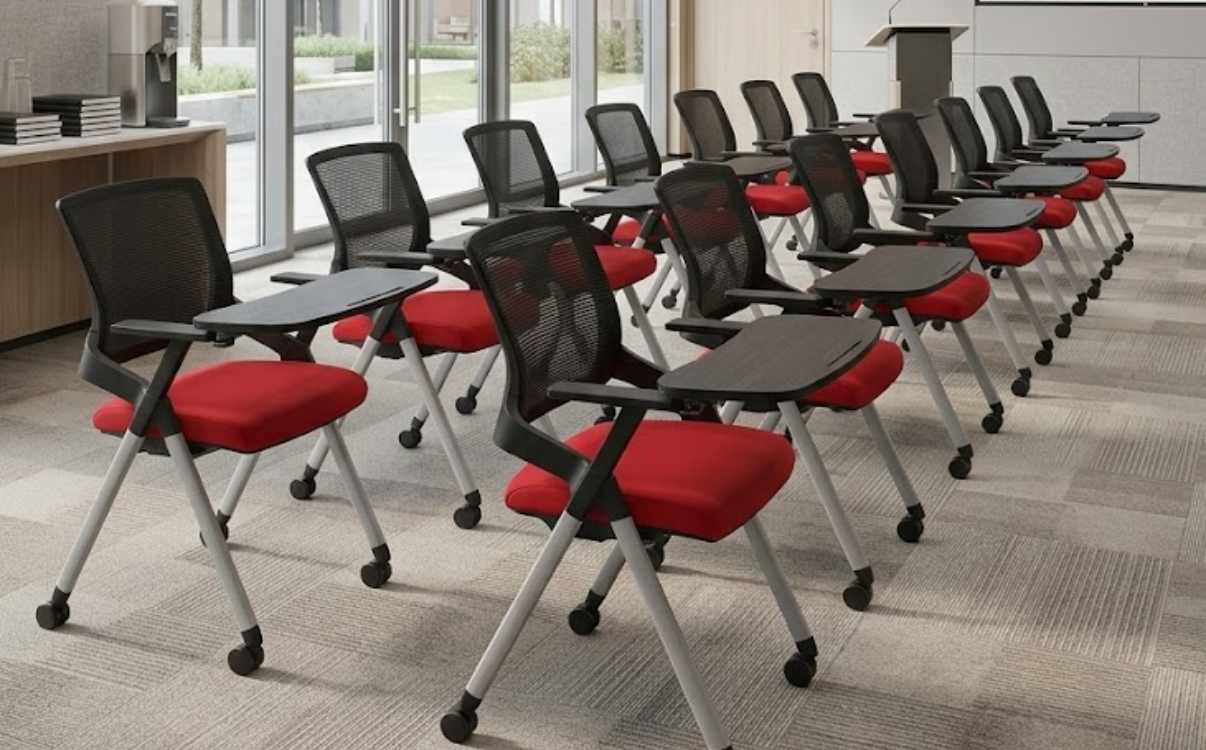
5+ Quality Training Chair Models at RPB Education & Public
Suggestions for outstanding training chair models at RPB Education & Public, from training chairs with tablets, training chairs with casters to premium lines; suitable for classrooms, training rooms, and modern training spaces.
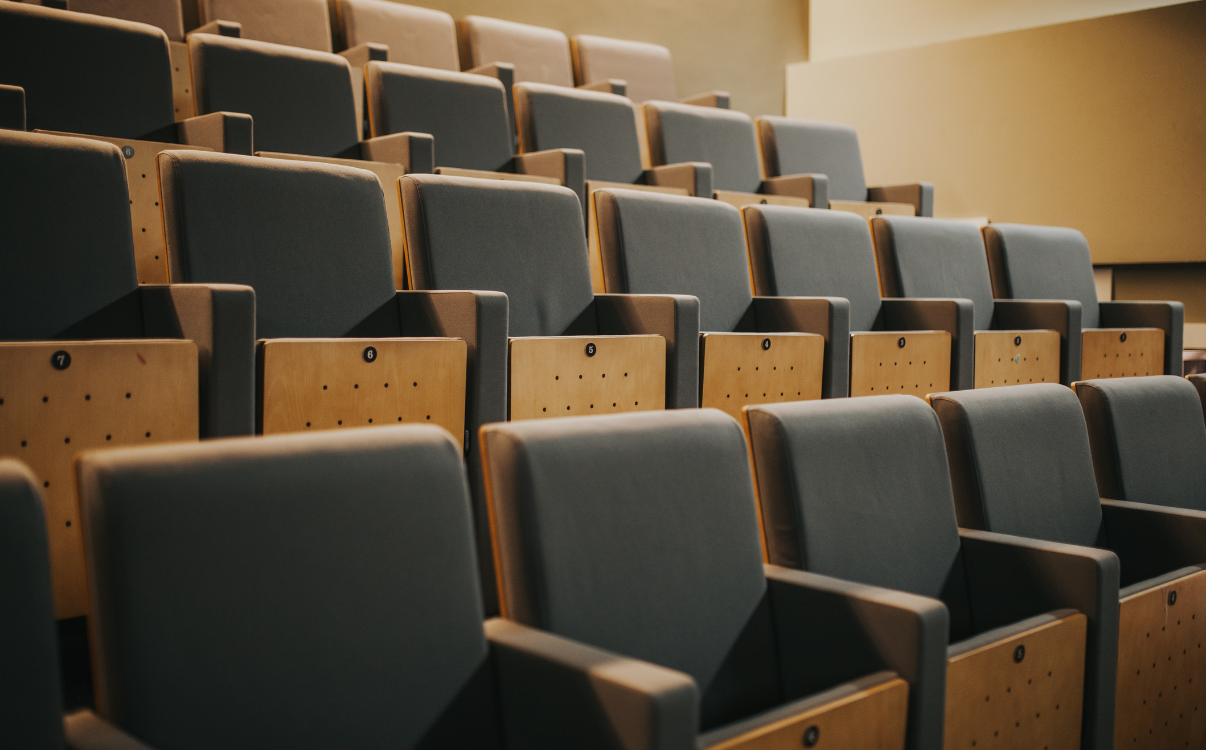
Auditorium Chairs - Standard Design for Halls and Event Centers
Explore auditorium chairs by material, function, and usage space; from wooden auditorium chairs, fabric-upholstered types to those with writing tablets, along with a guide on choosing the right auditorium chair dimensions.
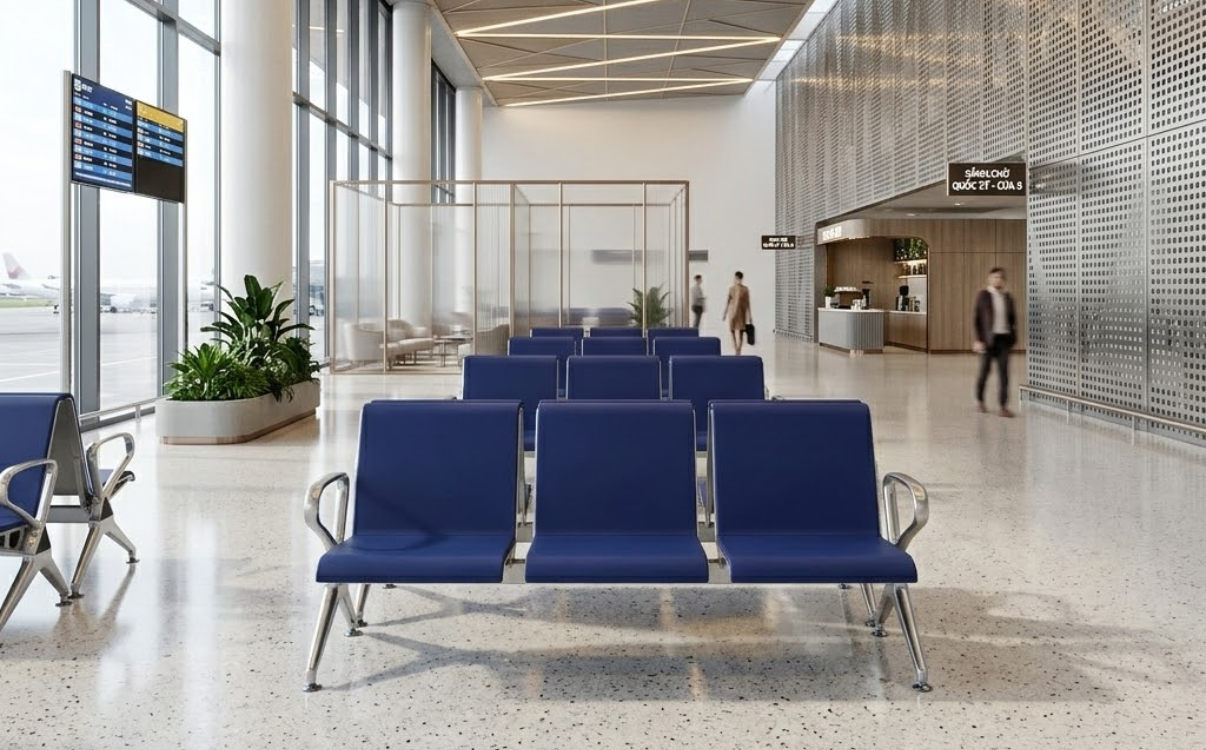
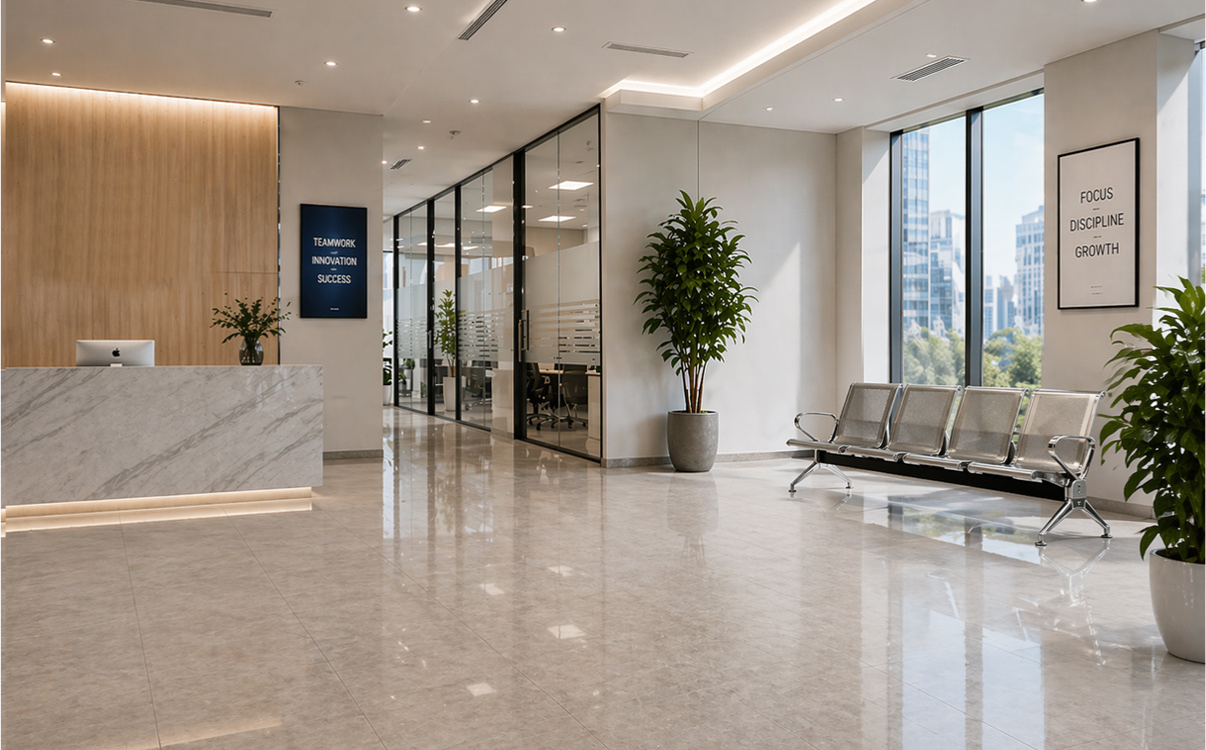
Lobby Chairs – Seating Solutions for Public Areas
Durable, highly aesthetic lobby chair solutions for hospitals, schools, airports, and public buildings. Suitable for large-scale project installations.
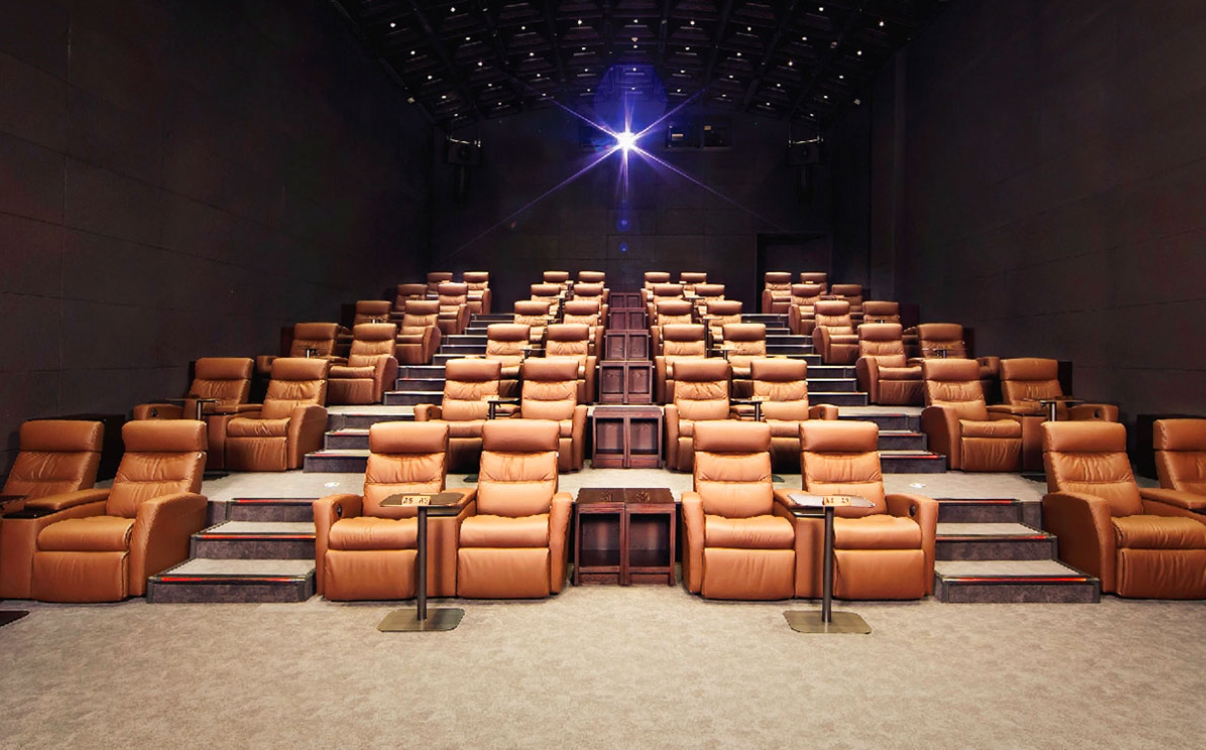
Gold Class Seat – Standard of Luxury Cinema Seats
Gold Class seats feature premium design, superior comfort, delivering a classy movie-watching experience and elevating the luxurious atmosphere of cinema spaces.
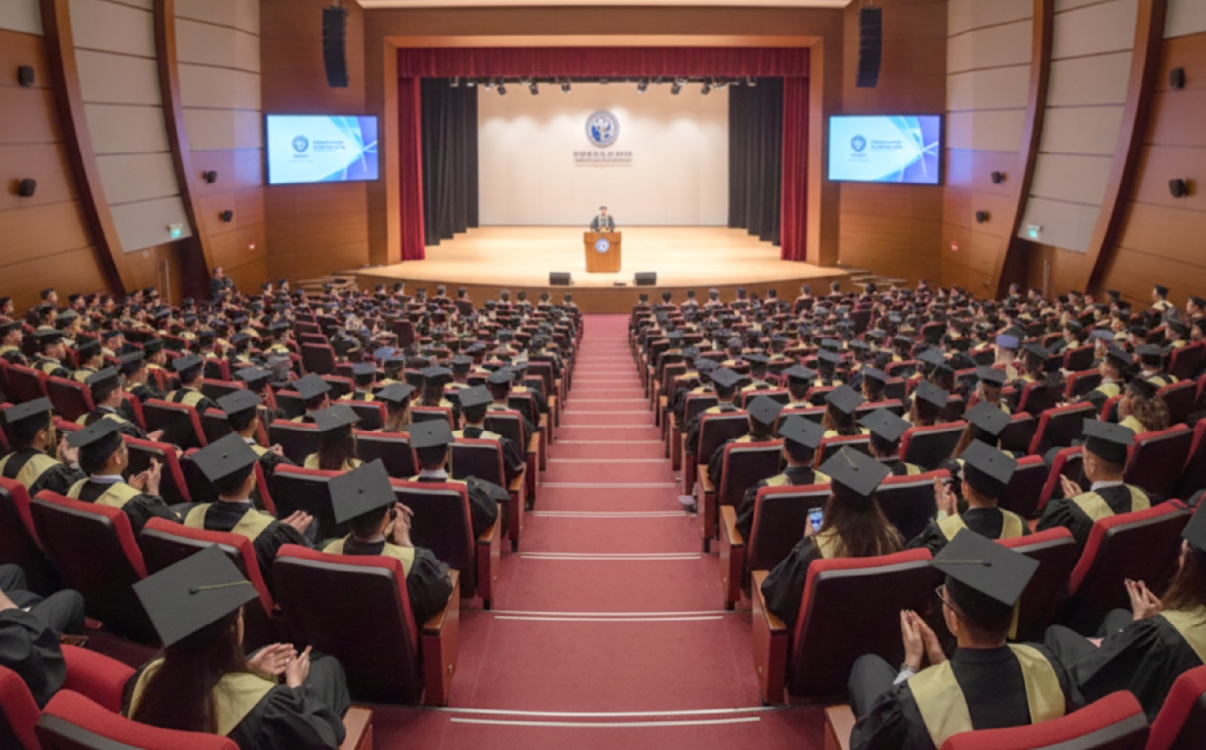
Modern School Auditorium: Where Knowledge and Emotion Converge
A school auditorium is more than just a large room. The auditorium is always a special space where opening ceremonies, year-end summaries, professional seminars, inspiring talk shows, cultural evenings, and emotional graduation ceremonies take place. Therefore, school auditorium furniture must not only provide sufficient seating but also effectively support both the transmission of knowledge and the nurturing of emotion.

RPB Education & Public Multi-functional Stadium Seating, a Symbol of Durability and Sporting Pride
In every stadium, gymnasium, school grandstand, or sports center project, the stadium seating component is always one of the tasks that is both detailed and strategic. For contractors, design consultants, and investors, choosing multi-functional stadium seating is not simply about finding a chair that is "sit-able," but rather a balancing act between durability, safety, audience experience, operational costs, and the long-term brand image of the facility.
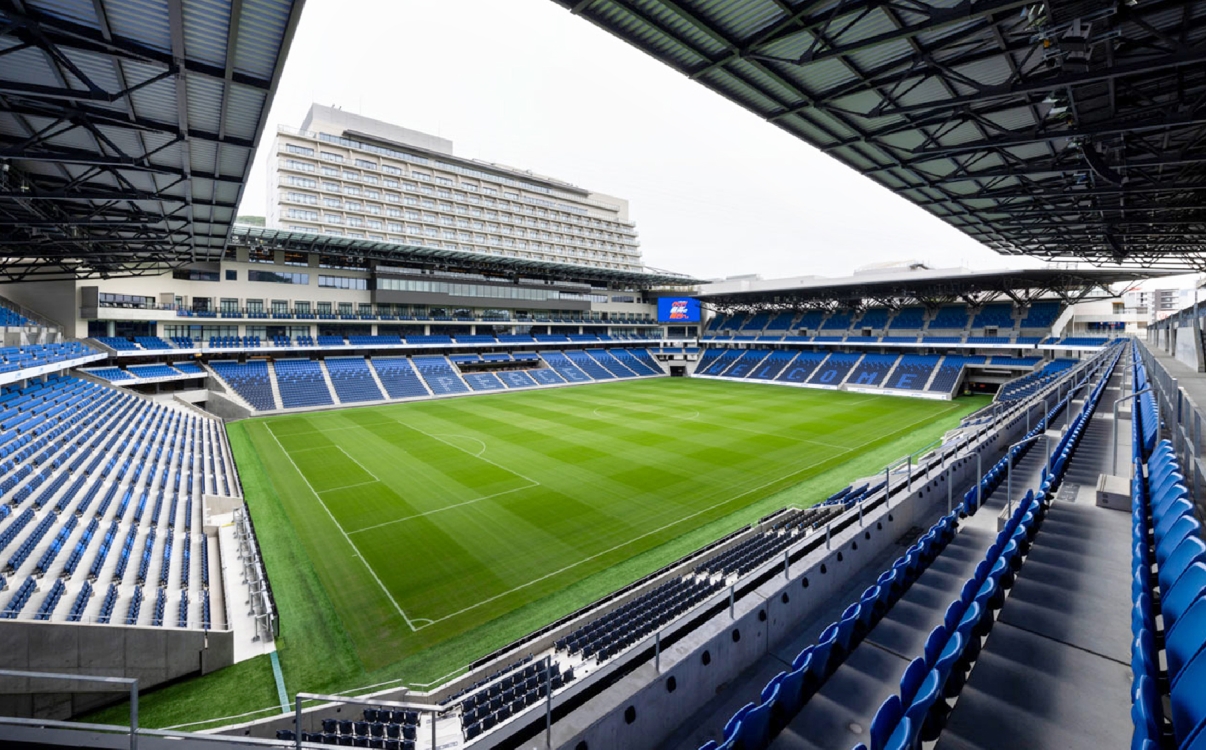
Multi-functional Stadium Seating, UV-Resistant, High Load-Bearing Capacity, Ready to Join You in Every Match
In projects for stadiums, gymnasiums, school grandstands, or sports centers, the choice of stadium seating has never been merely about functional sitting. For investors, contractors, and design consultants, every decision regarding multi-functional stadium seats or mobile grandstand seating is tied to safety, durability, audience experience, operating costs, and the brand image of the facility.

RPB Education & Public Stadium Seating: Where Emotion Resonates with Victory
In every match, people often remember the beautiful goals, the stunning saves, or the moment the championship cup is lifted. But behind those moments of overwhelming emotion, there is always a solid foundation quietly supporting them: these are the rows of stadium seating, where thousands of hearts beat in unison.

Durable in every frame, steadfast with the spirit of sports
Amidst the passionate atmosphere of the stadium, every cheer from the stands, every pass, every sprint, and every moment of emotional outburst is captured and supported by the seating. Stadium seats and multi-purpose grandstand chairs are not just where fans sit to watch the game; they are the launchpad for the spirit of sports and the solid foundation for those overflowing emotions. A seating system designed to be durable, safe, and aesthetically pleasing is an indispensable component of any sports facility aiming to establish its class, from school football fields and multi-purpose arenas to local stadiums and professional sports complexes.
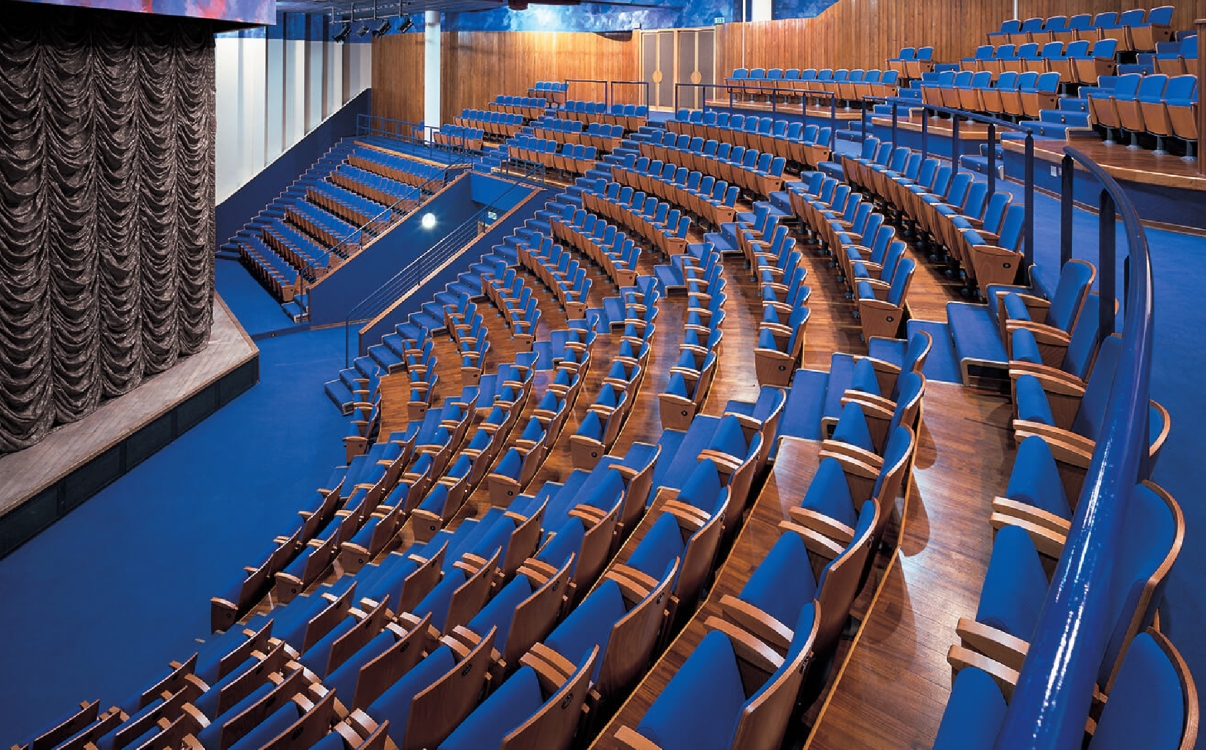
The difference is found in every detail: durable, sophisticated, and internationally compliant
In today's competitive landscape, high-level managers, business owners, principals, and government leaders all understand that the workspace, conference area, and reception space are the 'silent language' reflecting the organization's vision and caliber. An auditorium, conference room, or public space invested in to the correct standard not only serves daily operational needs but also creates an impression of professionalism, credibility, and commitment to quality. In such a space, every detail, from lighting and acoustics to the public seating system, contributes to establishing the brand image. The true difference always begins with seemingly minor details that are nonetheless designed for durability, sophistication, and compliance with rigorous international standards.
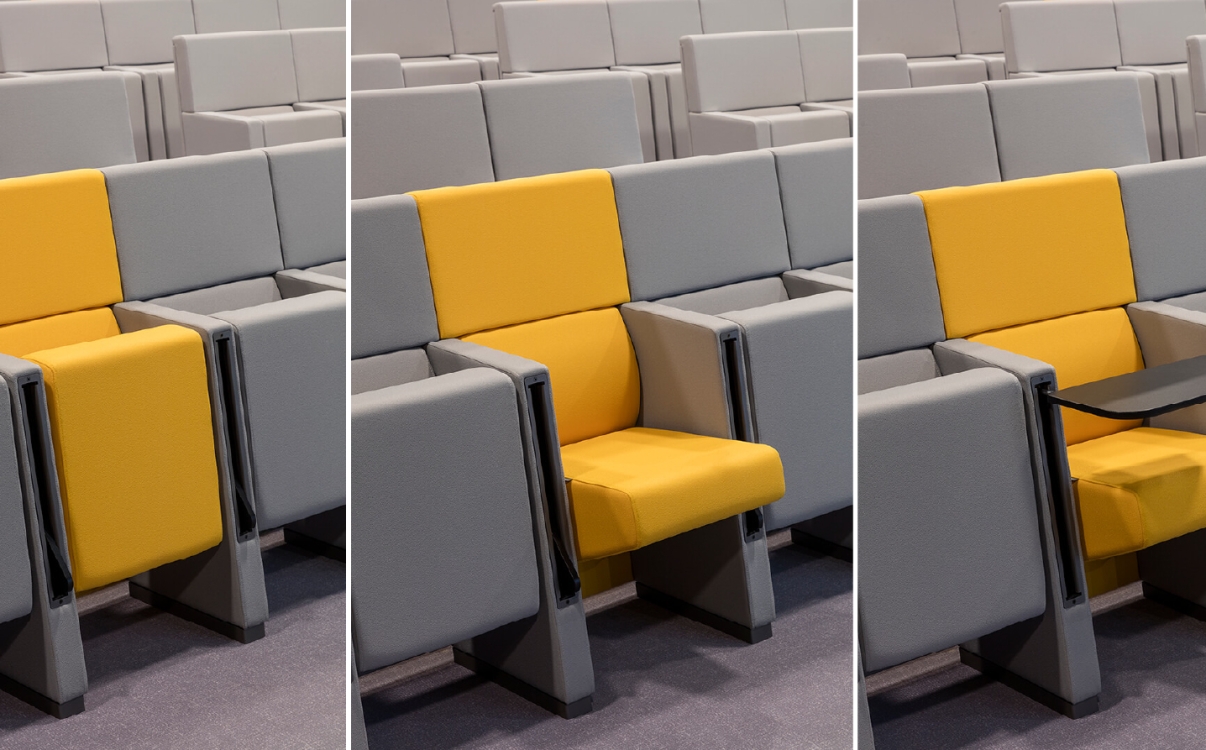
RPB Education & Public Auditorium Seating: The Benchmark Design for Educational and Cultural Spaces
As schools, cultural centers, conference halls, and training centers increasingly focus on their image and the attendee experience, auditorium seating is no longer simply a place to sit. It has become a vital part of the strategy to elevate the space, contributing to the expression of the unit's identity, class, and philosophy. RPB Education & Public Auditorium Seating is researched and developed specifically for the education and culture sector, simultaneously meeting three factors: aesthetics, functionality, and long-term operation, suitable for schools, children's centers, cultural centers, as well as corporate and governmental auditoriums,

Each seating row serves as the foundation for successful conferences
In the modern world, where conferences, seminars, and forums play an increasingly central role in the operations of businesses, organizations, and educational institutions, every detail in the auditorium space directly affects the effectiveness of message delivery. Among these, conference seating is not merely a common piece of furniture, but a factor that defines the experience, reception efficiency, and emotions of the attendees.
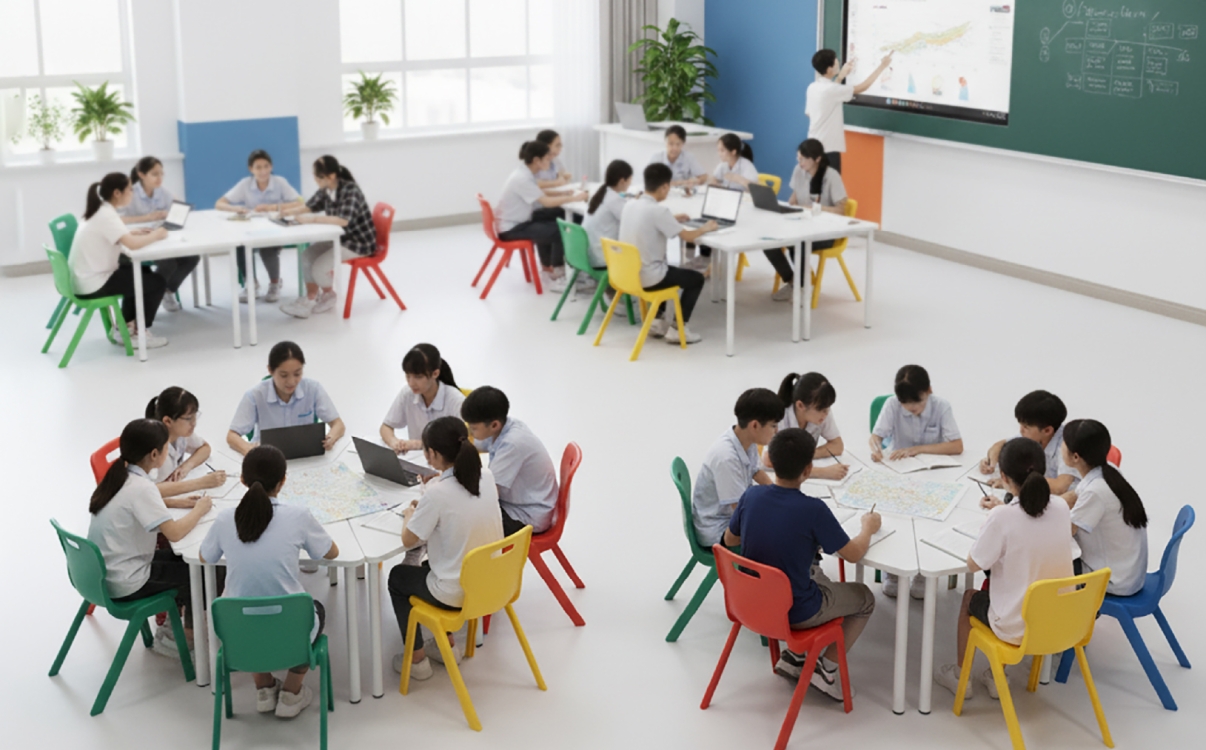
Active Learning Environments Foster a Generation That Dares to Innovate and Execute
Leading schools worldwide have transitioned from a passive learning model to an active learning model (Active Learning). This represents more than just a new teaching approach; it is a complete change in mindset where students participate in the learning process instead of merely receiving one-way instruction. While traditional classrooms focus on listening and note-taking, Active Learning stresses experience and interaction.
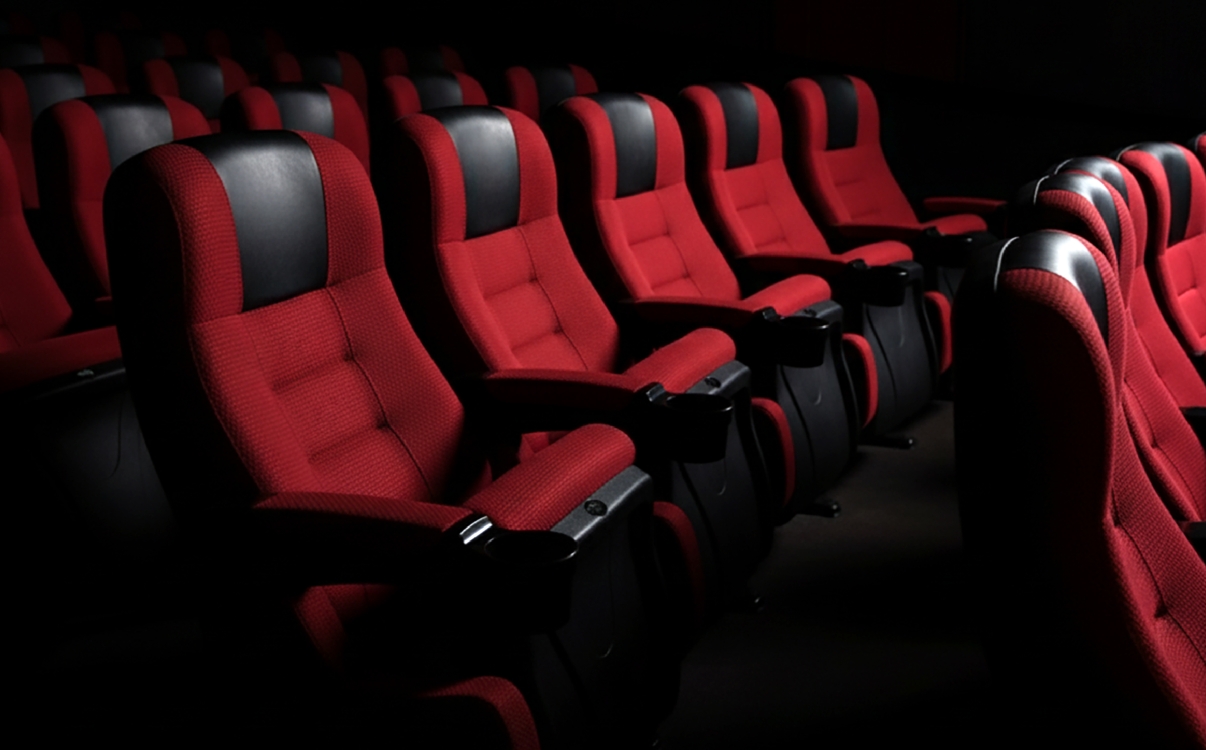
RPB Cinema Seating Collection, where every moment in the theater becomes unforgettable
In a movie theater, every sense is guided by light, sound, and the cinematic space. Yet the first thing that truly shapes the viewer’s emotions is not the size of the screen or the sound effects, but the seat they sit in for two straight hours. A comfortable chair allows the audience to be fully immersed in the story. In contrast, a chair that is hard, uneven, or lacks proper support distracts them, forces them to constantly change position, and breaks their concentration.
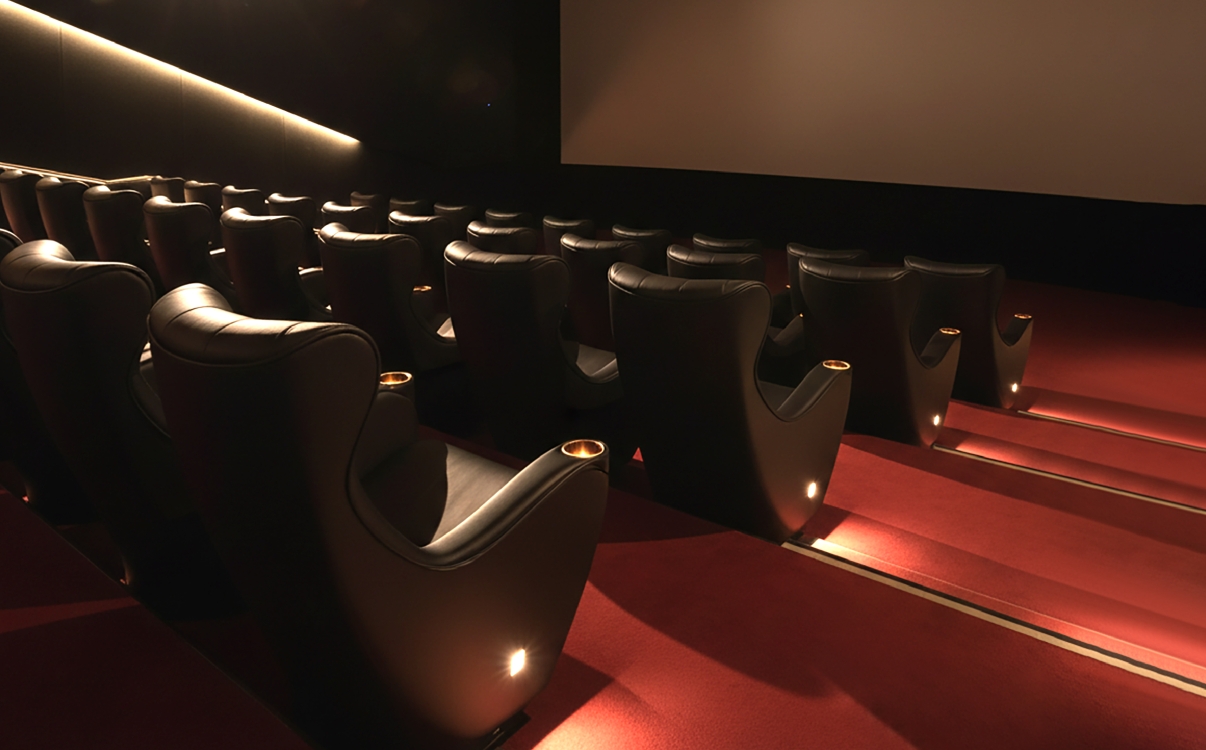
Ergonomic design that elevates every cinematic emotion
The cinematic experience is not only about a wide screen, surround sound, or sophisticated lighting – it begins with the very seat the audience sits in. Over the course of two hours, viewers are not only following the story on screen, but also listening to their own bodies: feeling relaxed, cushioned, and at ease, or constrained and fatigued.
A properly designed ergonomic cinema chair can completely transform that experience. It is not just a place to sit, but a space that supports every shade of emotion. When the body is relaxed, the mind opens up, emotions flow naturally, and every frame becomes more complete.
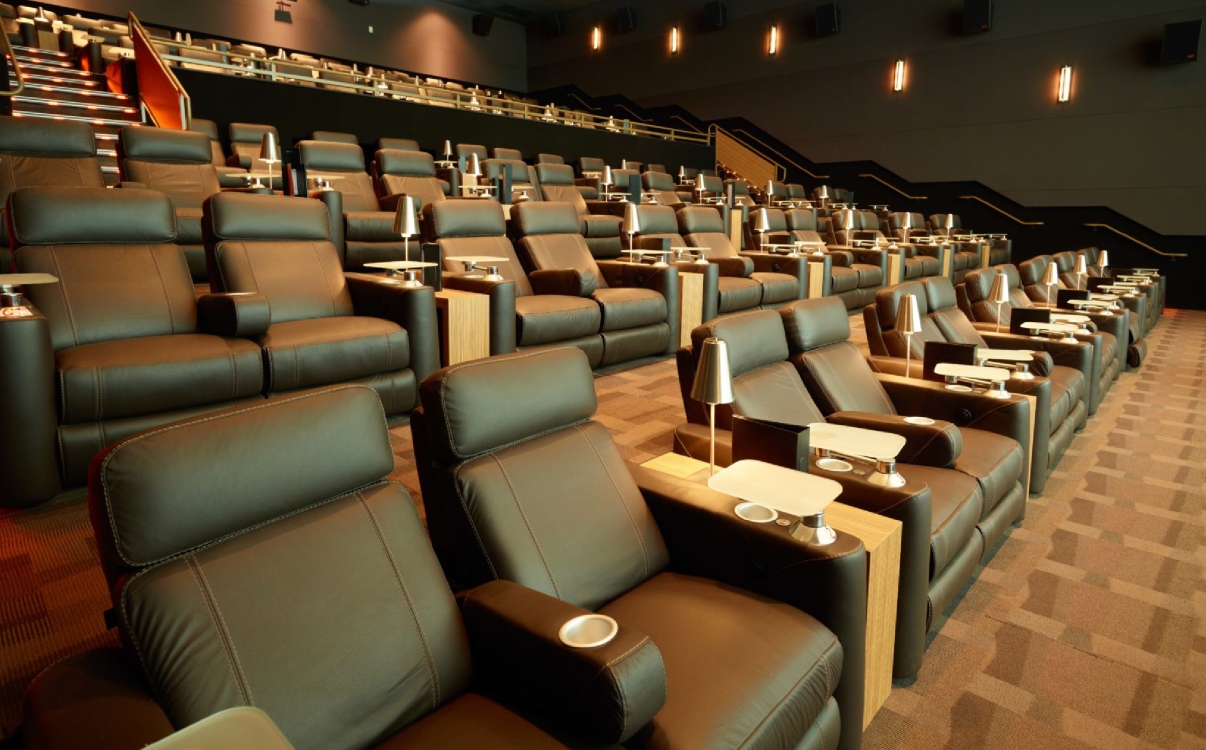
When your cinematic experience begins with the perfect seat
When the lights in the cinema slowly dim, the screen brightens and sound fills the room, that is the moment when all the senses awaken. Yet few people realize that the true cinematic experience does not begin with images or sound, but with the very seat they are sitting in. A perfect cinema chair not only helps the audience relax for two straight hours, but also cradles their emotions, allowing them to be fully immersed in the world of film.
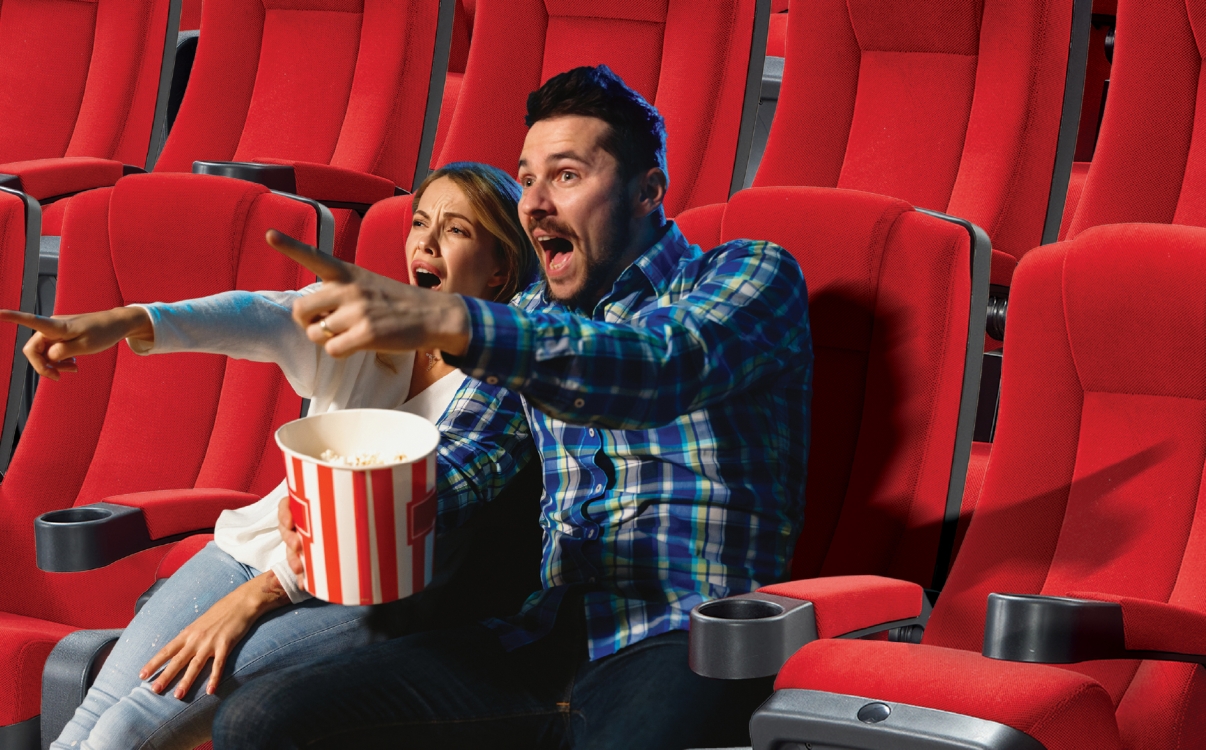
RPB Education & Public Cinema Seating Collection – When the Entertainment Experience Becomes an Art of Emotion
In the world of light, sound, and emotion, a cinema seat is not just a place to sit—it is where emotions begin. A film can make the audience laugh, cry, or fall silent in thought, but it is the seat they occupy that truly holds those moments.
With over 18 years of experience in the public furniture and cinema industry, RPB Education & Public introduces the 2025 Cinema Seating Collection, delivering world-class standards that perfectly combine ergonomic design, technical specifications, and modern aesthetics.
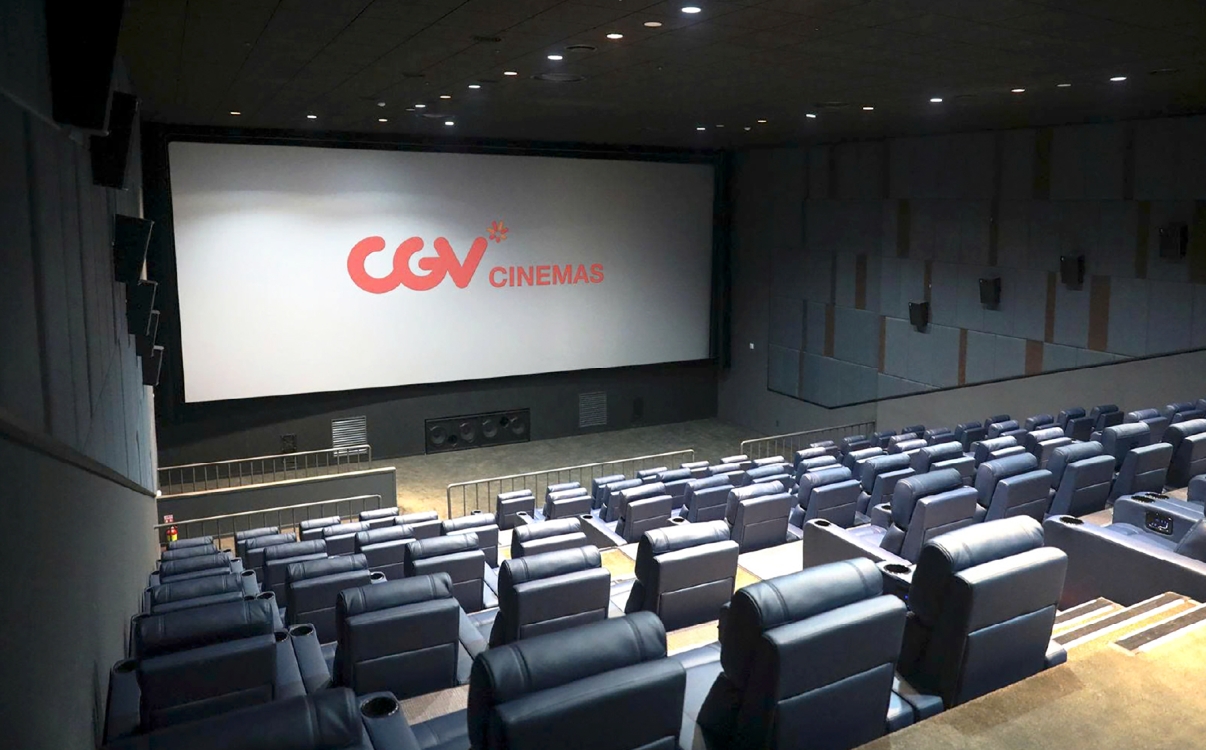
RPB Education & Public Launches the 2025 Public Seating Collection: Shaping the Future of Spatial Experience.
In the post-pandemic era, as digital experiences take center stage, public spaces are being redefined. Users no longer just need "a place to sit"—they demand a comfortable, connected, and emotionally engaging experience.
From university lecture halls and international convention centers to blockbuster cinemas and sports stadiums, the standard for seating has changed. It is no longer enough to be durable; seating must also be beautiful, ergonomic, and smart.

A waiting bench is more than just a seat — it is a symbol of enduring companionship through time
In public spaces where people constantly come and go — from bustling international airport terminals to quiet hospital corridors and modern customer service centers — there are silent elements that play an essential role. A waiting bench is not merely a temporary resting place; it is a symbol of professionalism, attentiveness, and respect for the user.
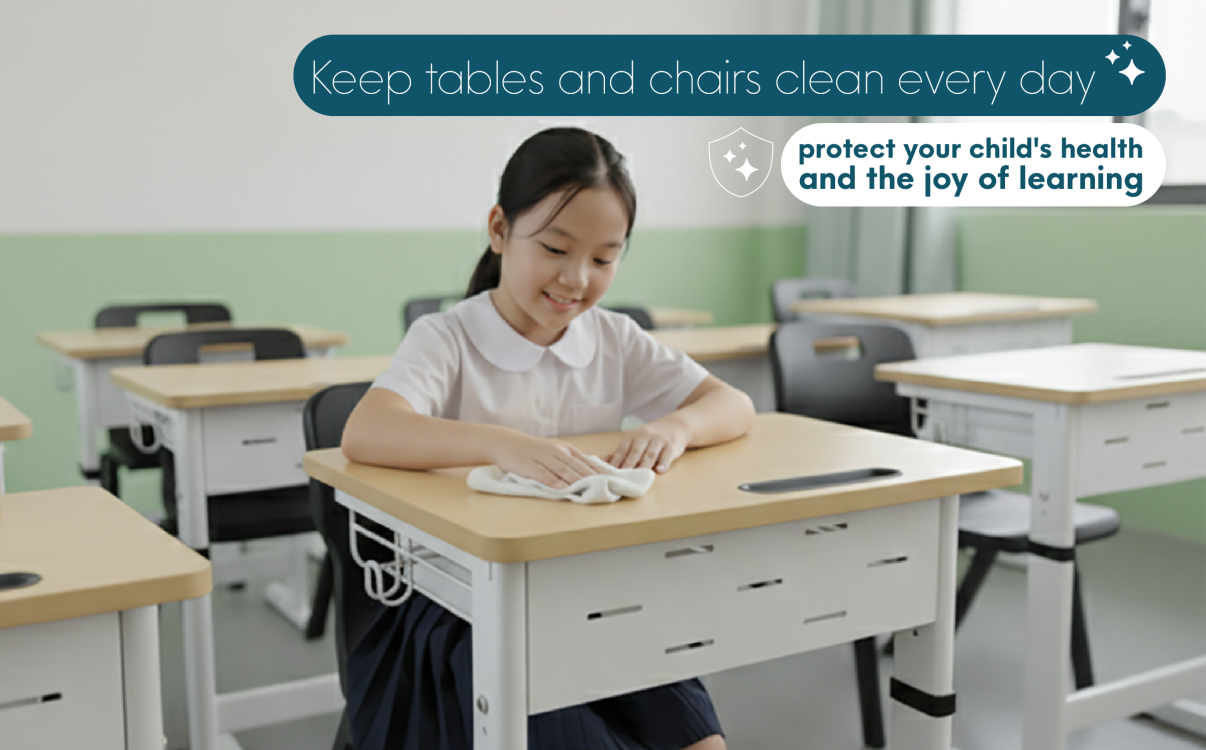
How to Clean and Maintain School Desks and Chairs for Lasting Durability
School desks and chairs are familiar companions that accompany students every day. They are not merely learning tools but also have a direct impact on students’ health, posture, and study motivation. Therefore, proper cleaning and maintenance play a crucial role in keeping the furniture durable, safe, and contributing to a modern, clean, and comfortable learning environment.
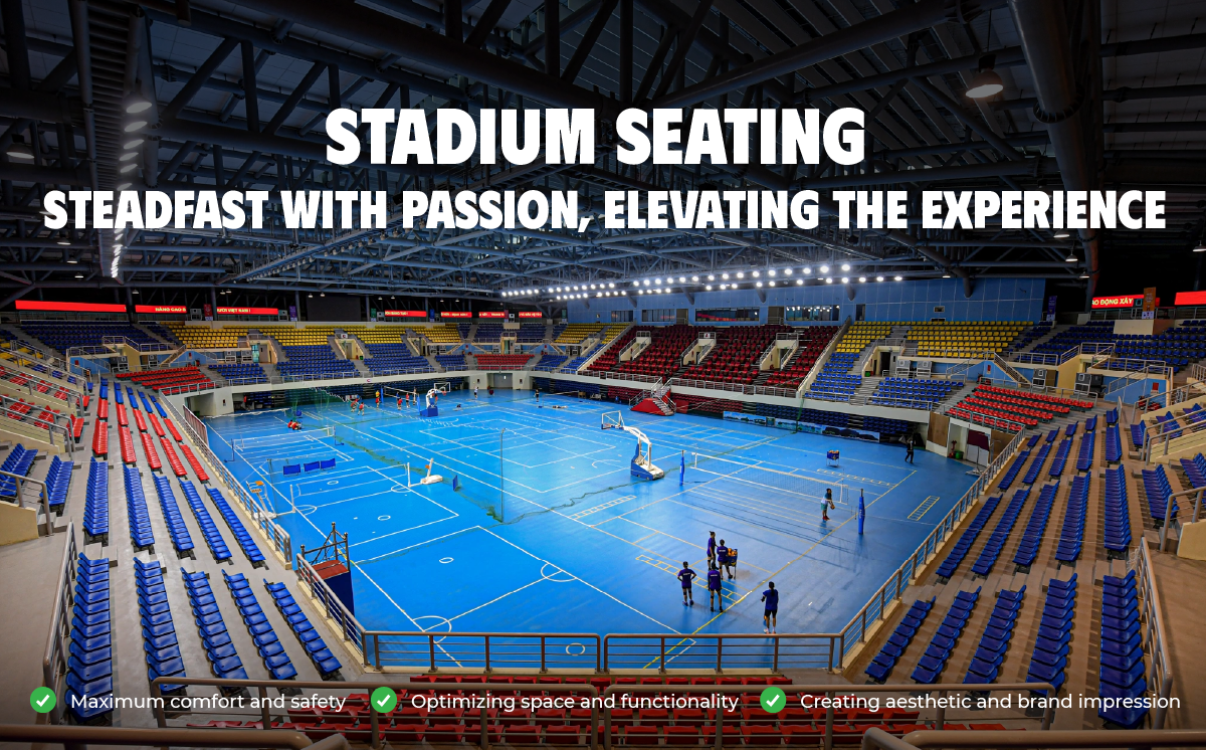
Stadium seats – Standing strong with passion, elevating the experience
A modern stadium is not only about a beautiful pitch, a standard lighting system, or spacious stands. There is a subtle yet crucial element that directly determines the comfort, safety, and professionalism of the venue: the stadium seats.
If the pitch provides the ideal playing field for athletes, then the grandstand seats are where emotions are conveyed, allowing spectators to immerse themselves in every moment of the match or event. For schools, sports centers, or multi-purpose arenas, investing in a high-quality seating system is a long-term and strategic step.
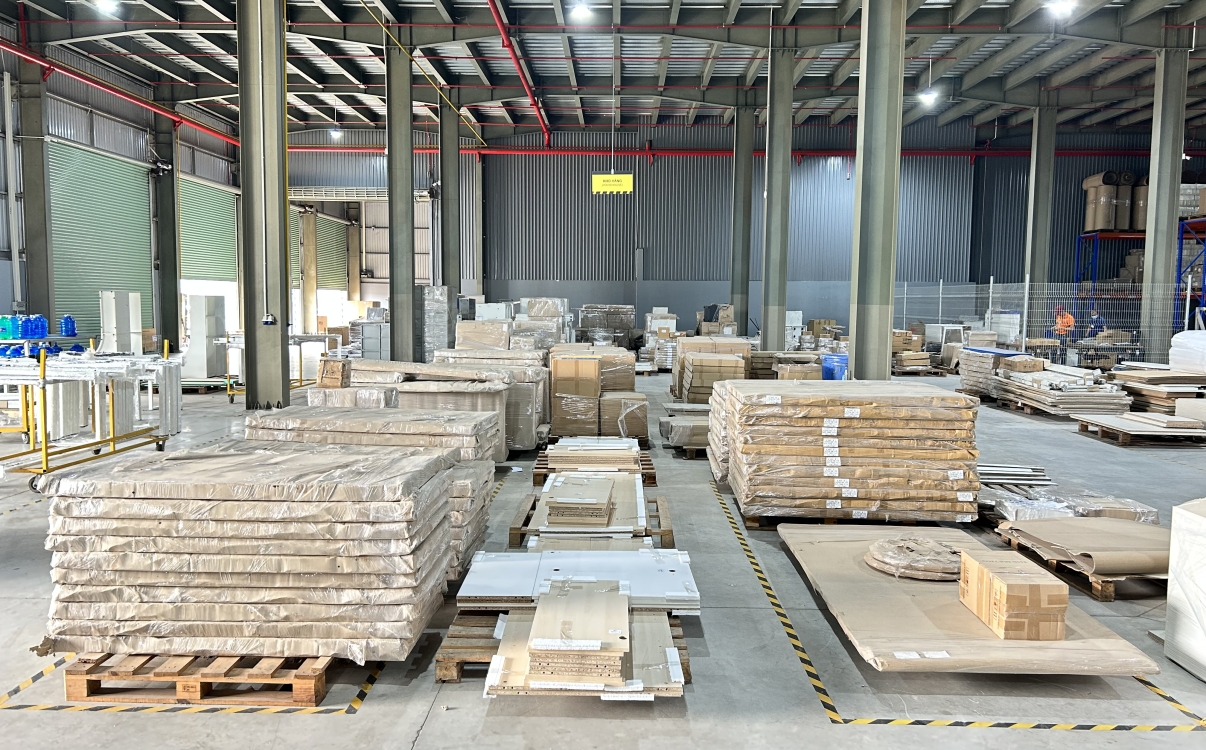
Inside RPB Education & Public Factory – The birthplace of Vietnam’s leading educational and public interior solutions.
When it comes to internationally standardised school desks and chairs, auditorium seats, and cinema chairs, few people know that behind them is a modern, closed-loop production process at RPB Education & Public’s factory – where each product is created with dedication, advanced technology, and the highest quality standards.
SITTO Waiting Bench – The Ideal Solution for Hospitals & Public Areas
In public spaces such as hospitals, schools, airports, or government offices, the waiting area is often a reflection of professionalism and thoughtful design. Therefore, choosing a waiting bench that is not only durable and easy to clean but also aesthetically pleasing is of utmost importance. The Sitto bench, a product line from RPB Education & Public, offers a comprehensive solution for all modern and professional waiting areas.
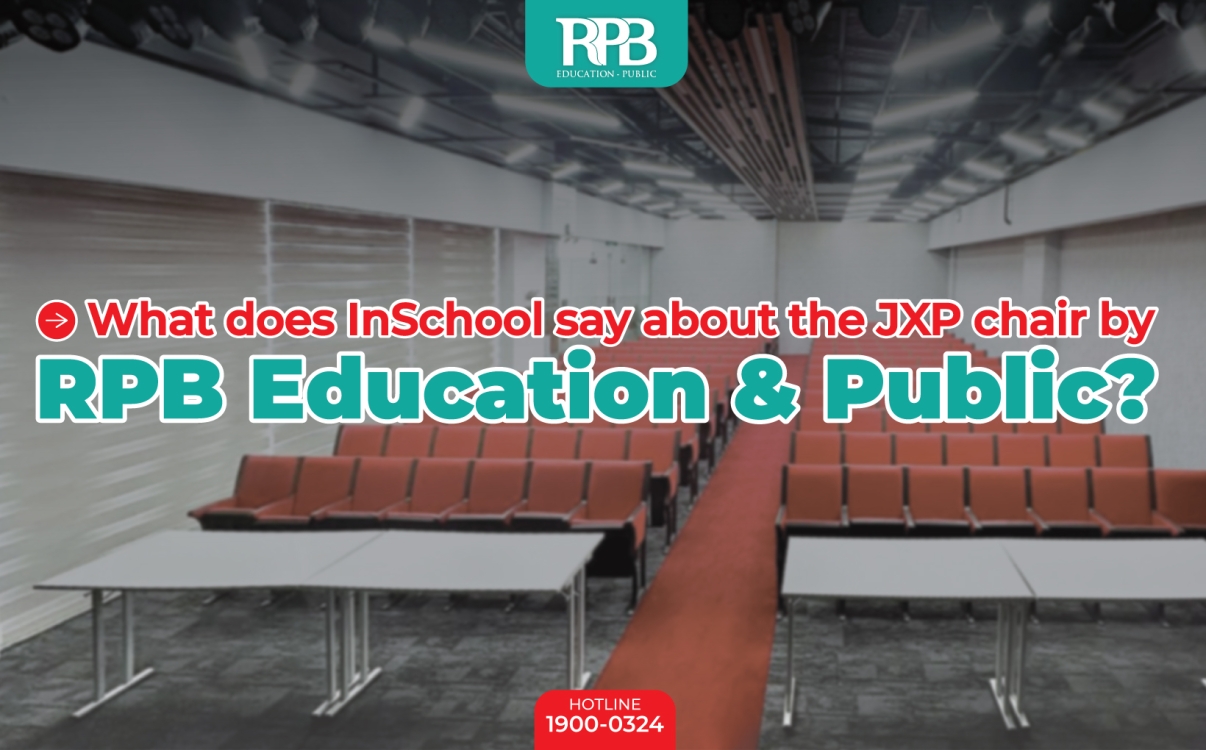
InSchool chooses JXP auditorium chair – A smart, flexible solution for modern educational spaces
When redesigning its auditorium, InSchool had a clear set of expectations. RPB Education & Public responded with the perfect solution – the JXP Auditorium Chair.
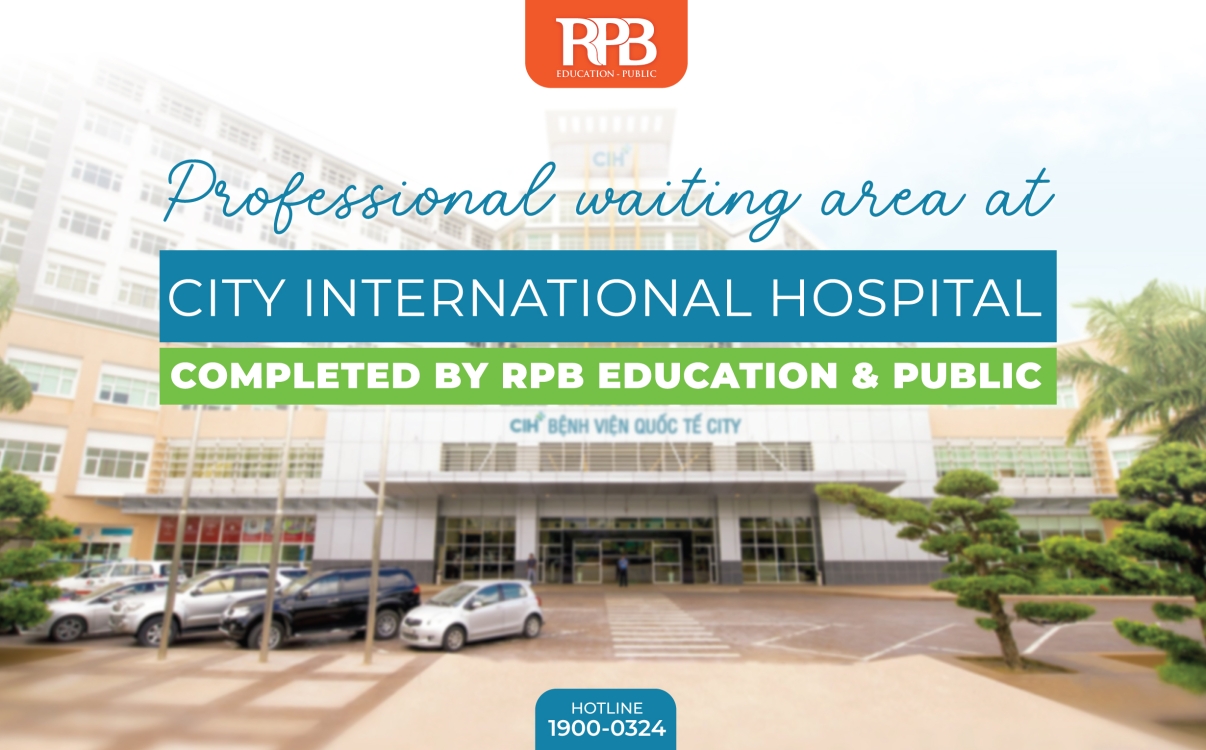
Professional waiting space at City International Hospital – Completed by RPB Education & Public
A hospital waiting area is more than just a resting spot—it reflects the care and respect extended to patients and their families.
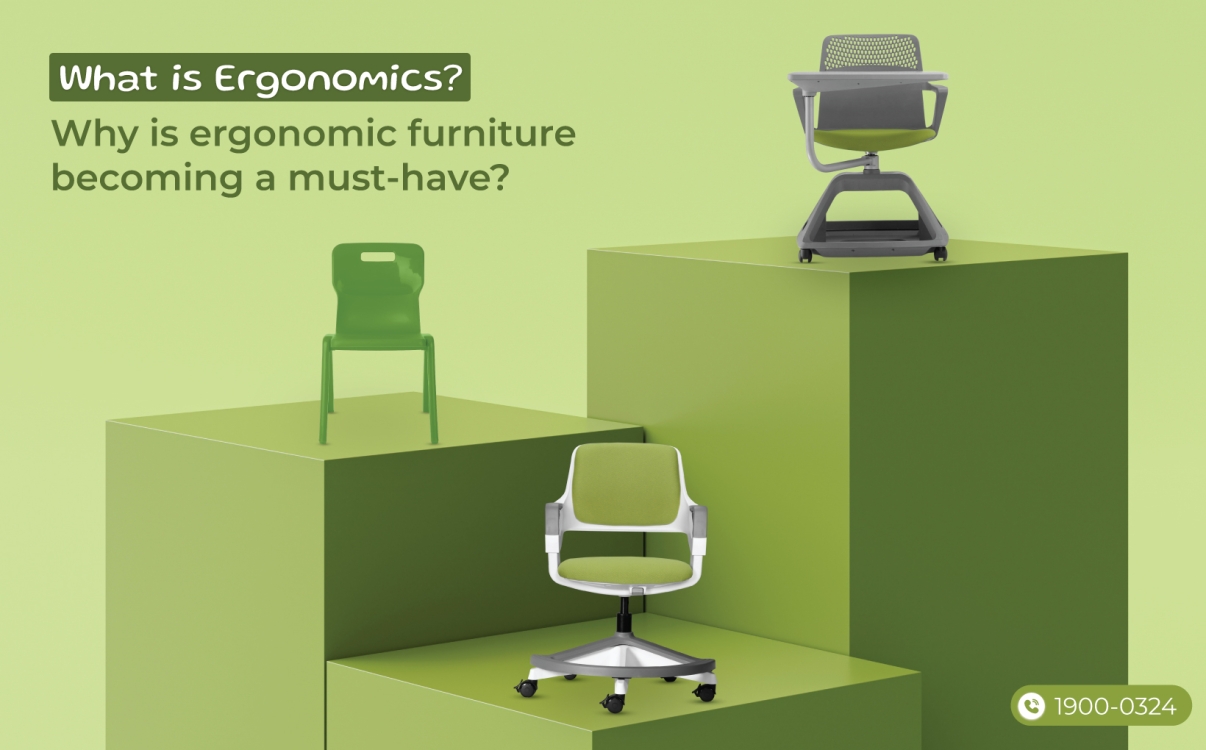
Ergonomic Furniture: A Solution to Elevate Modern Learning & Working Spaces
Ergonomic furniture is not just a trend but a mandatory standard in modern educational design. If you want your students, staff, and faculty to study and work in a healthy, productive, and safe environment, investing in ergonomic furniture is an essential choice.