


5 Modern Classroom Design Models That Optimize Functionality
In the context of increasingly innovative education, the learning space is no longer just a place for tables, chairs, boards, and basic teaching equipment. Instead, schools today are moving towards more modern, flexible classroom design models that are better suited to new teaching methods. As technology becomes more deeply integrated into education, the demand for a classroom that is both scientific, comfortable, and supportive of interaction becomes clearer than ever.
In reality, classroom design directly impacts the quality of teaching and the learning experience of students. A reasonably arranged space helps teachers organize lessons more effectively, students concentrate better, and classroom interaction becomes more natural. Conversely, if a classroom is designed unscientifically, the space can become cramped, inflexible, and reduce the effectiveness of knowledge absorption.
Currently, many modern classroom design models and smart classroom designs are being applied in primary and secondary schools, training centers, and educational institutions oriented towards innovation. Each model has its own advantages, suitable for different scales, educational levels, and teaching methods. Below are 5 modern classroom design models that are favored for their ability to optimize functionality and enhance the quality of the educational space.
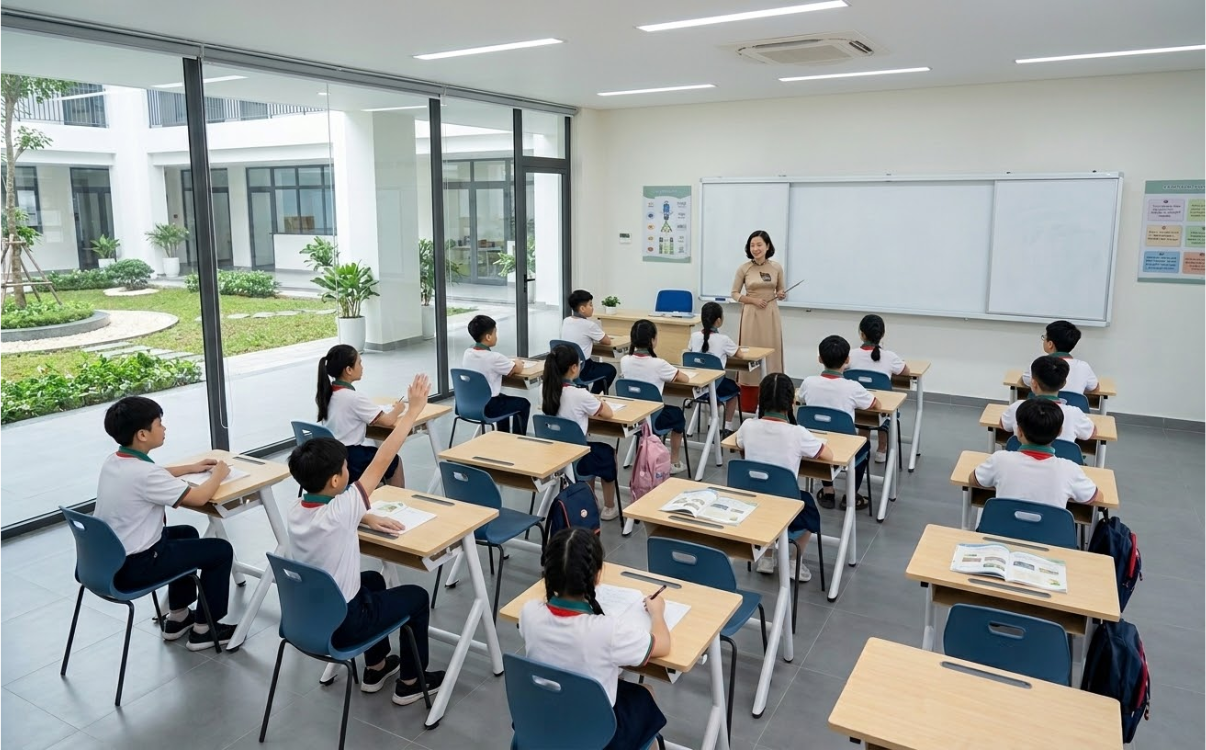
Criteria for Modern Classroom Design
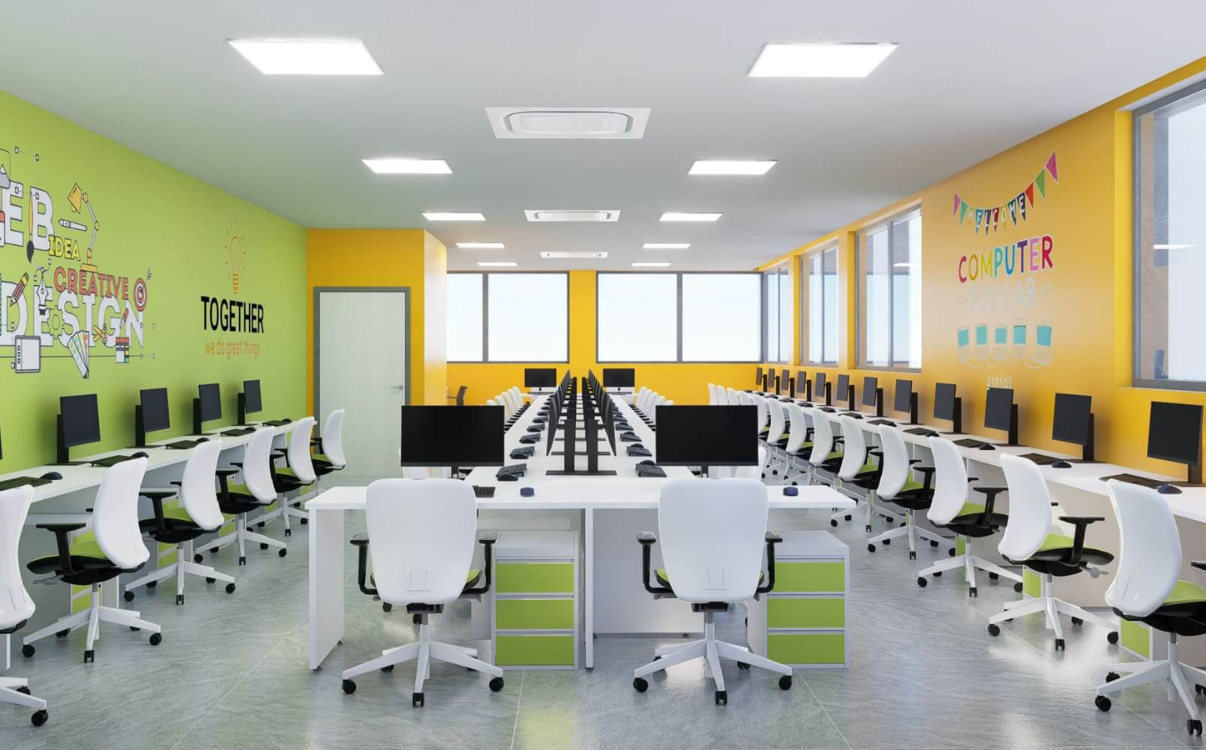
Optimizing Functionality
The first criterion in classroom design is meeting practical usage needs. A modern classroom not only needs sufficient seating but must also effectively support teaching, learning, discussion, and presentation activities. The classroom layout should facilitate easy observation for the teacher, easy interaction for students, and ensure all areas of the room are utilized efficiently.
Functionality involves not just tables, chairs, or boards, but also the arrangement of equipment, storage areas, placement of screens, interactive boards, power outlets, and necessary learning materials. When functionality is optimized, the classroom operates more smoothly, reduces clutter, and enhances long-term usage efficiency.
Scientific and Flexible Arrangement
A very important factor in modern classroom design is scientific and flexible arrangement. Today's classroom spaces need to adapt to various teaching formats such as group work, project-based learning, presentations, practical exercises, or blended learning combining in-person and online instruction.
Therefore, furniture should not be arranged too rigidly. A classroom that allows for easy layout changes enables teachers to be more proactive in their teaching methods, while simultaneously increasing interaction and enhancing the student experience.
Ensuring Lighting, Ventilation, and Safety
In any classroom design model, lighting, ventilation, and safety are always fundamental criteria. The classroom needs sufficient natural or evenly distributed artificial light to prevent eye strain. The space should also be well-ventilated to create an airy, comfortable feeling, especially in classrooms used continuously throughout the day.
Additionally, safety factors need careful consideration from the design stage. From walkways and spacing between table rows to furniture materials and edge treatment, everything must be calculated to minimize risks during usage.
Integrating Teaching Technology
In modern education, technology has become an essential part of the classroom. Therefore, smart classroom design is increasingly valued for its ability to support more flexible, intuitive, and effective teaching and learning.
A modern classroom should have planned positions for screens, projectors, interactive boards, audio systems, internet access, and appropriate power sources. Integrating technology not only enhances teaching effectiveness but also better prepares the classroom for future trends in digital education.
5 Modern Classroom Design Models That Optimize Functionality
Improved Traditional Classroom Design Model
This is one of the most popular classroom design models because it is easy to implement, suitable for the majority of schools, and ensures efficient use. However, compared to traditional classrooms of the past, the improved version focuses more on standard spacing, lighting, synchronized furniture, and learning comfort.
-
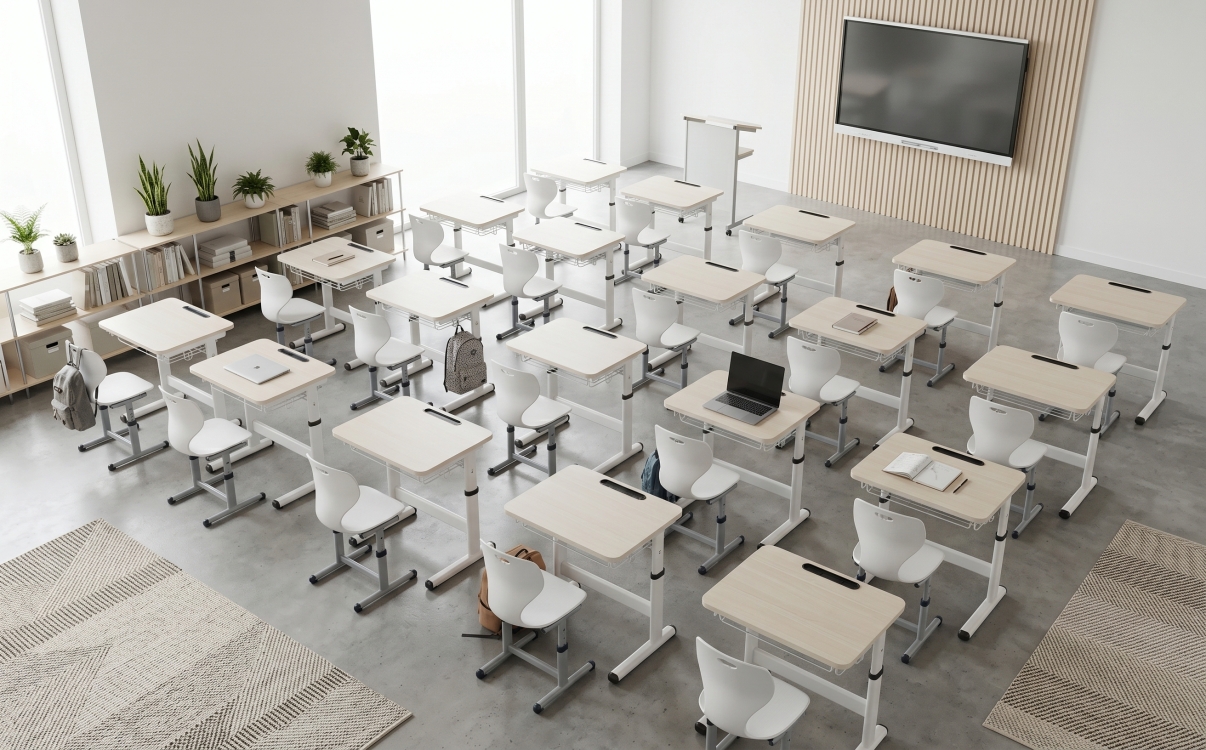
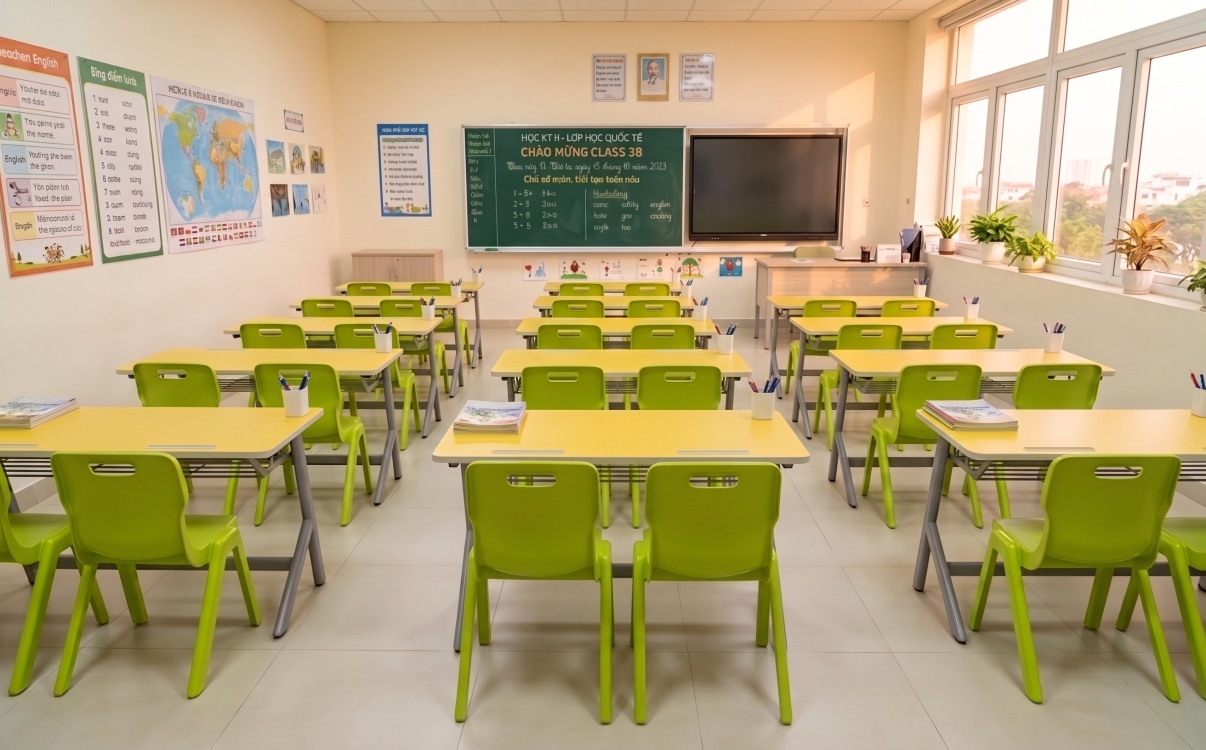
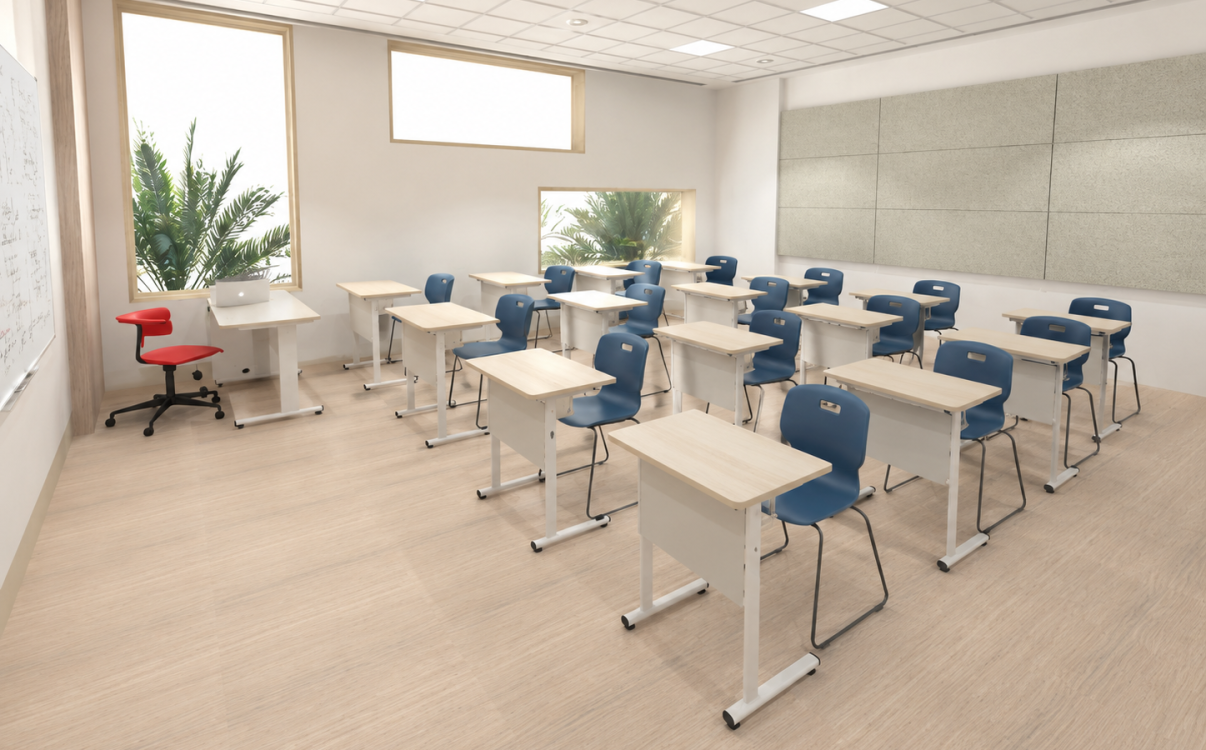
Desks arranged in rows: In this model, desks are still arranged in familiar rows, helping teachers easily manage the class and facilitating instruction. This arrangement suits theoretical lessons, tests, or classes with a large number of students.
-
Optimized standard spacing: The key difference of the improved model is that the distances between desk rows are calculated more reasonably to create clear walkways, improve visibility, and make seating more comfortable for students. This is a crucial factor in standard classroom layout.
-
Suitable for K-12 schools: This model is particularly suitable for elementary, middle, and high schools because it is easy to apply, has a reasonable initial investment cost, and meets the basic requirements of a modern classroom.
Flexible Classroom Design Model
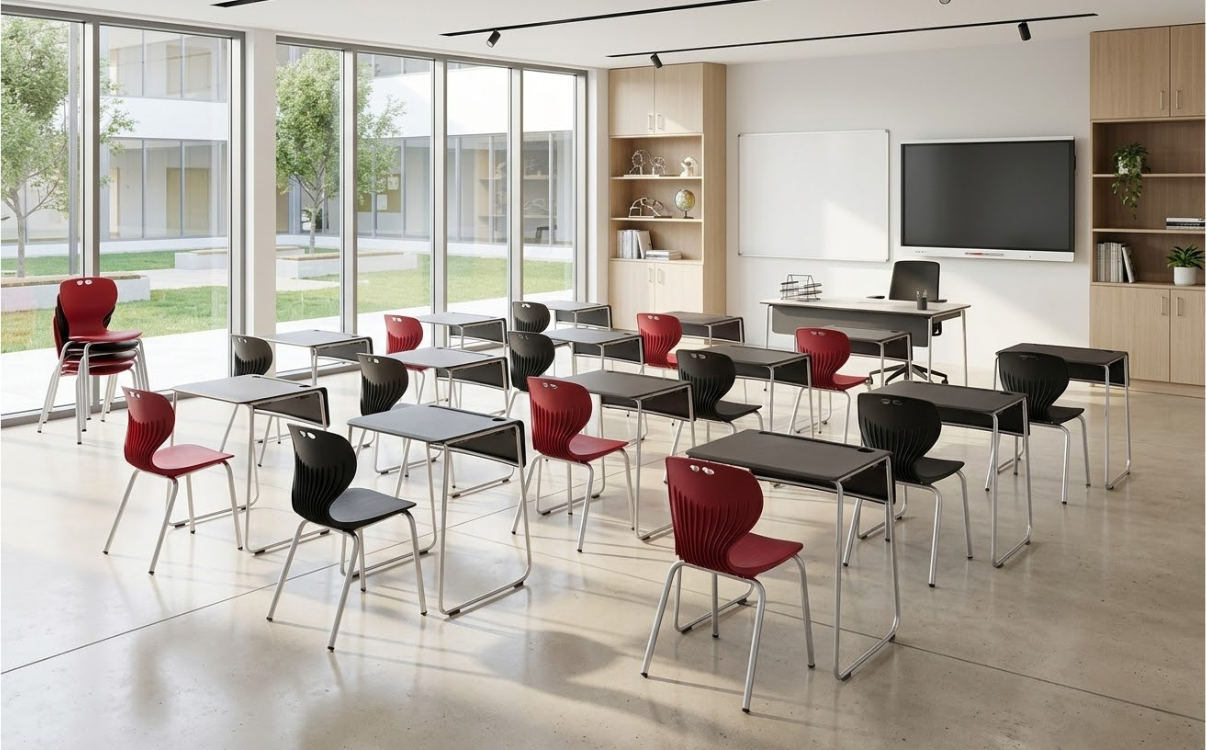
Smart classroom design is a trend attracting attention from many educational institutions in the era of digital transformation. This model integrates technology into the classroom space to support more intuitive, flexible, and effective teaching.
-
Integrated interactive screens: Interactive screens or electronic boards are central devices in a smart classroom. These devices help teachers deliver more engaging lessons, operate more quickly, and enable students to participate directly in the lesson.
-
Modern audio and lighting systems: A smart classroom often invests in synchronized audio, lighting, and projection systems to enhance the learning experience. When sound is clear, images are sharp, and lighting is appropriately distributed, the quality of lessons improves significantly.
-
Supports online teaching: This model is also suitable for classes that require combining in-person and online instruction. Integrating cameras, microphones, screens, and a stable internet connection helps teachers organize classes more effectively in various scenarios.
STEAM Classroom Design Model
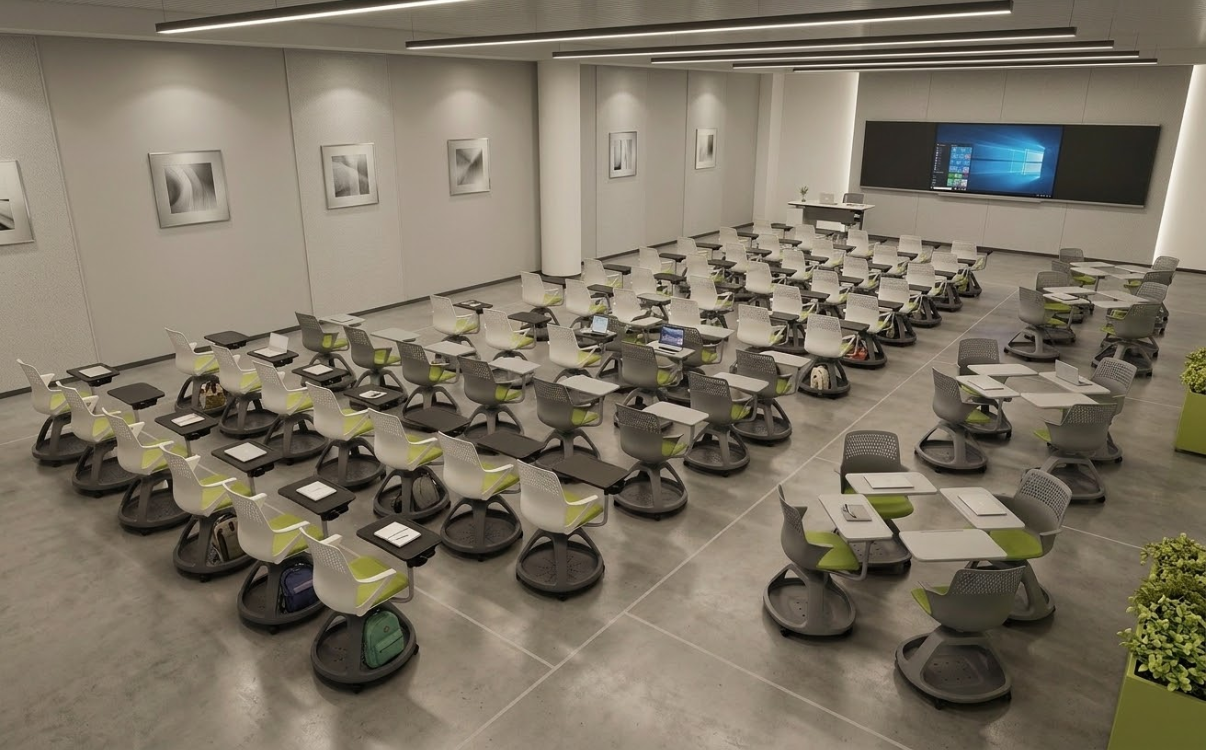
This is a classroom design model oriented towards hands-on learning, creativity, and experience. STEAM classrooms are typically used for activities related to science, technology, engineering, arts, and mathematics.
-
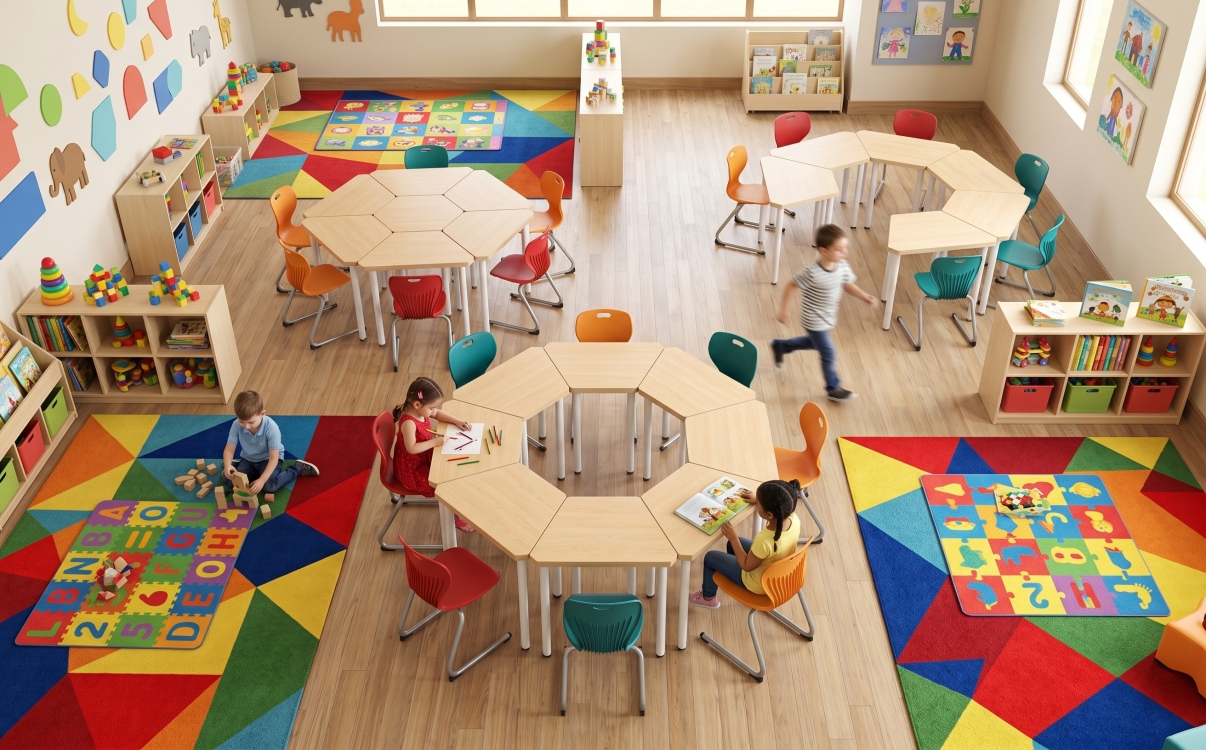
Open space: Open space is a characteristic feature of the STEAM classroom. Instead of a rigid layout, the classroom is organized in an airy, flexible manner that is easy to reconfigure for different activities. This helps students explore, experiment, and move around easily during learning.
-
Dedicated practice area: Besides the main seating area, STEAM classrooms often have a dedicated space for practice, displaying products, or storing learning materials. This is one of the factors that help this model maximize its applicability and practical experience.
-
Optimized for creativity: The main goal of the STEAM classroom is to encourage creative thinking and problem-solving skills. Therefore, the space design should support students in working in groups, testing ideas, and presenting results naturally.
Specialized Language Classroom Design Model
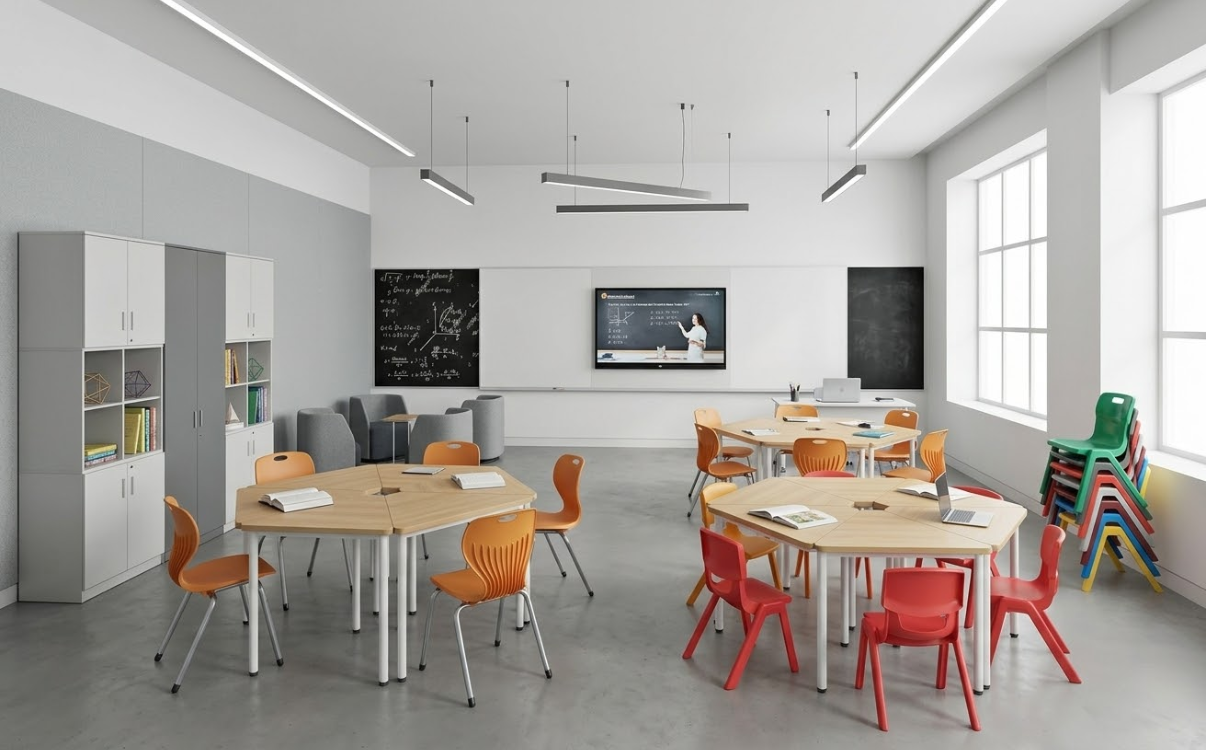
This is a modern classroom design model for language subjects where listening, speaking, interaction, and language reflexes play a crucial role.
-
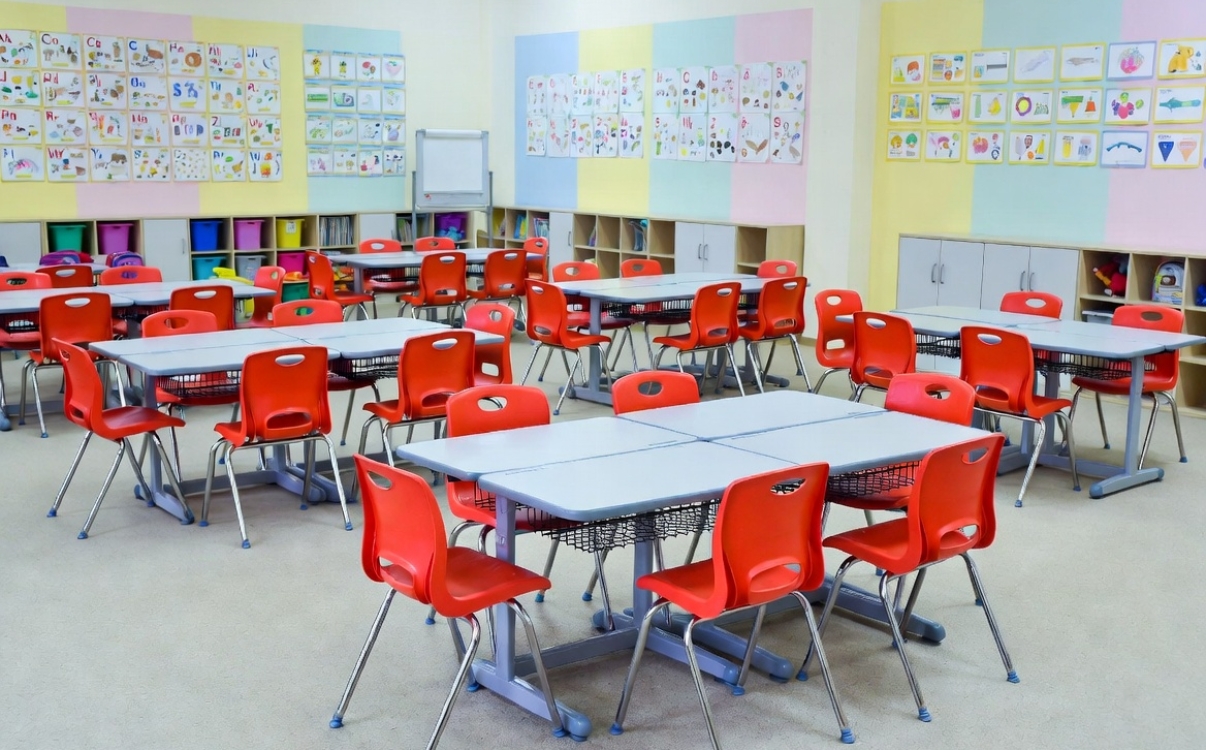
Arranged in clusters: Instead of straight rows, language classrooms are often arranged in small clusters so students can easily communicate and practice in pairs or groups. This arrangement increases proactiveness in learning.
-
Integrated listening and speaking equipment: Modern language classrooms are typically equipped with speaker systems, microphones, headphones, screens, or devices supporting listening and speaking practice. This enhances language absorption quality and creates a learning experience closer to reality.
-
Improved communication effectiveness: The goal of this model is to encourage students to use the foreign language more during class. Therefore, every design detail should aim to increase interaction, practice, and create a positive communication environment.
Related News
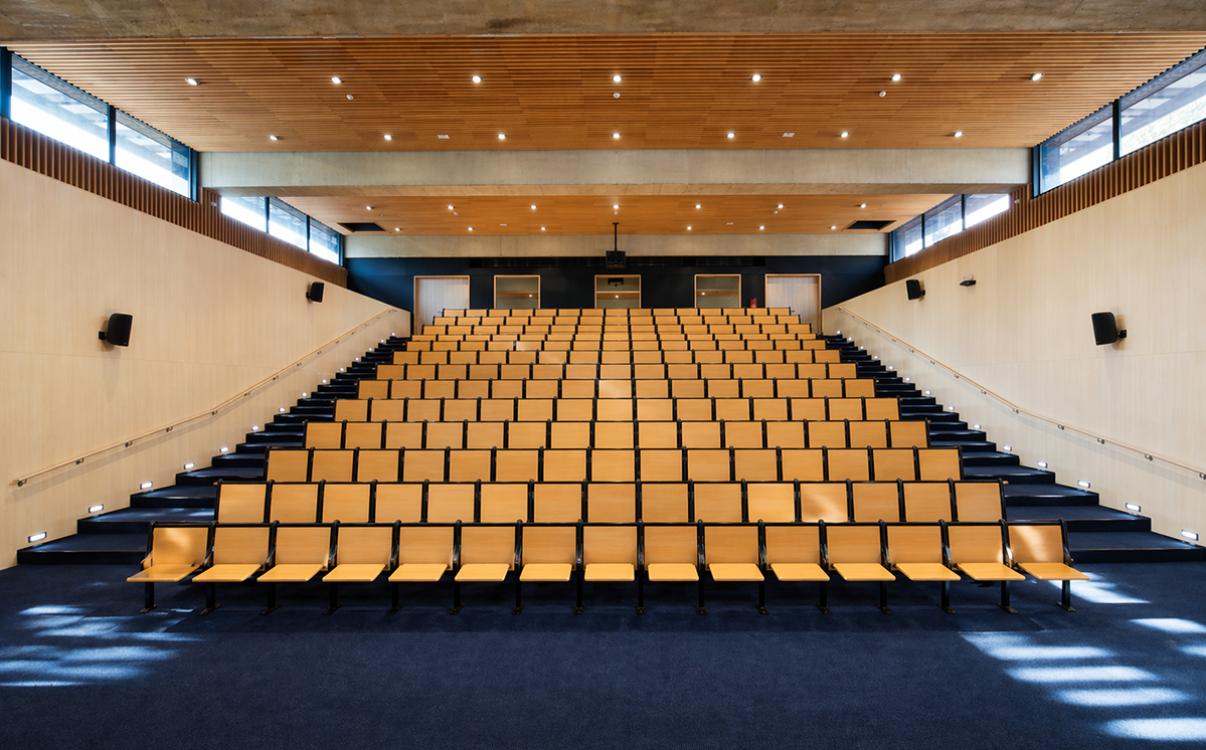

Bench Desk - Optimizing Lecture Hall and Classroom Space
Explore bench desks for lecture halls, classrooms, and training centers. Learn about their structure, advantages, how to choose, and outstanding models at RPB Education & Public right below.

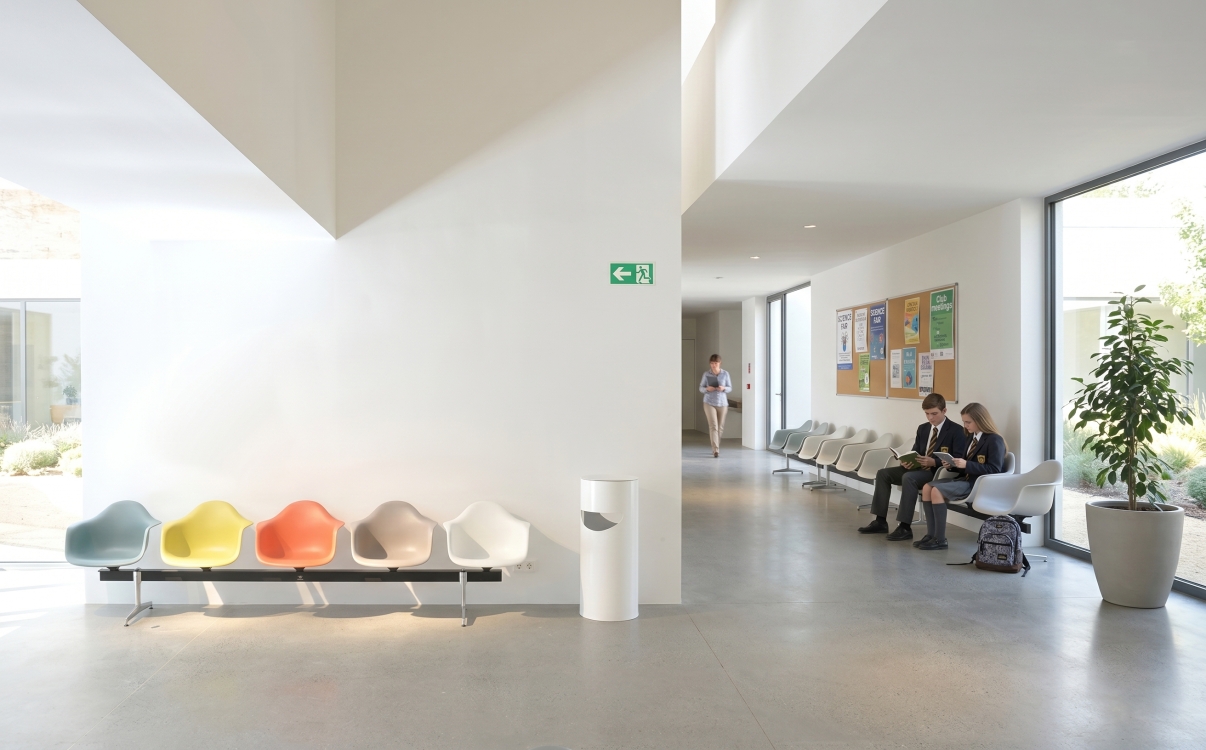
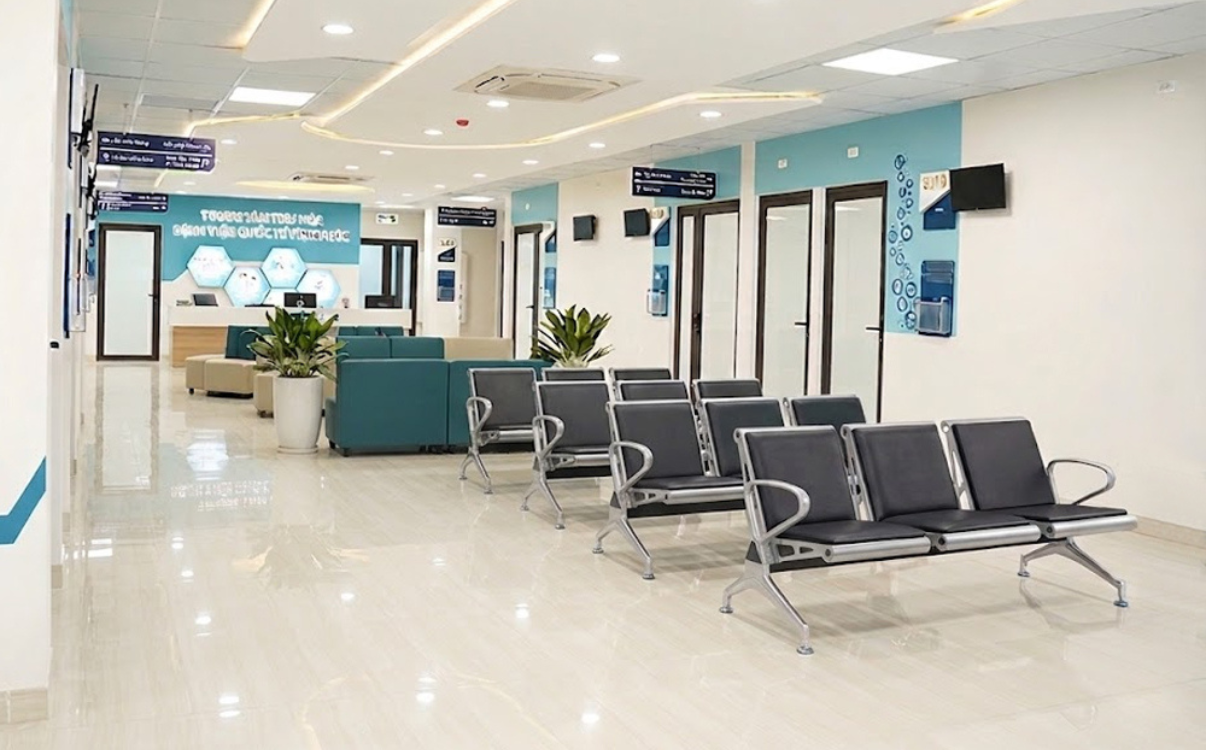
Kích thước ghế băng chờ inox, nhựa, nệm: Bảng thông số chi tiết nhất
Cập nhật bảng kích thước ghế băng chờ inox, nhựa, nệm theo 2–5 chỗ ngồi; kèm cách bố trí lối đi, chọn thông số phù hợp từng không gian như bệnh viện, trường học, văn phòng, bến xe.

What is a Stool? Classification, Uses and Standard Sizes
Learn what a stool is, popular types of stools, practical uses, standard sizes, and how to choose the right stool for your home, school, restaurant, and office.
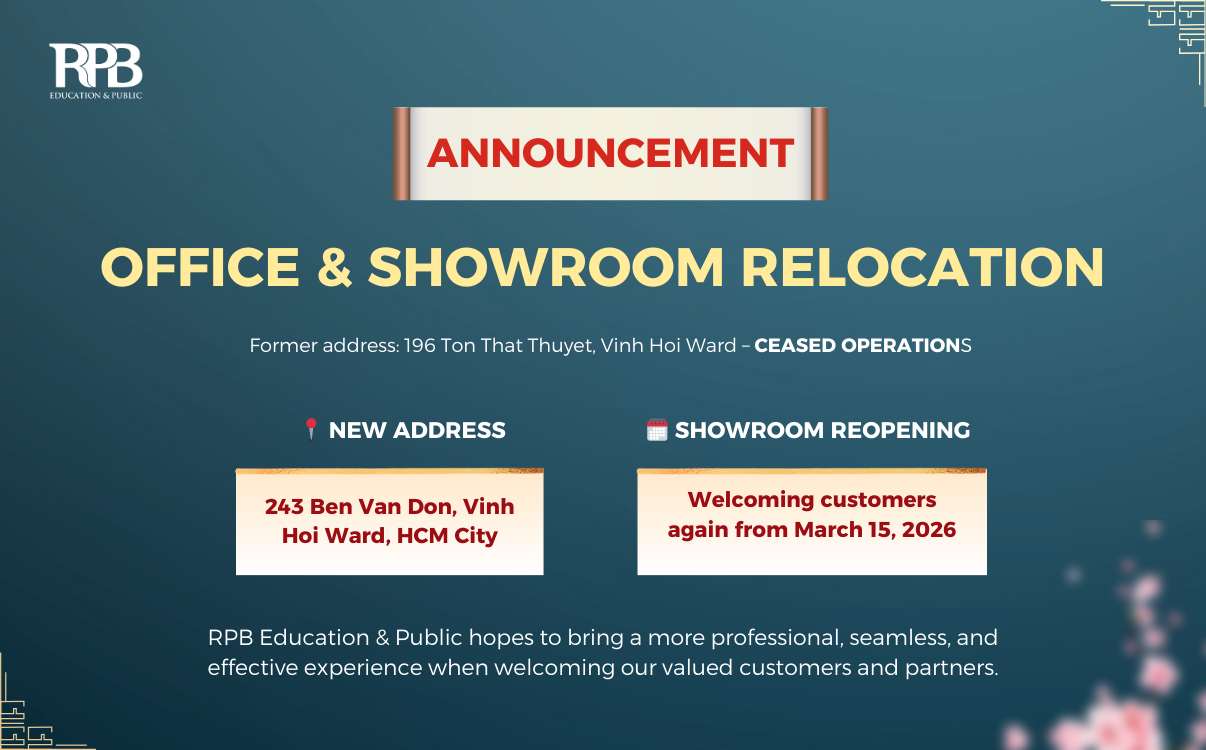
Office Relocation Announcement – Elevating Your Experience
To enhance service quality, expand our workspace, and provide a better experience for our customers, we are pleased to announce the relocation of our office to a new address.

Announcement of product price adjustment
RPB Education & Public sincerely thanks our valued customers for your continued trust and partnership over the past years.
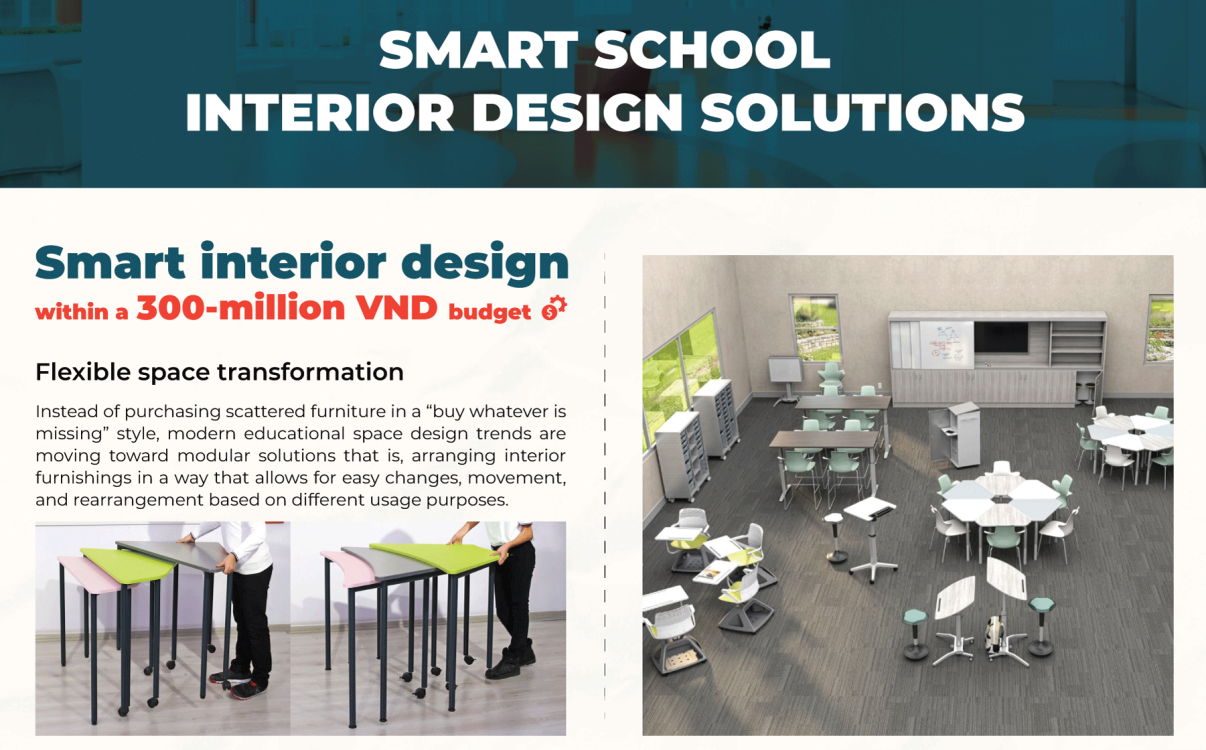
Smart Interior Design Solutions for Universities: Within a 300 Million VND Budget
Smart university interior design within a 300-million budget is not only a financial challenge but also a strategy to elevate the learning experience. With the right investment, it helps create modern, inspiring, and flexible spaces aligned with new teaching methods while optimizing long-term operating costs.

Environmental permit announcement
RPB Education & Public officially announces its environmental permit in accordance with current regulations, reaffirming the company's commitment to legal compliance, environmental protection, and sustainable development. This is an important step to ensure that all of RPB’s business and production activities are aligned with the goal of being environmentally friendly, safe for the community, and contributing to a greener future for the next generation.