


Low Filing Cabinet – Space saving Solution for the Workspace
In the modern office environment, optimizing storage space is always a crucial challenge for businesses. Alongside traditional tall cabinets, low filing cabinets are increasingly chosen by many organizations due to their compact design, flexibility, and ease of arrangement in various working areas. Not only do they meet document storage needs, this type of cabinet also contributes to a tidy, professional appearance and enhances the aesthetic appeal of the office space.
So, what exactly is a low filing cabinet? What are its outstanding advantages, and what office models is it suitable for? Let's explore the details below.
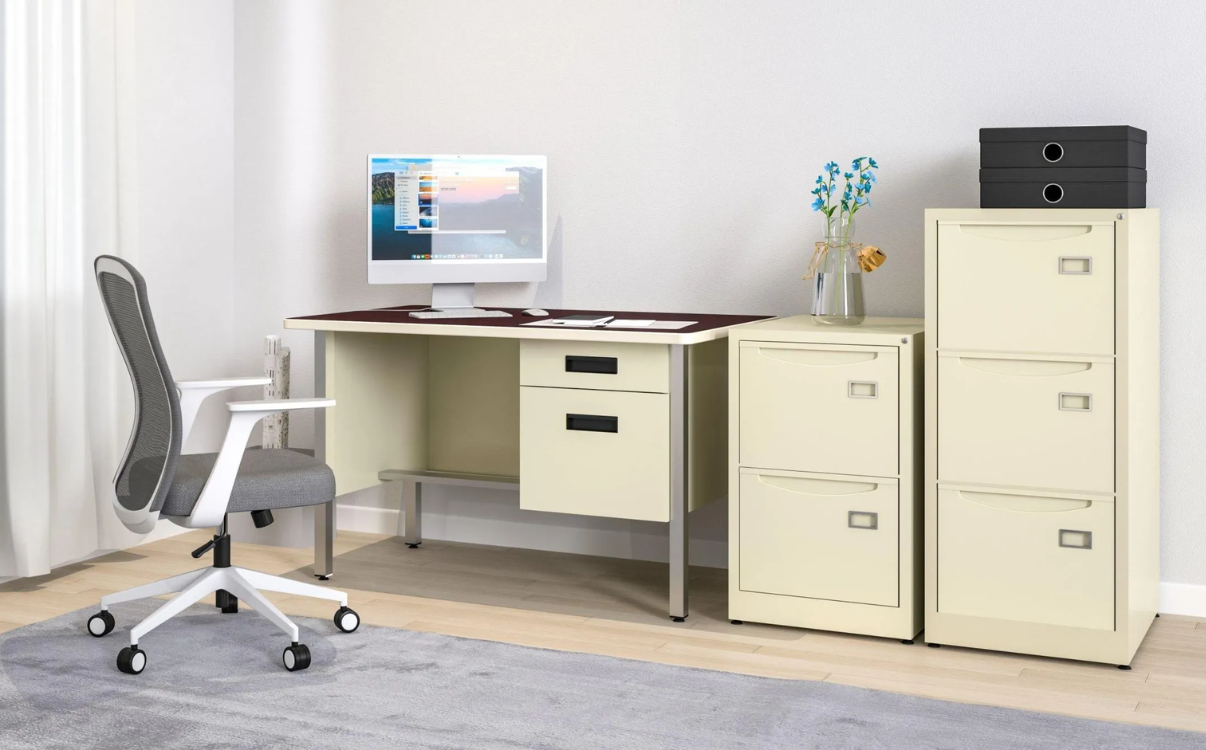
What is a low filing cabinet?
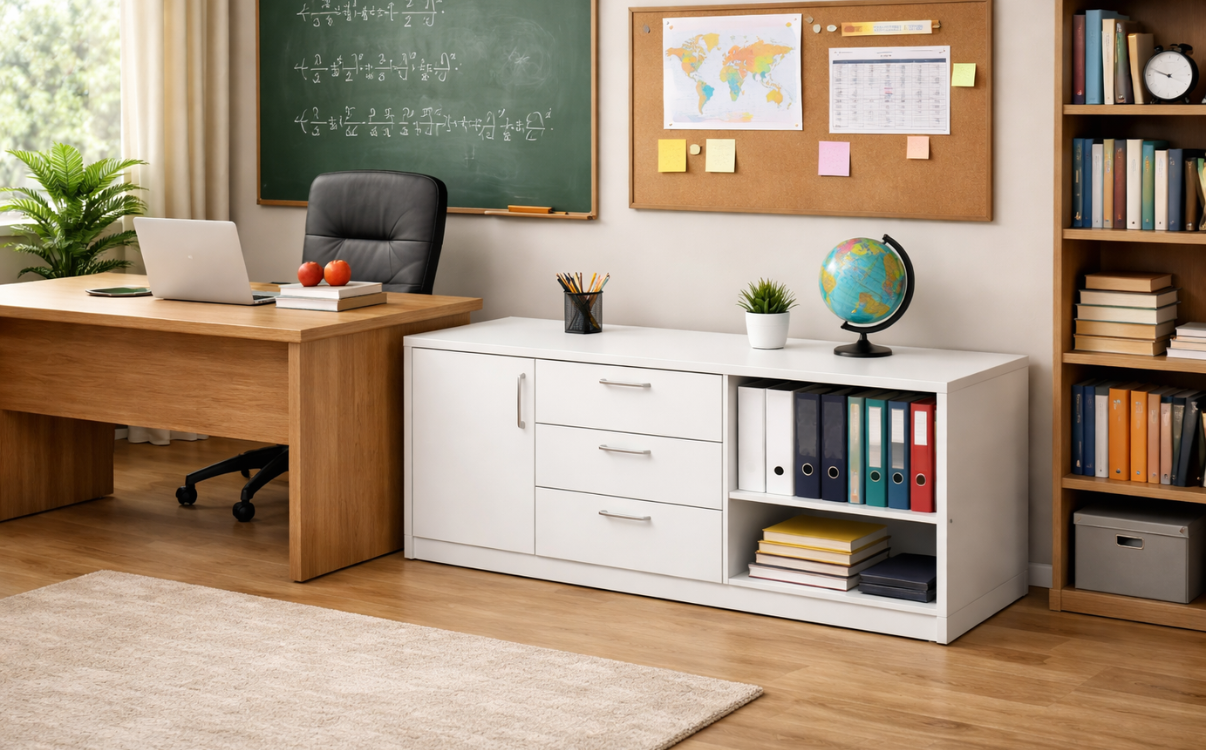
Concept of a low filing cabinet
A low filing cabinet is a storage cabinet with a height lower than traditional filing cabinets. Typically, the height ranges from approximately 700mm to 1000mm. The product is designed to meet the need for storing documents, papers, files, and office supplies while ensuring the workspace remains airy and tidy.
Unlike tall cabinets often used for large-volume storage, low filing cabinets are better suited for basic or moderate storage needs. This type of cabinet is often placed against walls, next to desks, or under windows to effectively utilize empty spaces without obstructing views or walkways.
Key features
Low filing cabinets possess many advantages suitable for storage needs in modern offices, notably:
-
- Compact design, space-saving: The cabinet has a low, compact form, easy to arrange in various workspaces without creating a bulky or cramped feeling.
-
-
Suitable for multiple use areas: The product is ideal for small to medium-sized offices, individual workstations, auxiliary meeting rooms, or home offices.
-
Easy to arrange and flexible to position: Thanks to its moderate dimensions, the cabinet can be placed against walls, beside desks, or effectively utilize empty spaces in the room.
-
Easily combines with other furniture: Low filing cabinets can harmoniously integrate with desks, bookshelves, mobile pedestals, or auxiliary cabinets, making the space more synchronized and tidy.
-
Enhances workspace convenience: The top surface of the cabinet can be used to place printers, small plants, frequently used documents, or decorative items.
-
Combines storage functionality with aesthetic support: Not only does it help organize documents neatly, but the cabinet also contributes to creating a professional, tidy, and comfortable workspace.
-
Advantages of a low filing cabinet
Space-saving
The biggest advantage of a low filing cabinet is its excellent space-saving capability. Compared to tall or large-sized cabinets, a low cabinet reduces the feeling of heaviness in the space and is better suited for offices with limited floor area.
Thanks to its moderate height, the product does not take up too much vertical space while still adequately meeting basic daily document storage needs.
Optimizing dead spaces (corners, under windows)
In many offices, areas like corners, spots under windows, or gaps beside desks are often not utilized effectively. The low filing cabinet is a suitable solution to turn these areas into useful storage, enhancing functionality without needing to expand the floor area.
Utilizing dead spaces not only makes the office tidier but also creates a feeling of well-organized and professional interior arrangement.
Increased flexibility in furniture arrangement
Due to its compact design, the low filing cabinet is very flexible during arrangement. Users can easily change the cabinet's position when reorganizing the office without much difficulty. This advantage is perfect for businesses that frequently change their working layout or need to optimize floor space during different development stages.
Easy to combine with desks
Another advantage of the low filing cabinet is its ability to combine harmoniously with desks. The cabinet can be placed next to the desk to form a cohesive furniture cluster, convenient for retrieving documents while enhancing the space's visual unity.
In many modern offices, low cabinets are also chosen as a solution to extend the work surface, providing users with additional space for printers, documents, or frequently used items.
Common types of low filing cabinets
2-door low filing cabinet
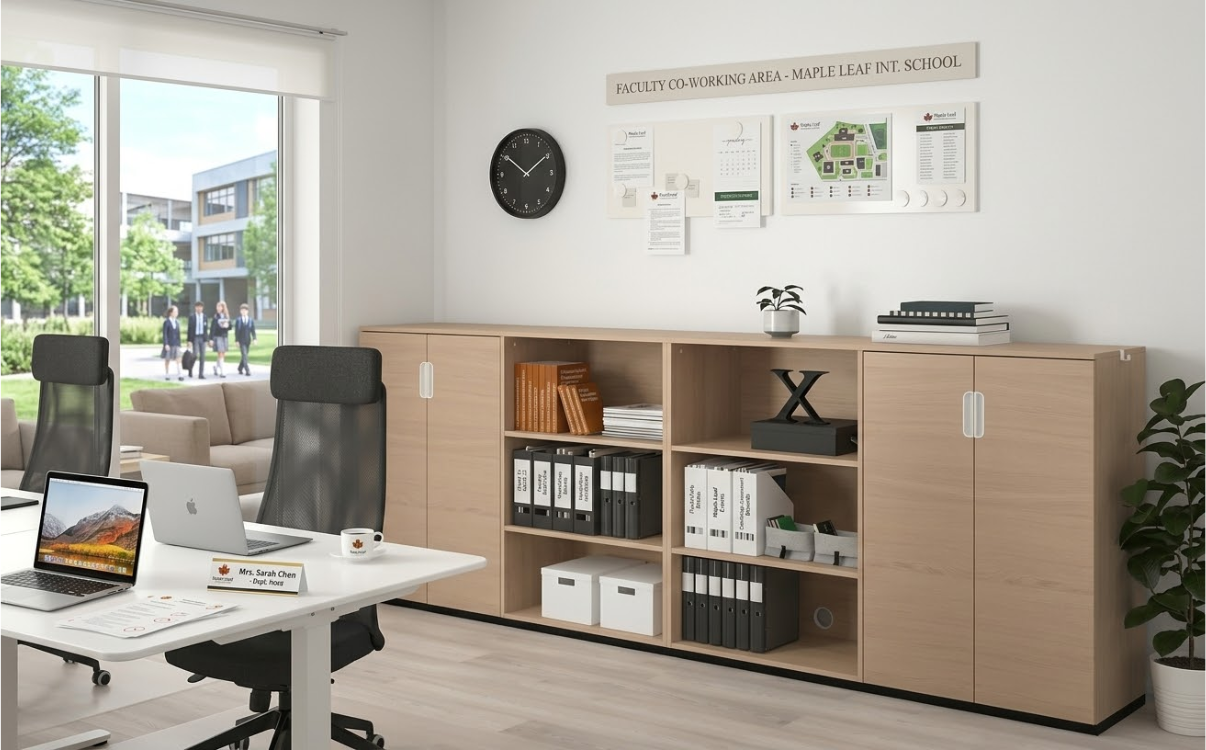
The 2-door low filing cabinet is a popular design due to its simplicity, ease of use, and suitability for many spaces. This cabinet model usually features a spacious compartment, convenient for storing file documents, administrative papers, or medium-sized office supplies.
The 2-door design allows for easy opening and closing while creating a tidy and discreet appearance during use.
Multi-drawer low filing cabinet
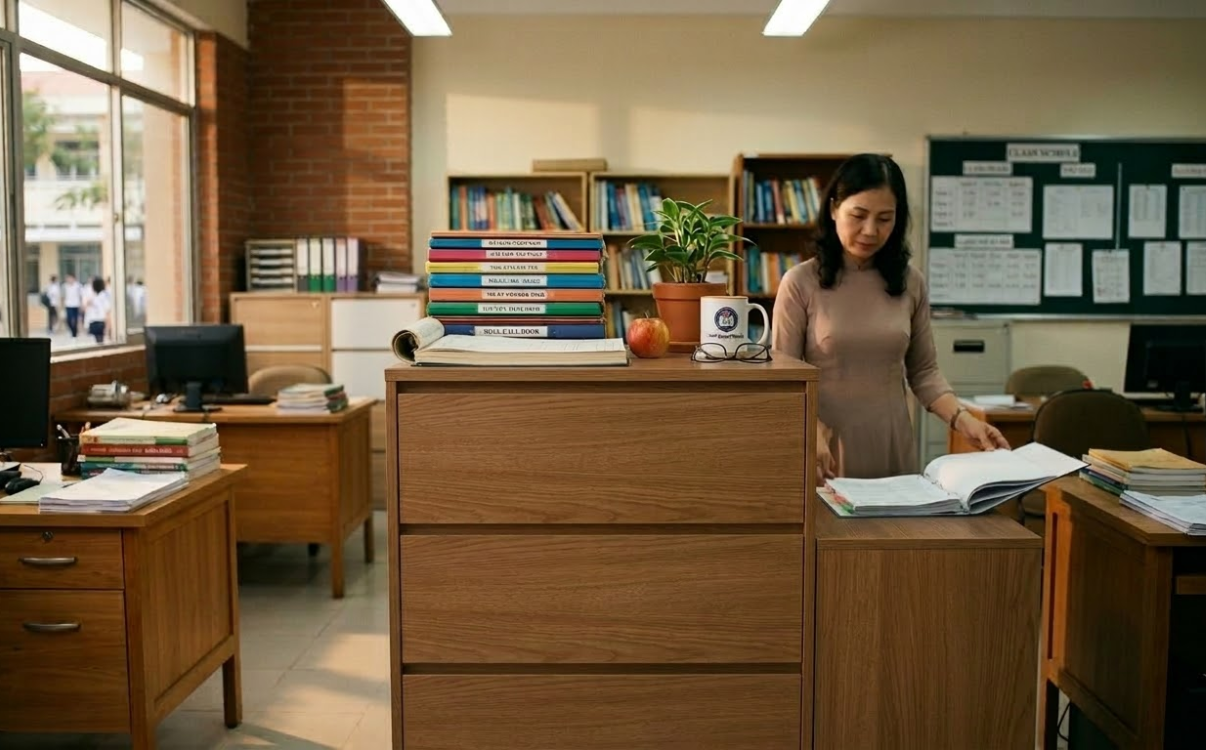
The multi-drawer low filing cabinet is suitable for organizations needing to classify documents into smaller groups or wanting to store various personal items, office supplies, and files in separate categories.
The advantage of this design is that it helps users manage documents in more detail, makes finding items easier, and prevents mixing up papers between different work groups.
Sliding door low filing cabinet
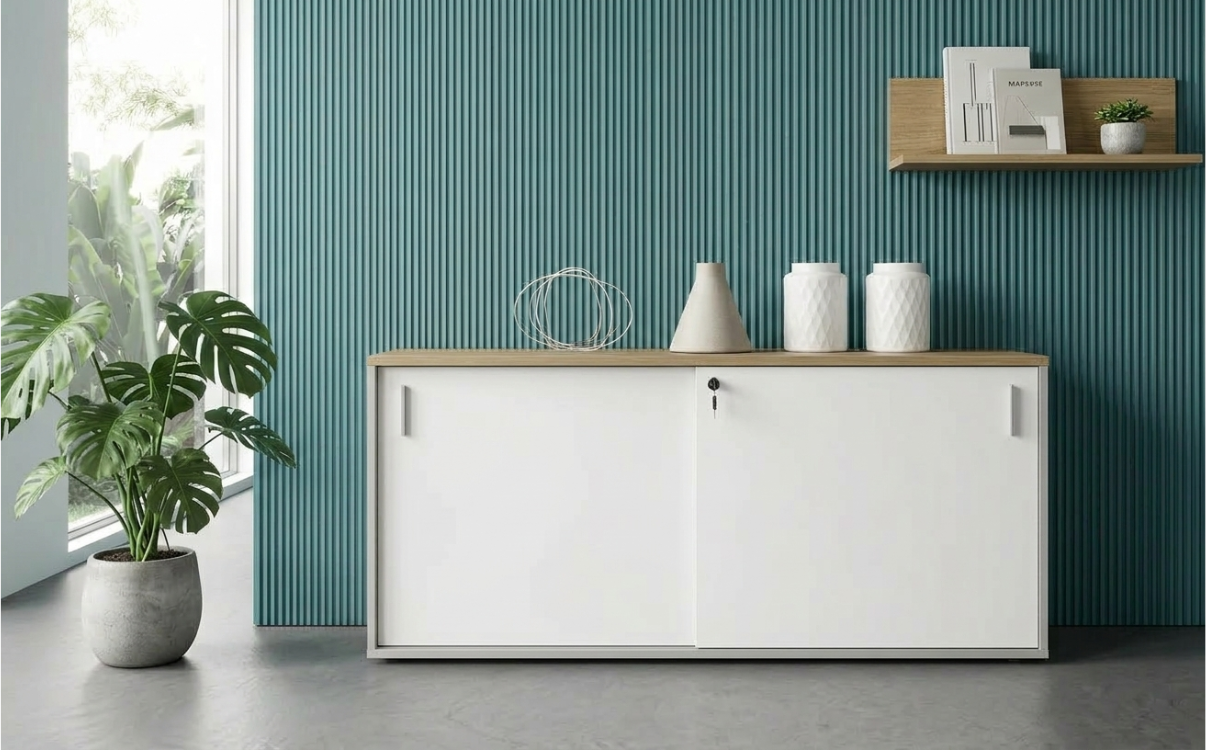
The sliding door low filing cabinet is an ideal choice for tight spaces or narrow hallways. Instead of swinging outward, the sliding door system slides horizontally, saving operational space, avoiding obstructions, and suiting environments with high furniture density.
This type of cabinet is well-suited for small offices, areas placed near desks, or internal hallways.
Low filing cabinet with open shelves
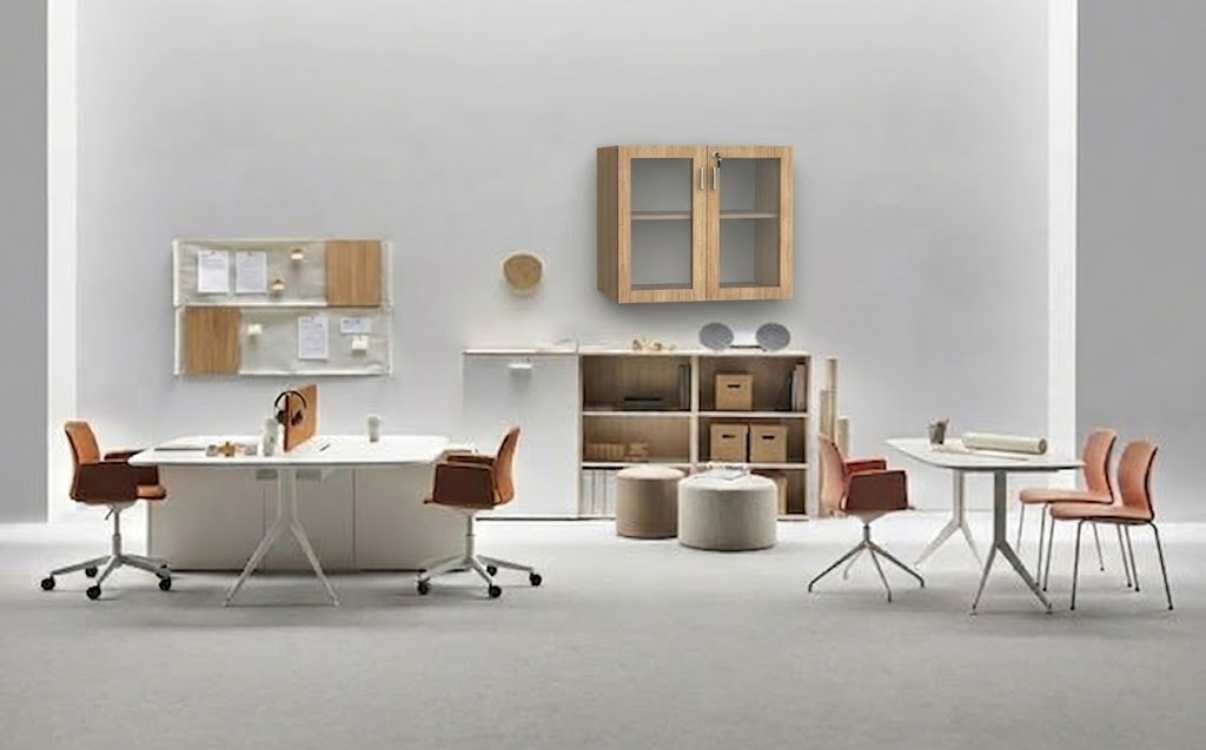
The low filing cabinet model combined with open shelves offers flexibility in both storage and aesthetics. The enclosed compartment is for storing documents, while the open shelves can display books, reference materials, decorative items, or frequently used supplies.
This design is suitable for modern offices aiming to blend storage functionality with decorative elements.
Materials of low filing cabinets
Low filing cabinet made of industrial wood
Low filing cabinets made of industrial wood are highly popular in modern offices due to their reasonable price, diverse designs, and ease of integration with various interior styles. Materials like MDF or MFC are commonly used because of their flat surface, ease of processing, and wide range of color options.
The advantage of this cabinet type is its suitability for office environments requiring uniformity, a modern look, and cost optimization. Additionally, surfaces coated with melamine or laminate enhance scratch resistance, are easy to clean, and maintain an aesthetic appearance over time.
Low filing cabinet made of natural wood
If prioritizing elegance and long-term durability, a natural wood low filing cabinet is a noteworthy choice. This material offers a sturdy, high-end feel and creates a distinct aesthetic highlight for the workspace.
With warm colors, beautiful wood grain, and robust construction, natural wood cabinets are often suitable for executive offices, meeting rooms, or workplaces aiming for a professional and refined image. However, the price of this product line is typically higher than industrial wood.
Low filing cabinet made of steel
Besides wood, steel low filing cabinets are also a popular option in many agencies, schools, or storage areas requiring high durability. Steel offers good load-bearing capacity, high durability, and is suitable for high-frequency use environments.
However, aesthetically, this cabinet type often has a simple style, leaning more towards practicality compared to wooden low filing cabinet models.
Standard dimensions of low filing cabinets
Common height
Typically, low filing cabinets have a height ranging from approximately 700mm to 1000mm. This height is suitable for ensuring storage functionality while avoiding a bulky feel in the office.
This height also makes it convenient for users to retrieve documents and allows them to utilize the top surface for various purposes.
Width and depth
The width of a low filing cabinet commonly ranges from 800mm to 1200mm, depending on the number of compartments and specific design. Meanwhile, the depth usually falls between 400mm and 450mm to accommodate A4-sized documents, ring binders, and common office paperwork.
These dimensions ensure adequate storage capacity without occupying excessive floor space in the workroom.
Notes on choosing dimensions
When selecting the dimensions of a low filing cabinet, first consider the actual area of the workspace. For small offices, prioritize a cabinet with a moderate width to avoid making the space feel cramped.
Additionally, consider the volume of documents to be stored to choose the appropriate size. If the number of documents is not large, a compact cabinet is sufficient. Conversely, if frequent storage is needed, opt for a model with multiple compartments or combined drawers to optimize functionality.
Furthermore, the layout of surrounding furniture such as desks, chairs, printers, and walkways should also be carefully considered to ensure the cabinet is convenient to use and harmonizes with the space.
Tips for choosing the right low filing cabinet
Choose cabinet dimensions suitable for the space
The first tip when buying a low filing cabinet is to measure the intended placement area beforehand. Accurately determining the width, depth, and operational area will help avoid the cabinet being too large or too small for actual needs.
Choose durable and suitable cabinet material
Depending on the budget and interior style, users can choose a low filing cabinet made of industrial wood, natural wood, or steel. For modern offices, industrial wood is often the optimal choice. For a touch of elegance, natural wood can be considered. Meanwhile, steel cabinets are suitable for storage needs prioritizing durability and load-bearing capacity.
Prioritize user-friendly design and easy document organization
A good low filing cabinet should have a logical design that facilitates clear document classification. Prioritize models with well-arranged compartments, storage spaces, or a combination of closed cabinets and open shelves to increase flexibility during use.
Check sturdiness and load-bearing capacity
Since they regularly hold papers and documents, low filing cabinets need a stable structure, sturdy shelves, and well-functioning hinges or drawer slides. This is a crucial factor determining the product's lifespan and long-term user experience.
Pay attention to cabinet security
If used to store important documents, contracts, internal papers, or administrative files, prioritize low filing cabinets with locks to enhance security. This is a small detail but essential in a professional work environment.
Choose a reputable brand and supplier
A reputable brand helps buyers feel more secure about material quality, product finish, and warranty policies. Therefore, when choosing a low filing cabinet, prioritize suppliers with clear information, transparent products, and good after-sales service.
Suggested quality low filing cabinet models at RPB Education & Public
At RPB Education & Public, the low filing cabinet line is introduced with various product codes, suitable for small offices, personal workspaces, schools, and administrative agencies. These cabinet models share the common advantages of compact design, easy arrangement, and efficient document storage in spaces needing to optimize area. The current low filing cabinet product line includes codes such as LC12-21, LC21-10, LC21-22, LC21-31, LC22-21, LC21-21, LC11-31, LC12-22, LC11-10, LC11-22, LC11-21.
Low Filing Cabinet LC12-21
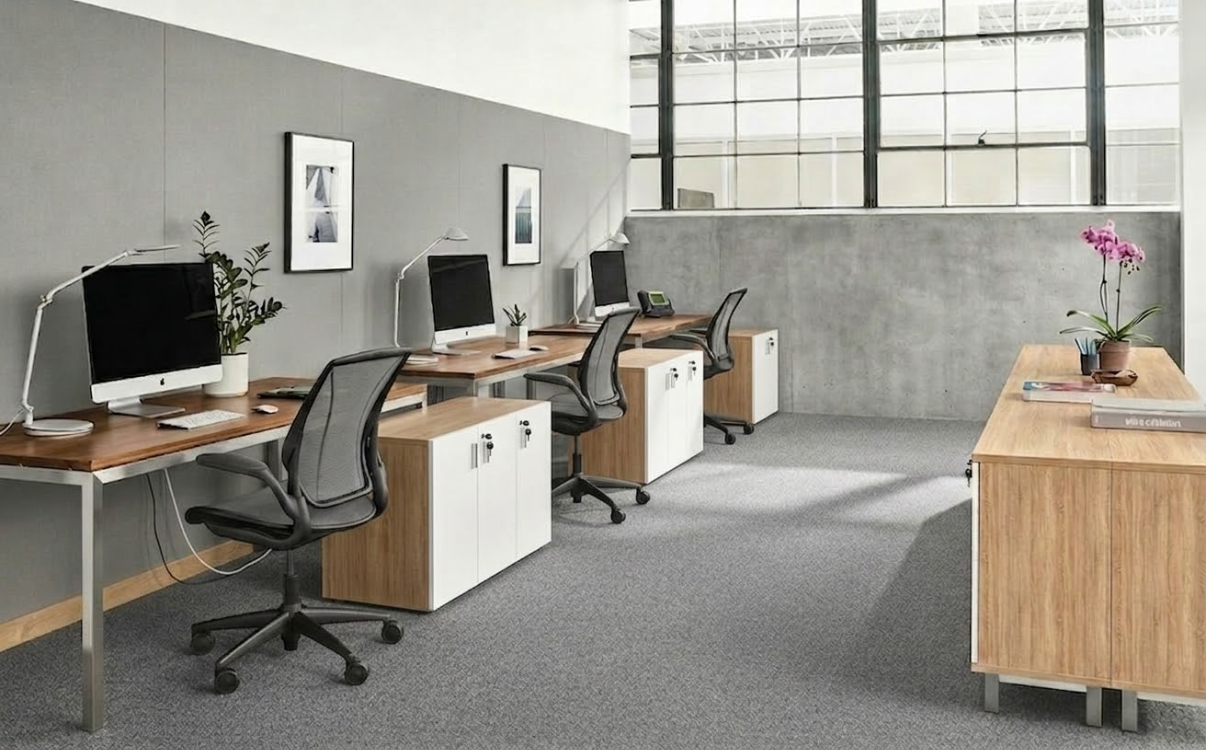
The LC12-21 low filing cabinet is one of the standout models on the RPB website, suitable for document storage needs in modern offices. With its low cabinet design, the product saves space, is easy to place against walls or next to desks while ensuring functionality. This is a suitable choice for spaces requiring neatness while maintaining a professional look.
Low Filing Cabinet LC21-10
The LC21-10 low filing cabinet is suitable for organizations seeking a compact storage solution that is cost-effective. Its low design makes the product easy to arrange in offices with limited space while still adequately meeting the need for storing documents, papers, or basic administrative items
Low Filing Cabinet LC21-22
If you need a low filing cabinet with better storage capacity while maintaining a compact design, the LC21-22 is a worthwhile choice. The product is suitable for corporate offices, teacher's rooms, or administrative areas needing systematic document arrangement without taking up too much space.
Low Filing Cabinet LC21-31
The LC21-31 low filing cabinet is a suitable suggestion for workspaces needing enhanced storage functionality while prioritizing an open interior layout. Low cabinet models like the LC21-31 can be flexibly placed in various locations, from individual workstations to administrative departments.
Low Filing Cabinet LC22-21
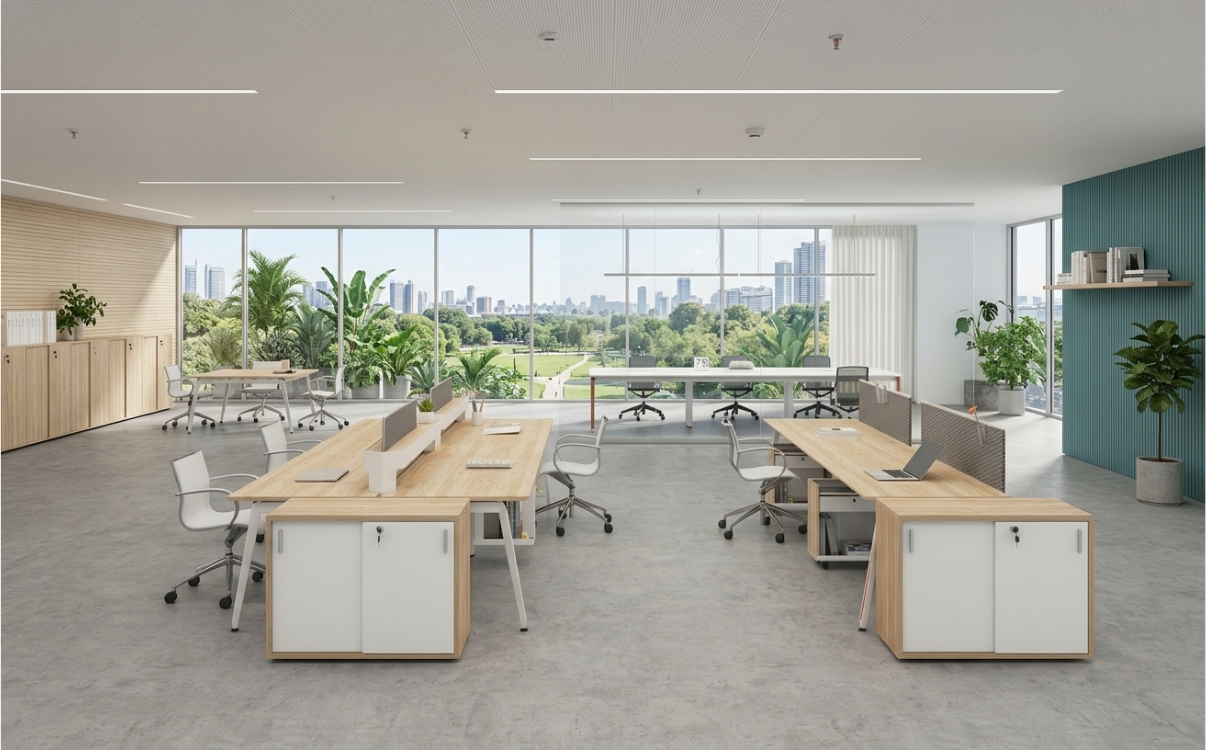
The LC22-21 low filing cabinet is suitable for organizations needing a storage cabinet with higher aesthetics and functionality within the low cabinet group. The product is ideal for arrangement in corporate offices, specialized workspaces, or areas where documents are accessed frequently.
Practical applications of low filing cabinets
Thanks to their compact, flexible, and easily arranged design, low filing cabinets are widely used in various workspaces. Not only suitable for modern offices, this cabinet type also effectively meets storage needs at home, in schools, and in administrative agencies. Below are common practical applications of low filing cabinets in daily life and work.
Low filing cabinets in small offices and startups
For small offices and startup companies, space is always a factor that needs careful calculation when arranging furniture. The workspace must simultaneously accommodate staff seating and have areas for storing documents, files, and necessary supplies. In this context, the low filing cabinet becomes a suitable solution due to its space-saving ability while still meeting usage needs well.
With a moderate height, low filing cabinets can be placed against walls, next to desks, or utilize empty spaces like corners without creating a heavy feeling in the space. Thus, the office remains airy, tidy, and easy to navigate during daily work.
Besides document storage, low filing cabinets can also serve as a place for printers, desk phones, decorative items, or frequently used documents. This is a big plus for startups and small businesses, where every piece of furniture needs to maximize its functionality.
Low filing cabinets in home offices
The trend of remote work and working from home is increasingly popular, leading to the need for a well-organized workspace within the living area. However, home offices often lack ample space, so choosing furniture should prioritize compactness, convenience, and harmony with the overall interior.
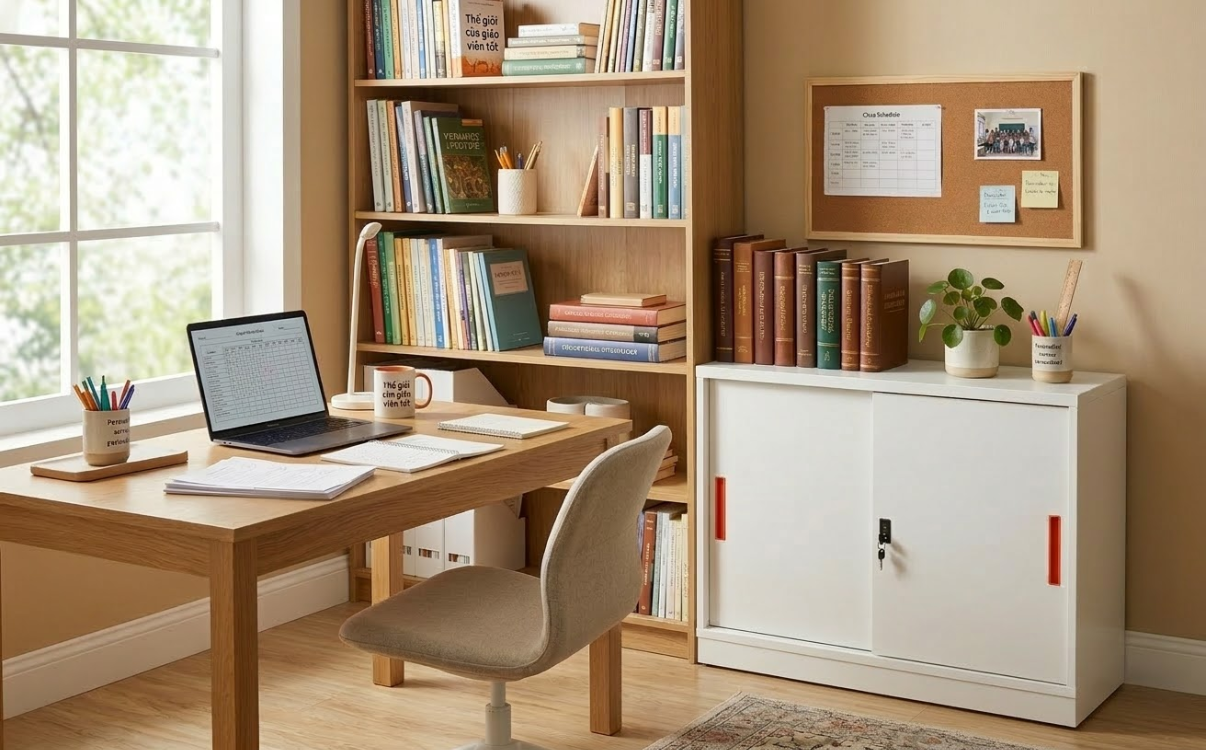
In this case, the low filing cabinet is a very suitable choice. The product helps store papers, documents, books, office equipment, and personal items neatly without making the room feel cramped. Thanks to its low design, the cabinet is also easy to combine with desks, bookshelves, or place under windows to utilize space more effectively.
Beyond functionality, low filing cabinets also contribute to creating a tidy, professional, and more focused workspace. For freelancers, hybrid office workers, or those managing work from home, this is a practical and long-term storage solution.
Low filing cabinets in schools and administrative agencies
In schools and administrative agencies, the need for storing files, records, official dispatches, and specialized documents is always substantial. However, not every space is suitable for tall or large-sized cabinets. In many cases, low filing cabinets are a more reasonable choice as they ensure functionality while allowing for flexible and tidy furniture arrangement.
In school environments, low filing cabinets are often used in teacher's rooms, academic affairs offices, libraries, or functional rooms to store lesson plans, student records, internal documents, and teaching materials. Thanks to their low design, the product helps the space feel less heavy and creates a more friendly and user-friendly atmosphere.
In administrative agencies, low filing cabinets are suitable for storing frequently accessed documents, internal dispatches, or department-sorted files. The cabinet can be placed along office hallways, in document reception rooms, or in areas handling specialized paperwork, making document management more convenient and systematic.
Why are low filing cabinets widely applied?
The reason low filing cabinets are applied in diverse work environments is that they effectively meet three key criteria: saving space, supporting efficient storage, and easily integrating with various furniture styles. From small offices and home workspaces to schools and administrative agencies, this cabinet type consistently fulfills its role as a neat, flexible, and aesthetically pleasing storage solution.
For spaces requiring optimization and professionalism, investing in a suitable low filing cabinet will significantly improve document organization capabilities and enhance the overall tidiness of the entire work area.
Conclusion
With their compact, flexible, and space-saving design, low filing cabinets are a suitable solution for many modern workspaces such as small offices, home offices, schools, and administrative agencies. The product not only helps store documents neatly and systematically but also contributes to creating a more professional and organized work environment.
To choose the right cabinet model, users should carefully consider dimensions, materials, and actual usage needs. If you are looking for durable, user-friendly low filing cabinet models suitable for various spaces, contact RPB Education & Public via hotline: 19000324 for detailed consultation.
Related News



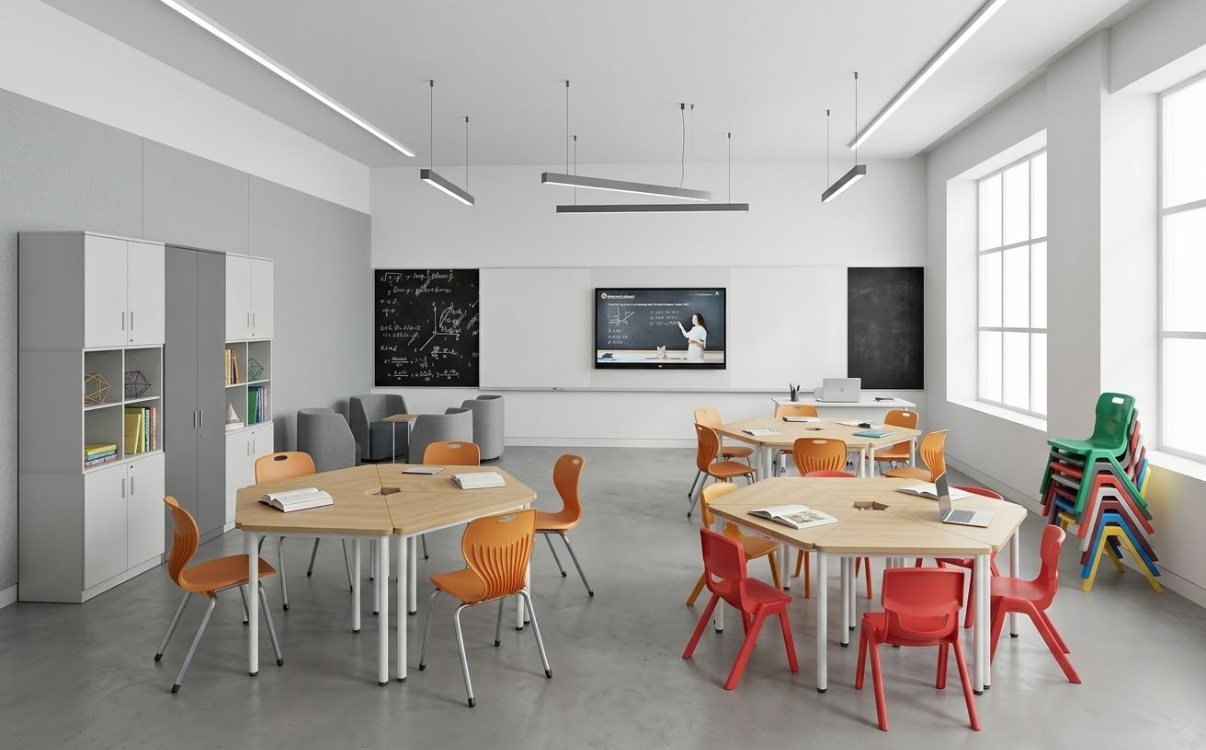
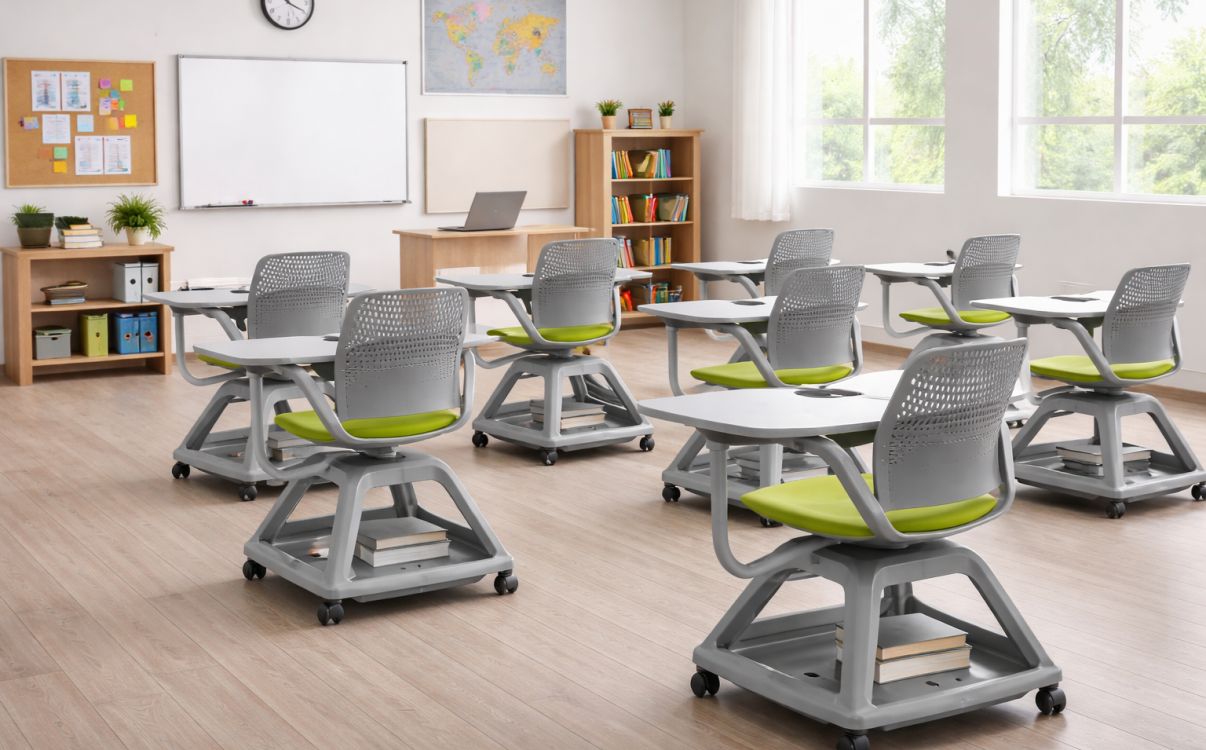
Bench Desk - Optimizing Lecture Hall and Classroom Space
Explore bench desks for lecture halls, classrooms, and training centers. Learn about their structure, advantages, how to choose, and outstanding models at RPB Education & Public right below.

Kích thước ghế băng chờ inox, nhựa, nệm: Bảng thông số chi tiết nhất
Cập nhật bảng kích thước ghế băng chờ inox, nhựa, nệm theo 2–5 chỗ ngồi; kèm cách bố trí lối đi, chọn thông số phù hợp từng không gian như bệnh viện, trường học, văn phòng, bến xe.

What is a Stool? Classification, Uses and Standard Sizes
Learn what a stool is, popular types of stools, practical uses, standard sizes, and how to choose the right stool for your home, school, restaurant, and office.

Office Relocation Announcement – Elevating Your Experience
To enhance service quality, expand our workspace, and provide a better experience for our customers, we are pleased to announce the relocation of our office to a new address.
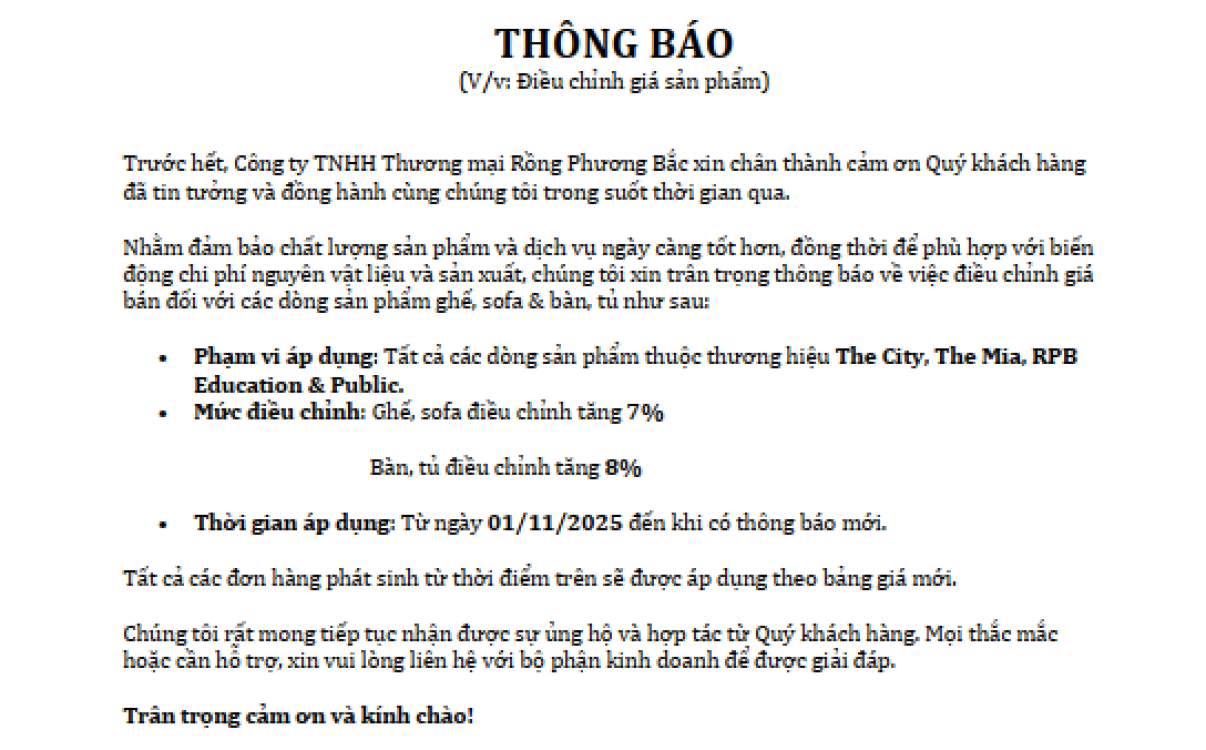
Announcement of product price adjustment
RPB Education & Public sincerely thanks our valued customers for your continued trust and partnership over the past years.
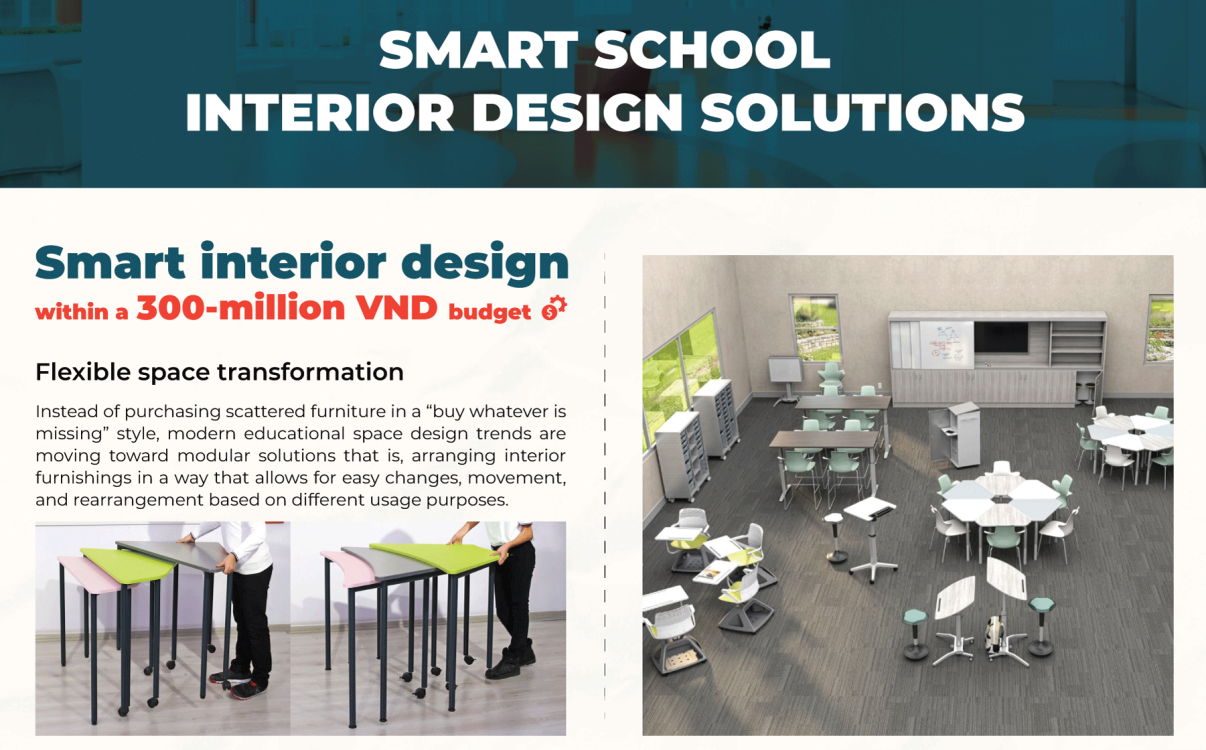
Smart Interior Design Solutions for Universities: Within a 300 Million VND Budget
Smart university interior design within a 300-million budget is not only a financial challenge but also a strategy to elevate the learning experience. With the right investment, it helps create modern, inspiring, and flexible spaces aligned with new teaching methods while optimizing long-term operating costs.

Environmental permit announcement
RPB Education & Public officially announces its environmental permit in accordance with current regulations, reaffirming the company's commitment to legal compliance, environmental protection, and sustainable development. This is an important step to ensure that all of RPB’s business and production activities are aligned with the goal of being environmentally friendly, safe for the community, and contributing to a greener future for the next generation.