


Stadium Seats Durable, Suitable for All Large Projects
In large-scale projects such as football stadiums, indoor arenas, school bleachers, or sports centers, stadium seats are an indispensable item to complete functionality and enhance the overall image. These are not just equipment providing seating for spectators but also directly contribute to the operational quality of the entire project.
In the past, many stadiums used simple tiered bleachers, lacking seats or using poorly designed ones. However, with the development of the sports industry and the need to improve spectator experience, seating systems have become an essential part of modern design. Major tournaments today require bleachers to be equipped with seats that meet standards for safety, comfort, and visibility.
For investors and operators, choosing and designing stadium seats is not just an interior item but an important part of a sustainable sports facility development strategy. A seating system invested in according to proper standards will help enhance spectator experience, increase service exploitation capabilities, and affirm the stadium's class in the long term.
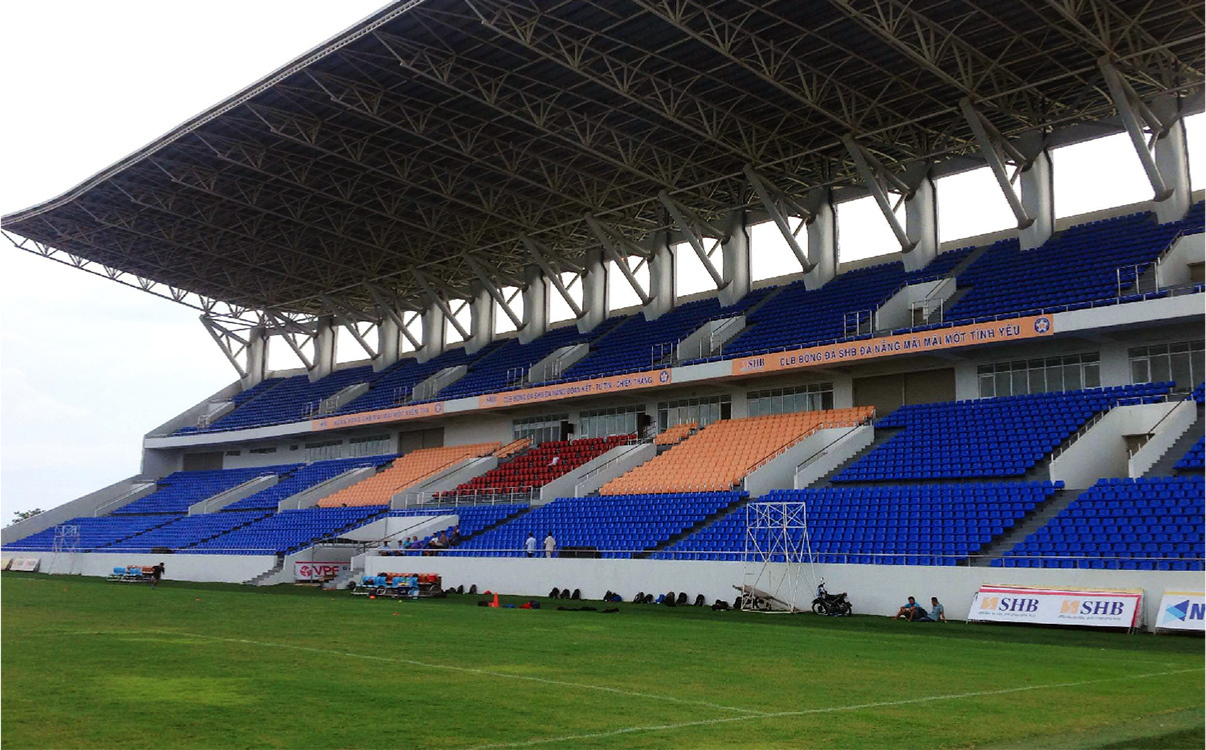
What are stadium seats?
Concept of stadium seats
Stadium seats are specialized seating lines designed for installation in bleacher areas of sports and event facilities. Compared to regular seats, this line is optimized in structure, load-bearing capacity, durability, and layout to meet specific usage environments.
The product typically has a compact, sturdy design, suitable for high seating density, easy to install in long rows, and ensures stable use for many years. For large projects, seats must also meet requirements for safety, uniformity, and ease of operation.
Projects that commonly use them
Types of stadium bleacher seats currently are widely applied in many items such as:
-
Football stadiums
-
Multi-purpose indoor arenas
-
District, provincial, national stadiums
-
Schools, universities with bleachers
-
Cultural houses, outdoor event venues
Why do large projects need specialized seats?
Large projects always need specialized stadium seats because the exploitation characteristics are very different from regular seating areas. First is the high frequency of use, especially during matches, sports events, or crowded gatherings. Besides that is the large installation quantity, requiring products to be uniform, easy to construct, easy to replace, and easy to maintain.
Furthermore, these seats must meet safety standards, good load resistance, minimize shaking, and be durable against weather factors like sun, rain, humidity, dust, or temperature changes. This is why large projects cannot arbitrarily choose domestic seats as replacements.
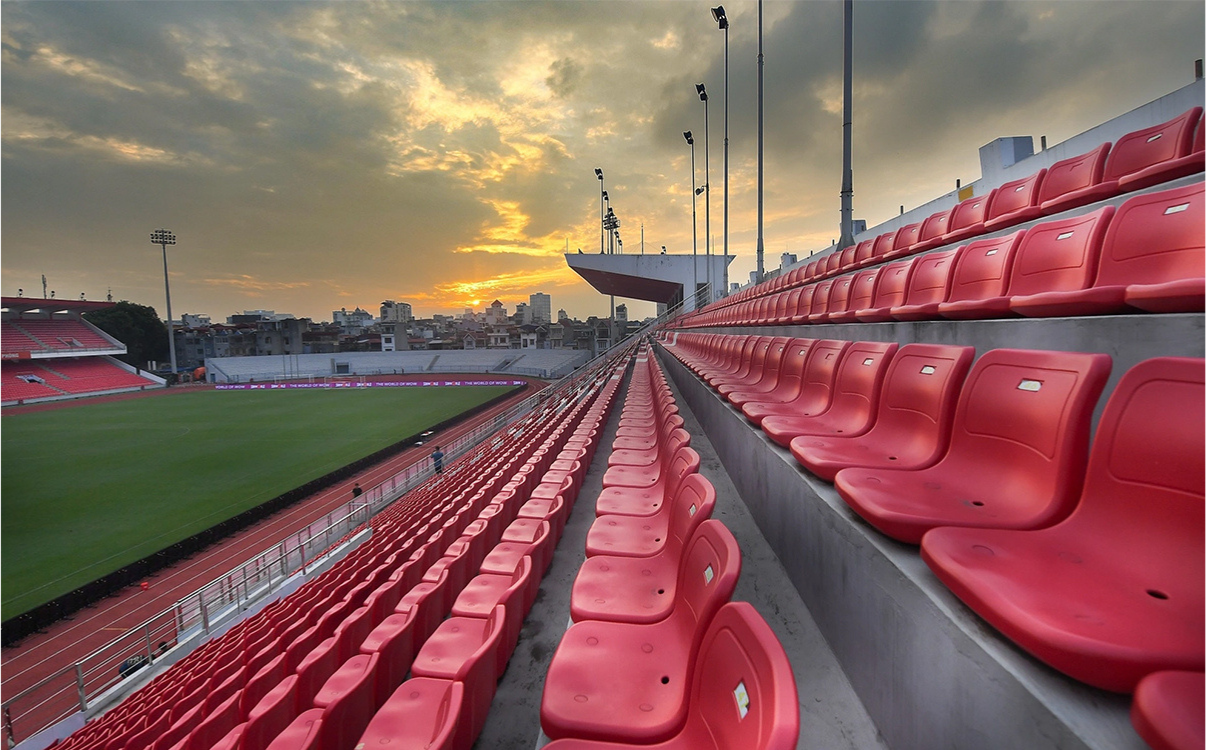
Standard stadium seat dimensions
There is no single dimension applicable to all stadium seat models. Actual dimensions will vary depending on the seat type, comfort level, installation method, and requirements of each project. However, in modern bleacher design, there are important reference points to ensure seating capacity, comfort, mobility, and safety during operation.
Seat width
Seat width is one of the most important parameters when calculating the number of seats on a bleacher. For common seat models, width is usually in the range of 430–450 mm. Common flip seats typically range around 440–450 mm, while premium or VIP seats are often from 480 mm upwards to create a more comfortable sitting feeling.
From an international reference perspective, many stadium seat models have a common width in the range of 19–22 inches, equivalent to approximately 483–559 mm. Depending on the investment budget and exploitation direction of the project, investors can choose a compact seat configuration to optimize capacity or choose wider seats to enhance viewer experience.
Seat depth
Seat depth directly affects sitting comfort and the amount of floor space occupied on the bleacher step. For common seat models, the depth when the seat is open is usually in the range of 550–580 mm. For some fixed models with high plastic backs, the actual size can be more compact, for example around 447 mm for the seat body.
When calculating seat depth, one should not only look at the individual product but place it within the overall bleacher design. Because besides the seat body size, the project must also ensure footwell area, mobility, and necessary clearance between seat rows.
Seat height
Seat height needs to be calculated reasonably so that the sitter maintains a stable and comfortable posture for a long time. For many common bleacher configurations, the seat surface height is often arranged around 450 mm from the floor level to achieve better comfort.
Besides the seat surface height, the backrest height is also a factor to consider. For some common high-back seat models, the backrest height can be around 350 mm. This parameter helps the seat provide basic support for the back area, while still keeping the overall design compact, suitable for large-volume installation areas.
Distance between seats
The distance between seats is usually calculated by the seat center-to-center distance. This is an important parameter to ensure that sitters are not too cramped, while also helping rows of seats be arranged evenly and easily constructed. In a space-saving configuration, the center-to-center distance can be calculated from 450 mm. However, 500 mm is often considered a more common recommended benchmark.
For projects prioritizing user experience, the center-to-center distance can be increased to around 500–600 mm. Choosing which parameter depends on the bleacher scale, user group, and actual exploitation goals of the project.
Distance between rows
The distance between rows of seats does not only depend on the seat size but is also directly related to the depth of the bleacher step. In international design practice for common bleacher areas, the bleacher step depth is often recommended to be around 800 mm or more to ensure enough space for seat arrangement, footwell, and mobility.
Besides that, the minimum foot area also needs to be calculated reasonably so that spectators can enter and exit more conveniently. If the rows are arranged too close together, spectators will feel cramped, find it difficult to move, and this affects the general experience, especially during events with large crowds.
Height difference between rows
The height difference between rows is an important factor in bleacher design because it directly affects the visibility of spectators sitting behind. This parameter does not have a fixed level applicable to all projects but needs to be calculated according to the bleacher slope, step structure, and specific seating arrangement plan.
If the height difference between rows is not reasonable, spectators sitting behind can easily have their view obstructed by the row in front. Therefore, when implementing, investors need to carefully survey the layout, slope, and dimensions of each step to ensure balanced, safe, and convenient seating arrangement.
Visibility standards
A standard stadium seating system not only ensures seating but also meets visibility requirements. Rows need to be arranged so that spectators sitting behind can still observe well without being too obstructed by people or seats in the front row.
Visibility standards are therefore always closely linked to the distance between rows, the height difference between steps, and the actual installation position. In professional stadiums or indoor arenas, this factor is particularly important because it directly affects spectator experience and the operational quality of the entire bleacher area.
Adjusting dimensions according to project type
Stadium seat dimensions should be adjusted according to each project type rather than mechanically applying a single common parameter. For grassroots stadiums, school bleachers, or projects needing budget optimization, compact seat models with smaller center-to-center distances can be prioritized to increase seating capacity.
Conversely, for modern indoor arenas, multi-purpose sports centers, or VIP areas, priority should be given to seat models with larger widths, more spacious distances between seats, and more comfortable seating configurations. Adjusting dimensions according to project type will help balance usage functionality, spectator experience, investment costs, and the overall image of the project.
Common types of stadium seats today
Depending on project scale, investment budget, and actual operational requirements, stadium seats are currently divided into different groups. Each seat type has its own advantages in design, space optimization, comfort level, and aesthetic image of the bleacher. Classifying correctly from the start will help investors easily choose the right solution for each usage area.
Stadium seats without backrest
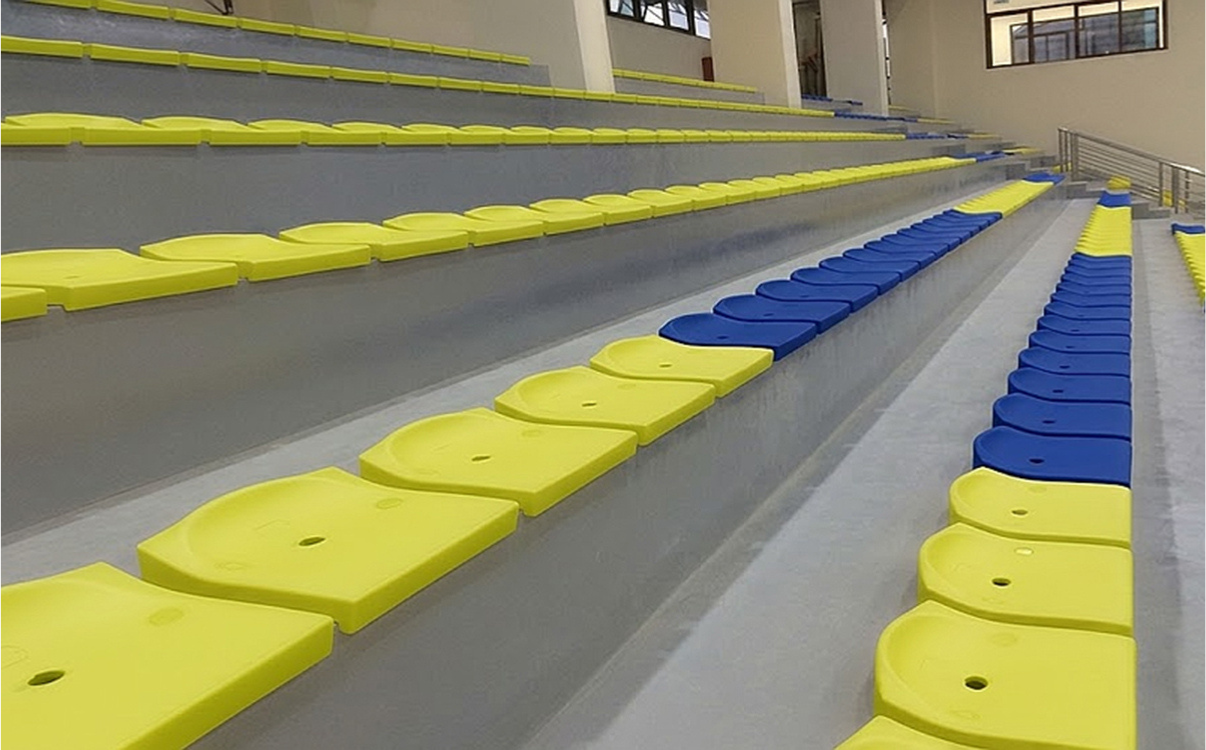
This is a seat line with a simple, lightweight design focused on optimizing the number of seats. Due to the lack of a backrest, this model helps save installation space, suitable for bleachers that need high seating density or projects that need good budget control.
The great advantage of stadium seats without backrest is fast construction, compact structure, easy cleaning, and convenient when deploying in large quantities. This line is often used for common bleacher areas, grassroots stadiums, school grounds, or projects that need a durable seating solution but still cost-effective. At RPB Education & Public, the Stadium 05 stadium seat model is an option to consider for the backless seat group.
View details: Stadium 05 Stadium Seat
Stadium seats with backrest
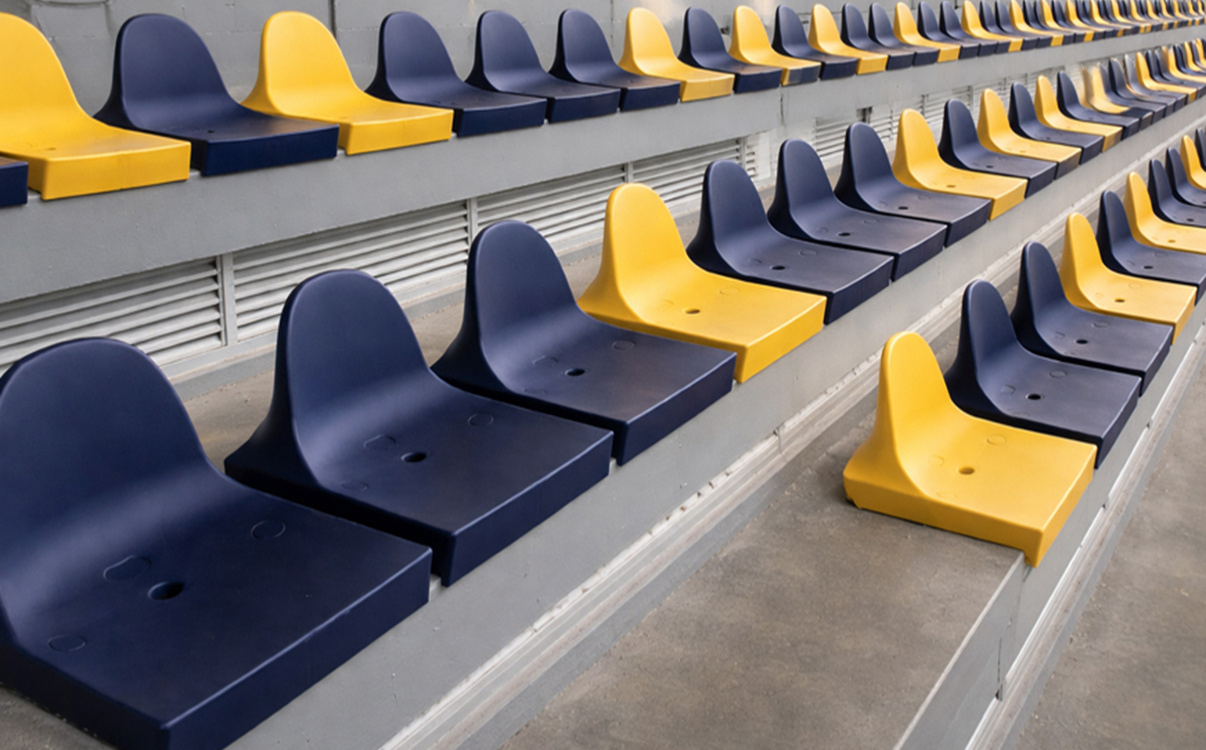
Compared to backless seats, the backrest seat line provides a more comfortable sitting experience thanks to the lumbar support and creates a stable feeling when used for long periods. This is a suitable choice for projects that pay more attention to spectator comfort, especially in indoor arenas, modern stadiums, or common bleacher areas with higher service standards.
Backrest seats often create a more complete and professional feeling for the entire bleacher. Besides functionality, this seat type also helps the project have a uniform, modern image and is easy to upgrade space quality. At RPB Education & Public, you can also refer to Stadium 02 and Stadium 06 models for the backrest seat group.
View details: Stadium 02 Stadium Seat, Stadium 06 Stadium Seat
Folding stadium seats
Folding stadium seats are a suitable solution for projects that need to increase operational flexibility and ensure clear aisles. When not in use, the seat surface can fold up or back, helping the bleacher area become tidier, supporting more convenient movement, and creating better conditions for cleaning, management, and event organization.
This is a seat line often prioritized in high-end projects, multi-purpose indoor arenas, event venues, or projects with high requirements for aesthetics and user experience. The Stadium 04 stadium seat at RPB Education & Public has an automatic folding mechanism, backrest and seat surface made of high-grade plastic, and an electrostatic painted iron frame, suitable for stadiums, indoor arenas, school auditoriums, and even outdoor event areas. Thanks to the smart folding mechanism, this seat model helps save aisle space and enhances the professionalism of the bleacher space.
View details: Stadium 04 Stadium Seat
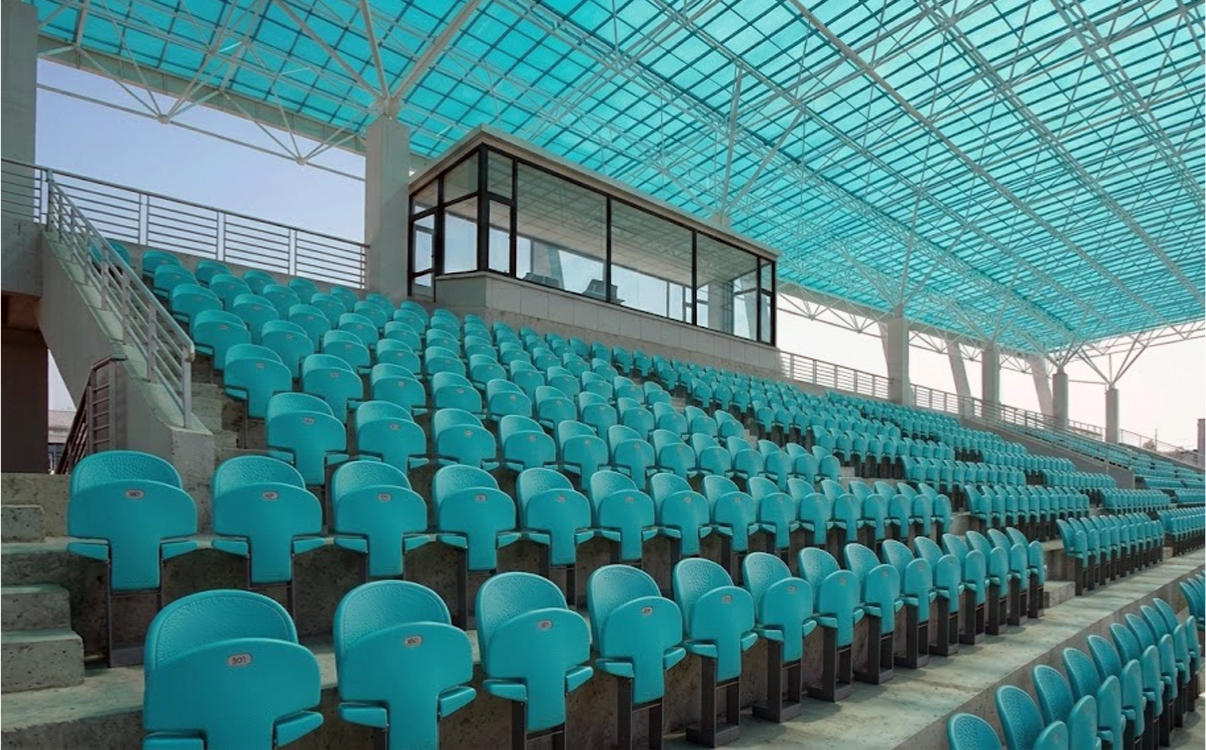
VIP bleacher seats
VIP bleacher seats are a product line for areas requiring higher service standards such as guest areas, organizing committee areas, leadership areas, or special spectator areas. Compared to regular seats, VIP seats usually have a more meticulous design, better finishing materials, and pay more attention to long-sitting experience, luxurious image, as well as uniformity with the overall architecture of the project.
In large-scale stadiums or indoor arenas, the VIP area is often considered a highlight demonstrating the class of the entire project. Therefore, seats used for this area not only need to be sturdy and durable but also must create a professional and clearly differentiated feeling from regular seat areas. RPB Education & Public has Stadium 02 and Stadium 04 stadium seat models for VIP bleacher seats or priority areas. Particularly Stadium 04 with a minimalist, modern style, automatic folding mechanism, and suitable materials for large-scale public and sports projects.
View details: Stadium 02 Stadium Seat, Stadium 04 Stadium Seat
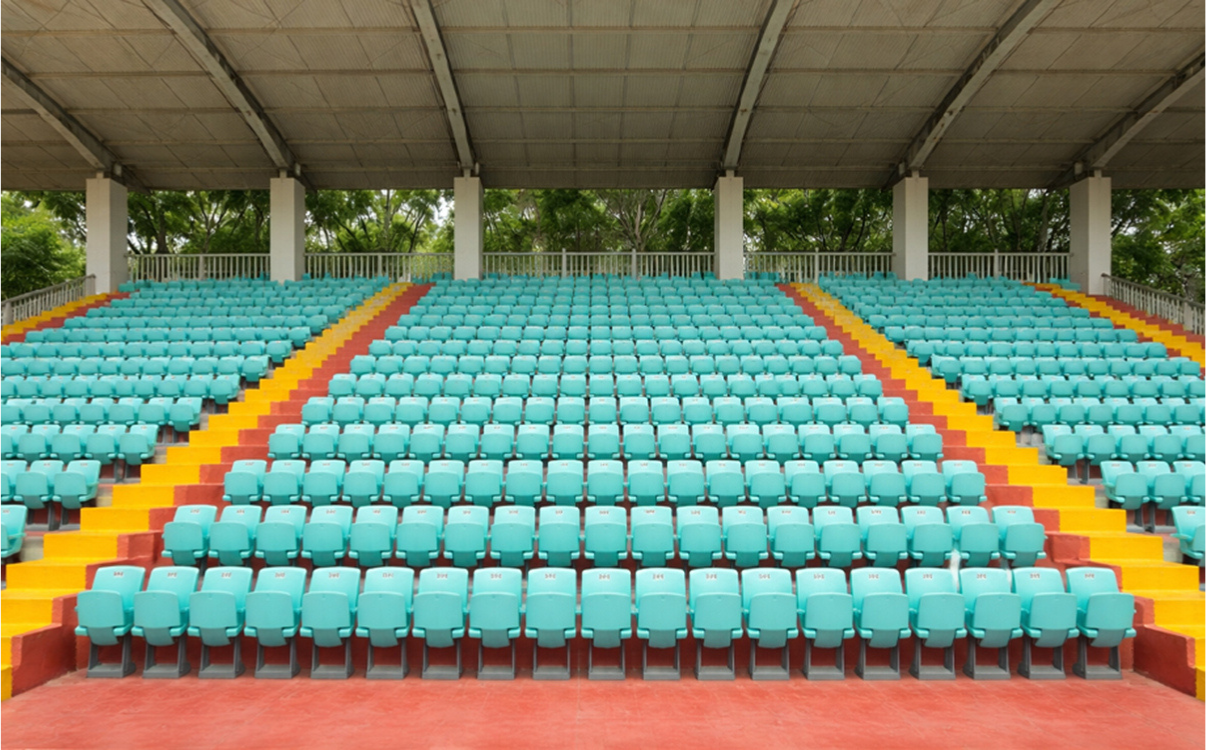
Design and installation standards for stadium seats
Designing and installing stadium seats is an item that requires synchronized calculation between the product, bleacher structure, and actual operation plan. A standard seating system not only meets seating needs but must also ensure durability, safety, aesthetics, and long-term exploitation capability for the entire project. Therefore, right from the stage of choosing the seat model, investors need to carefully consider factors such as type of use, seating density, characteristics of indoor or outdoor areas, and bleacher zoning requirements.
Suitable for the bleacher step surface structure
First, seats must be designed to suit the bleacher step surface structure. Depending on each project, seats can be installed directly onto concrete floors, steps, or a specialized support frame system. Each option requires accurate calculation of screw positions, load-bearing capacity of the installation surface, and stability during use.
If the bleacher step has a large slope or uneven dimensions, the seating arrangement plan must be carefully surveyed to avoid misalignment, imbalance, or affecting spectator visibility.
Scientific row and aisle seating arrangement
Another important criterion is arranging seats in clear, uniform, and scientific rows and aisles. The distance between seats, between rows, and between seats and aisles needs to be calculated reasonably so that sitters have enough space to use while still optimizing the number of seats on the entire bleacher.
This arrangement not only relates to comfort but also directly affects mobility, crowd control, and event organization when the facility operates at large capacity. In professional stadiums or indoor arenas, seating arrangement also needs to ensure clear visibility, minimizing the situation where people sitting in front block the viewing angle of those behind.
Sturdy installation connection, good load-bearing capacity
Besides the layout factor, the installation connection is also a mandatory criterion that must be ensured to be sturdy. The base system, bolts, expansion screws, brackets, or fixed frames need good load-bearing capacity, firmly adhere to the installation surface, and minimize shaking when many people use them for a long time.
For projects with high exploitation density, the load capacity and stability of each seat position are very important factors, because just a few loose connection points can affect the overall safety of the entire bleacher area.
Suitable for environmental conditions of use
For outdoor projects, seat materials and installation accessories must have good resistance to environmental conditions. Seats need to limit fading, brittleness, cracking, or deformation when frequently exposed to sun, rain, dust, and high humidity.
Metal accessories such as bolts, screws, support frames, or connection plates should also have rust and corrosion resistance to maintain long-term durability. This is a particularly important factor for football stadiums, school bleachers, outdoor stadiums, or seasonal event venues.
Meeting safety and actual operation requirements
Besides durability and load capacity, seat design standards also need to meet safety and actual operation requirements. In crowded areas, aisles between rows, evacuation distances, and movement directions need to be calculated reasonably to ensure convenient entry and exit and good handling in case of incidents.
Seat edges, corners, connection details, and overall structure should also be finished safely, minimizing sharp details or those prone to collision during use.
Ensuring aesthetics for the entire bleacher
For modern projects, aesthetics in stadium seat design and installation are also highly valued. The seating system needs uniform colors, harmonious layout with the overall architecture, and can coordinate colors according to brand identity, team colors, or the project's main color.
When installed with proper technique, rows of seats will create a professional, modern bleacher image and contribute to enhancing the image value for the entire project.
Convenient for long-term maintenance and replacement
Finally, a standard seating system does not stop at initial installation but must also be convenient for maintenance, replacement, and long-term operation. For a project with thousands of seats, the ability to disassemble individual positions, replace components, and perform periodic cleaning is a very important factor to optimize future usage costs.
Criteria for choosing durable stadium seats suitable for all large projects
To choose suitable stadium seats for large-scale projects, investors cannot just look at design or initial price. A satisfactory product needs to be evaluated on many aspects such as durability, load capacity, design, safety, exploitation efficiency, and long-term usage costs. Below are important criteria to consider when choosing durable stadium seats suitable for all types of large projects.
Durability and load-bearing capacity
This is the most important criterion when choosing stadium seats. For projects such as football stadiums, indoor arenas, school bleachers, or sports centers, seats often have to withstand very high usage frequency and great pressure from the number of people sitting simultaneously. If the product is not sturdy enough, seats will quickly degrade, crack, warp, or loosen connections after only a short period of use.
A durable seat needs a stable structure, good load-bearing capacity, and minimal deformation during long-term exploitation. Besides the seat body, parts such as the base, connection points, support frames, or installation accessories must also be manufactured uniformly to ensure overall stability. For outdoor projects, durability must also come with the ability to withstand sun, rain, humidity, dust, and continuous temperature changes. Choosing highly durable seats from the start will help the project limit damage, reduce operational risks, and significantly save on future replacement costs.
Ergonomic design
Even for bleacher areas with a large number of seats, comfort is still very important. A stadium seat with ergonomic design will help the sitter maintain a stable posture, reduce back and hip fatigue when having to follow a match or event for a long time. This factor directly affects spectator experience, especially in modern stadiums and projects with high service requirements.
Ergonomic design is shown in the curvature of the backrest, seat surface width, seat height, and overall proportion distribution suitable for natural sitting posture. A seat with reasonable design not only creates a more comfortable feeling but also contributes to enhancing the professional image of the entire bleacher. For VIP areas or guest areas, this criterion needs even more attention because it directly relates to service quality and user impression.
Space optimization and bleacher layout
In large projects, bleacher area always needs to be calculated carefully to both maximize the number of seats and ensure ventilation and convenience for movement. Therefore, when choosing stadium seats, investors need to consider the space optimization capability of each seat model. Each seat type such as backless, with backrest, folding, or VIP will have different levels of space occupation and is suitable for different layout purposes.
A suitable seat model must harmonize actual usage dimensions with installation density on the bleacher. If seats are too large, the project may lose seating capacity. Conversely, if seats are too small or arranged too close together, viewers will feel cramped, uncomfortable, and this affects the general experience. Additionally, space optimization also relates to row spacing, bleacher slope, aisles, visibility, and evacuation plans in case of incidents. Choosing seats suitable for the overall layout will help the bleacher operate more efficiently and create a more professional and scientific feeling.
Installation and maintenance capability
A very practical criterion but often overlooked when choosing stadium seats is installation and maintenance capability. For projects with hundreds to thousands of seats, construction needs to be done quickly, accurately, and uniformly to save time and labor costs. If the seat model is too complex in structure or difficult to assemble, the deployment process will face many difficulties and be prone to errors.
Besides that, seats should also have a structure convenient for inspection, cleaning, maintenance, and replacement of individual positions when needed. This is a very important factor in long-term operation, because no project can avoid the need for repair or partial replacement after a period of use. An easy-to-maintain seating system will help the management unit be more proactive in exploitation, reduce downtime, and optimize long-term operating costs.
Aesthetics and brand identity
Today, stadium seats are not only functional equipment but also part of the project's image. The color, design, and uniformity of the seating system have a great impact on the overall appearance of the bleacher. A beautifully arranged seating area, harmonious colors, and suitable for the general architecture will create a modern, professional feeling and enhance the aesthetic value for the entire project.
In many stadiums and indoor arenas, seats are also used as a brand identity element through color coordination according to logos, team colors, school colors, or the main color of the organizing unit. Therefore, when choosing seats, investors should consider aesthetic factors alongside durability and functionality. A suitable product not only meets usage needs but also contributes to creating a unique image mark for the project.
Safety standards and certification
Safety is a mandatory factor for any crowded gathering project. Therefore, stadium seats need to meet all requirements regarding structure, sturdiness, and ability to operate stably in high-density exploitation environments. Seats must be installed firmly, without shaking, without sharp details, and without causing danger during regular use.
Besides structural factors, investors should also prioritize products with clear technical specifications, transparent origin, and quality certification if available. This increases product reliability, while ensuring uniformity in construction and operation. For large projects or public projects, choosing seats that meet safety standards not only helps protect users but also limits legal risks, technical incidents, and subsequent costs.
Investment cost and long-term efficiency
The initial purchase price is always a factor that many investors care about, but when choosing stadium seats, this should not be the only criterion. A low-priced product may help save immediate budget, but if quality is not guaranteed, lifespan is short, and it is prone to damage, the actual total usage cost will be much higher.
Instead of just comparing selling prices, investors should evaluate based on long-term efficiency, including durability, maintenance costs, replacement costs, and the ability to operate stably for many years. A good quality seat model, high load capacity, slow degradation, and easy maintenance will bring better economic efficiency throughout the project's lifecycle. This is a smart investment approach for large-scale projects, where stability and sustainability are always more important than short-term benefits.
Benefits of investing in high-quality stadium seats
Investing in high-quality stadium seats is not only a solution to complete the bleacher area but also brings many practical values to the entire project. For large-scale projects such as football stadiums, indoor arenas, sports centers, or school bleachers, the seating system is not simply a place for spectators to sit but also directly affects user experience, project image, and long-term operational efficiency. Choosing the right product from the start will help investors limit many risks arising during exploitation and at the same time enhance the overall value of the project.
Enhancing spectator experience
One of the most obvious benefits of investing in high-quality seats is improving viewer experience. When spectators sit on sturdy, stable seats with reasonable design, they will feel more comfortable throughout the match, performance, or community events. This factor is especially important for projects that frequently host events lasting many hours or have large attendance.
Good seats will help limit feelings of discomfort, cramping, and instability. This not only creates goodwill with regular spectators but also helps improve service quality for guests, delegates, and special user groups. In the context of more and more projects aiming for professional operation standards, spectator experience is one of the determining factors for the overall impression of the venue.
Increasing project professionalism
A systematically invested stadium seating system will contribute to creating a uniform, modern, and professional appearance for the entire bleacher area. When the color, design, layout, and seat quality are consistent, the project will have a much more polished image compared to bleachers using non-uniform or rapidly degrading seats.
For stadiums, indoor arenas, or sports centers, the bleacher area is highly visible and often appears in media images, filming, and event photography. Therefore, seats not only have usage value but also contribute to building the brand image of the venue. A modern, uniform, and aesthetic bleacher will create a feeling of reliability, professionalism, and elevate the project's value in the eyes of viewers, partners, and event organizers.
Ensuring operational safety
Safety is always an important requirement for crowded gathering projects. Using high-quality stadium seats will significantly limit the risk of damage during exploitation, especially in areas with high usage frequency. Sturdy seats, good load capacity, and proper installation will help reduce shaking, limit cracking or loosening of connections after long-term use.
This is particularly meaningful during matches, crowded spectator events, or programs organized with high density. When the seating system operates stably, investors and managers are also more assured during exploitation, while increasing the project's reliability with users. A safe bleacher area not only protects spectators but also helps organization and operation take place more smoothly.
Optimizing long-term costs
Many investors tend to focus on the initial purchase cost, but in reality, the greatest value of a quality product lies in its long-term usage efficiency. When investing in the right type of stadium seat with high durability, good resistance, and less damage, the project will save a lot of repair, replacement, and maintenance costs during use.
The higher the product lifespan, the more obvious the investment efficiency, especially for projects with a large number of seats. Instead of having to replace seats in short stages or continuously handle localized damage, investors can operate stably for many years. This is a very important benefit for public, sports, and educational projects, where sustainability and operating costs always need to be optimized.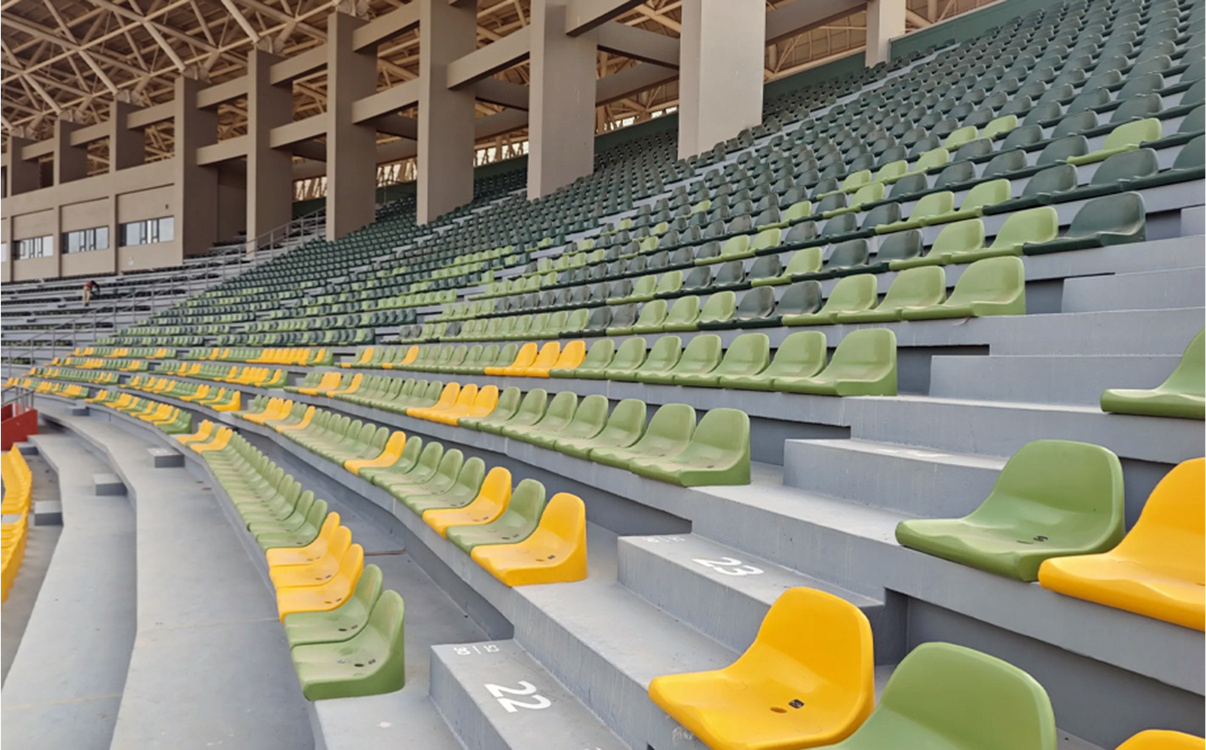
Common mistakes when choosing stadium seats
Whether the project is large or small, the selection of stadium seats still needs careful calculation from the beginning. In reality, many investors or contractors often make common mistakes that cause the seating system not to achieve the desired usage efficiency. These mistakes not only increase investment and maintenance costs but also affect the image, safety, and lifespan of the project.
Only caring about low price
One of the most common mistakes is focusing only on the low price factor while ignoring the actual quality of the product. Choosing seats with a low price may help save the initial budget, but in return, it is very easy to encounter situations where seats are thin, structure is weak, quickly fade, crack, or get damaged after a short period of use.
For large-scale projects, just a part of the seating system degrading early can lead to very significant repair and replacement costs. Therefore, choosing based on the lowest price is not always the economical option. What is more important is to compare based on long-term usage value, durability, and suitability with actual operating conditions.
Ignoring actual environmental conditions
Not a few cases involve investors choosing seats without properly assessing the installation environment. Meanwhile, seats used for indoor and outdoor areas have completely different requirements. For outdoor projects, the product needs much better resistance to sun, rain, fading, moisture, and corrosion than seats installed indoors.
If this factor is ignored, seats can degrade very quickly after only a short time in use. This is a common error in school grounds, local stadiums, or outdoor bleacher areas when choosing products that are not suitable for weather conditions. Therefore, before choosing seats, it is necessary to clearly determine the installation location, usage intensity, and environmental factors directly affecting the product.
Not calculating the installation plan
Another mistake is only caring about the seat model without calculating the overall installation plan. In reality, seat dimensions, bleacher slope, distance between rows, aisles, aisle width, exit width, and visibility of sitters are all important factors that need to be considered simultaneously.
If not surveyed carefully, the project is very likely to encounter situations where seats are arranged too close, aisles are narrow, visibility is obstructed, or construction is not uniform. This not only affects user experience but also reduces the exploitation efficiency of the entire bleacher. A standard seating system must be calculated from the product to the actual layout, rather than choosing seats first and then handling the layout later.
Choosing a model not uniform with the overall project
Stadium seats are a very large part of the overall bleacher image, so if the seat model is not suitable for the architectural style or main color of the project, the overall picture will become disjointed and lack professionalism. Many projects, despite quite good investment, still feel lacking in uniformity because the seat color, seat design, or area coordination do not match the general design.
Besides aesthetics, uniformity also relates to the perception of project quality in the eyes of viewers. A beautifully designed bleacher, harmonious colors, and uniform arrangement always create a much better impression than an area using many different seat models or seats not suitable for the functionality of each area.
Not considering warranty and after-sales service
Many units when choosing stadium seats only focus on the product and forget the importance of warranty policies, technical support, and the ability to replace components in the future. For projects with large installation quantities, having a clear after-sales policy is very necessary, because during use there is always the possibility of needing to replace individual positions, check connections, or perform periodic maintenance.
If the supplier does not have a transparent support policy, the investor will face many difficulties when needing to handle incidents or replace seats later. This is a very big risk, especially for public projects and projects that need to maintain continuous operation.
Experience in choosing a reputable stadium seat supplier
Besides choosing the right product, choosing the right supplier is also a deciding factor for the final quality of the project. A reputable unit not only provides stadium seats that meet standards but also supports the investor throughout the process of consulting, layout, installation, and warranty. Below are important experiences to help evaluate and choose a suitable supplier.
Having experience in large project works
The first criterion to consider is the actual experience of the supplier. A supplier that has deployed for stadiums, indoor arenas, school bleachers, or large-scale public projects will usually better understand the requirements for products, seating layout, construction progress, and operation plans.
This experience is very important because large projects always have many more complex requirements than small projects. A unit that has carried out many actual projects will have the ability to provide appropriate solutions, minimize construction errors, and provide better support when specific requirements arise.
Products with clear specifications
When choosing a supplier, investors should prioritize businesses with transparent and complete product information systems. Parameters such as material, dimensions, load capacity, installation method, weather resistance, color durability, or structural characteristics need to be clearly stated.
Products with specific technical specifications will help the comparison, evaluation, and selection process be more accurate. At the same time, this is also an important basis for the design, construction, and operation units to coordinate synchronously throughout the project implementation process.
Having solution consulting suitable for each project
A reputable supplier not only sells seats but also needs the ability to consult on solutions suitable for each specific project. Each project will have different characteristics in terms of bleacher area, budget, usage environment, seating density, and target user group. Therefore, the right solution is not always the most expensive or modern seat model, but the one most suitable for actual needs.
A capable unit will assist from choosing the seat line, suggesting zoning methods, arranging installation positions, to consulting on colors and maintenance solutions. This is a great value that not every supplier can meet.
Transparent warranty policy
The warranty policy is a factor not to be overlooked when evaluating a supplier. A reputable unit needs a clear commitment on warranty period, scope of support, replacement conditions, and how to handle technical errors. This helps investors feel more secure during use, especially for projects with a large number of seats and long exploitation time.
Besides warranty, the ability to provide technical support and replacement components when needed is also a very noteworthy point. This factor helps the seating system be maintained stably and avoids disruption during operation.
Reasonable price accompanied by quality
A good price is necessary, but a reliable supplier must bring a balance between cost and quality. Investors should not only compare the initial purchase price but need to evaluate the overall picture according to product lifespan, durability, material quality, maintenance costs, and long-term usage efficiency.
A product with a reasonable price, accompanied by stable quality and good after-sales service, will bring much higher investment efficiency than a cheap product lacking durability or difficult to maintain. This is the important criterion when choosing a stadium seat supplier for large projects.
Conclusion
It can be seen that stadium seats are not simply an item for arranging spectator seating but also a factor directly affecting the operational quality and overall image of the project. For large-scale projects such as football stadiums, indoor arenas, school bleachers, or sports centers, the choice of seats needs to be carefully considered on many criteria such as durability, load-bearing capacity, weather resistance, safety level during use, and uniform aesthetics.
When choosing the right product from the start, investors not only ensure comfort and safety for users but also help the project operate more efficiently, more stably, and last longer throughout the exploitation process. At the same time, a systematically invested seating system also contributes to enhancing professionalism, creating a clear image mark, and increasing the overall value for the entire project.
If you are looking for a durable stadium seat solution suitable for all large projects, RPB Education & Public is a unit you can refer to. With a variety of seat models for stadiums, indoor arenas, school bleachers, and public projects, RPB Education & Public is ready to advise on appropriate solutions according to actual needs, from project scale, investment budget to layout and installation plans. Contact RPB Education & Public for detailed advice, receive a suitable quote, and choose the optimal solution for your project.
Related News
Bench Desk - Optimizing Lecture Hall and Classroom Space
Explore bench desks for lecture halls, classrooms, and training centers. Learn about their structure, advantages, how to choose, and outstanding models at RPB Education & Public right below.

Kích thước ghế băng chờ inox, nhựa, nệm: Bảng thông số chi tiết nhất
Cập nhật bảng kích thước ghế băng chờ inox, nhựa, nệm theo 2–5 chỗ ngồi; kèm cách bố trí lối đi, chọn thông số phù hợp từng không gian như bệnh viện, trường học, văn phòng, bến xe.

What is a Stool? Classification, Uses and Standard Sizes
Learn what a stool is, popular types of stools, practical uses, standard sizes, and how to choose the right stool for your home, school, restaurant, and office.
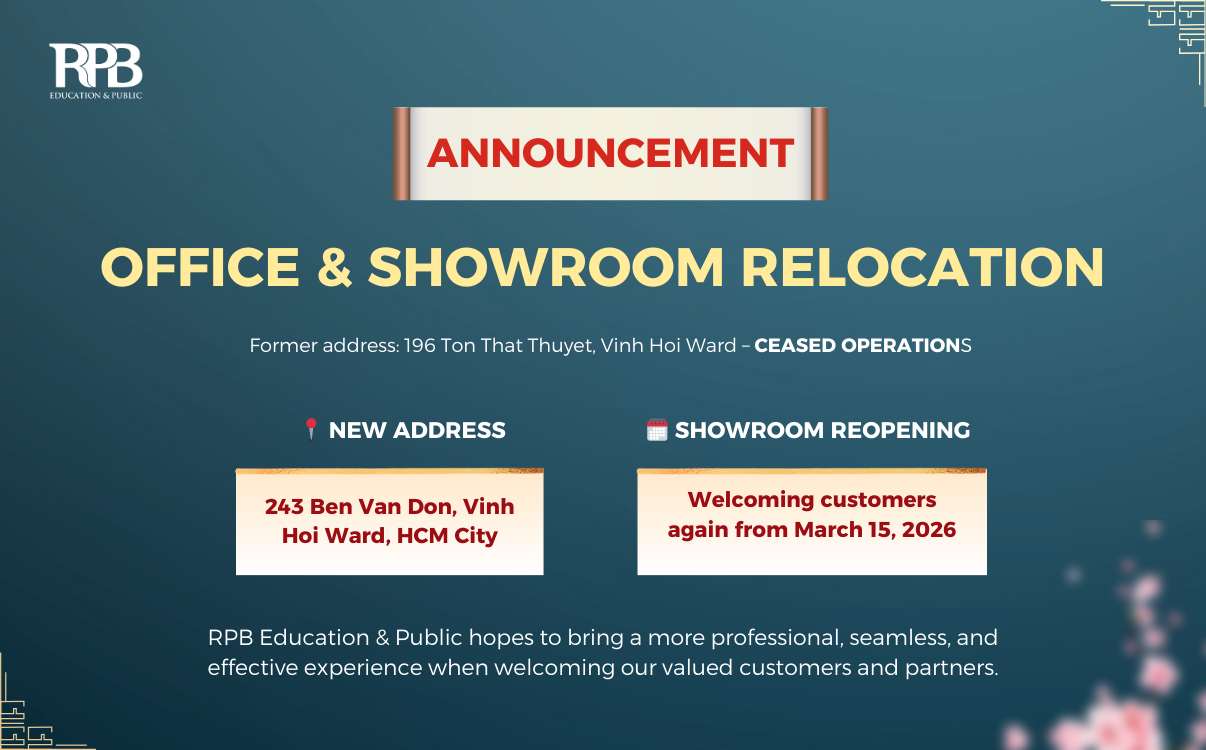
Office Relocation Announcement – Elevating Your Experience
To enhance service quality, expand our workspace, and provide a better experience for our customers, we are pleased to announce the relocation of our office to a new address.
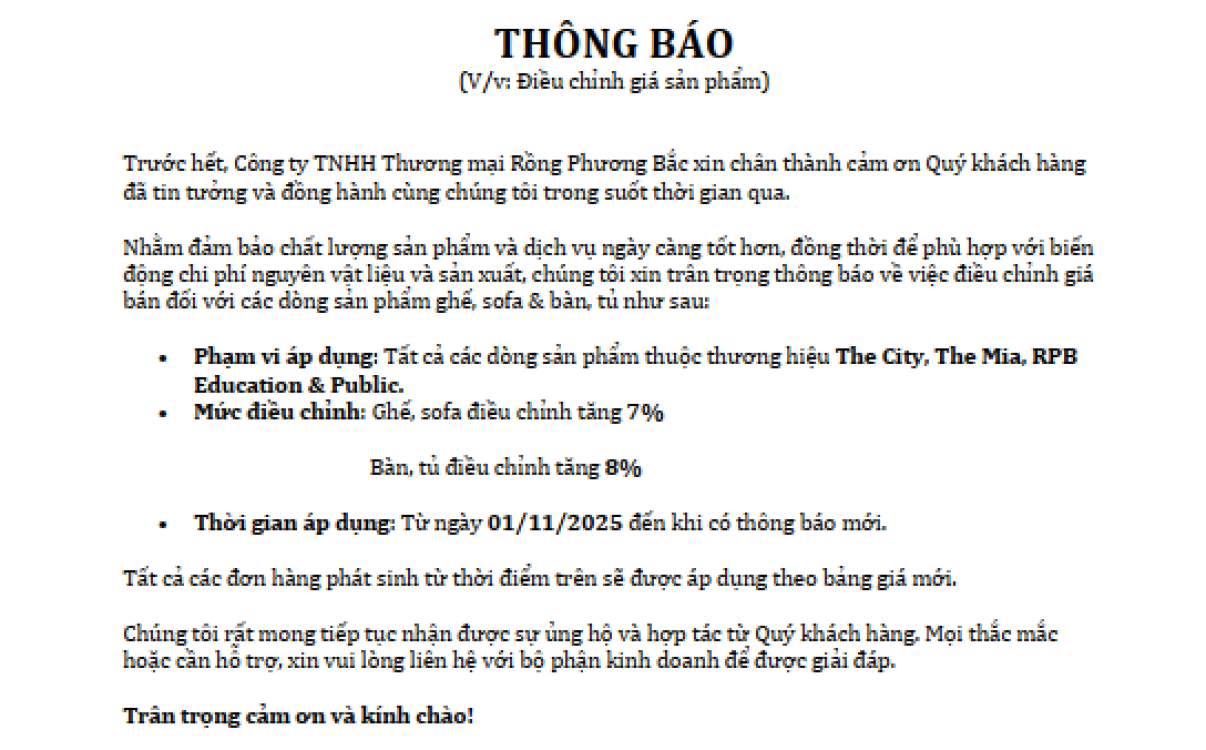
Announcement of product price adjustment
RPB Education & Public sincerely thanks our valued customers for your continued trust and partnership over the past years.
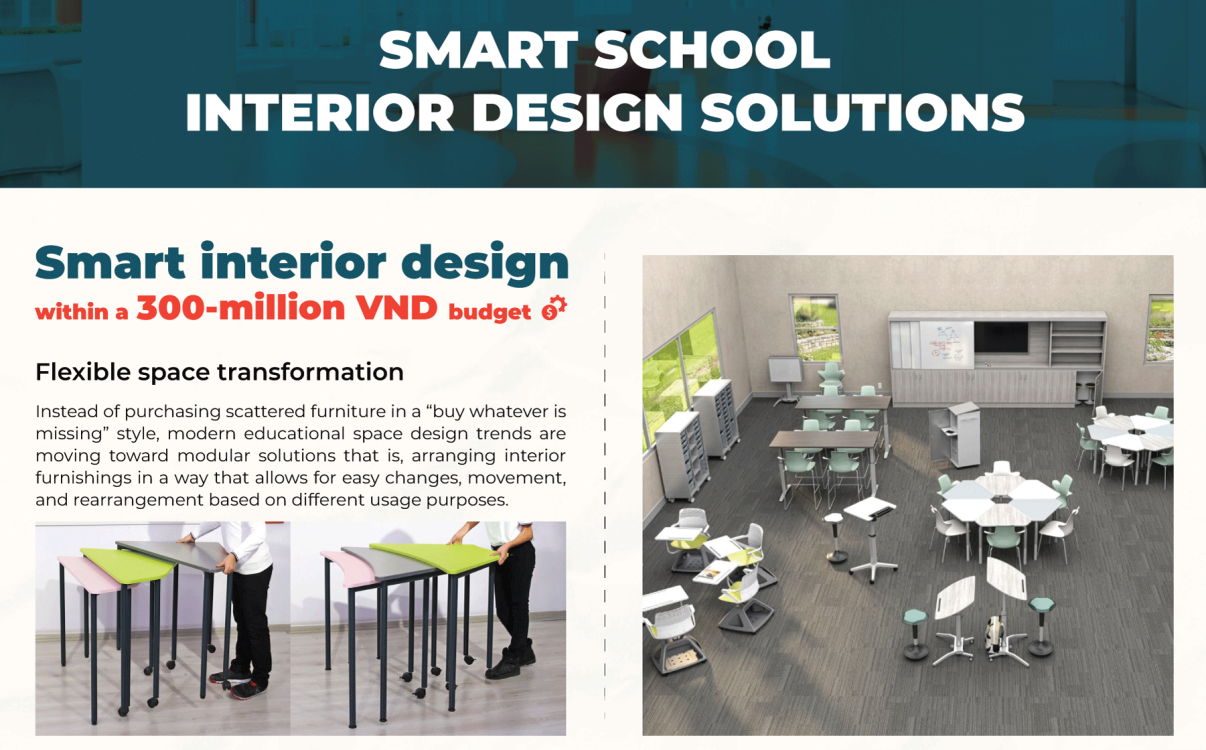
Smart Interior Design Solutions for Universities: Within a 300 Million VND Budget
Smart university interior design within a 300-million budget is not only a financial challenge but also a strategy to elevate the learning experience. With the right investment, it helps create modern, inspiring, and flexible spaces aligned with new teaching methods while optimizing long-term operating costs.

Environmental permit announcement
RPB Education & Public officially announces its environmental permit in accordance with current regulations, reaffirming the company's commitment to legal compliance, environmental protection, and sustainable development. This is an important step to ensure that all of RPB’s business and production activities are aligned with the goal of being environmentally friendly, safe for the community, and contributing to a greener future for the next generation.